Showing posts with label air pollution. Show all posts

Friday, July 1, 2022

The Great Clean Air Debate--Part II

 Answering Kennedy’s Call

 Chapter Six

Environmental Protection Could be Hazardous

At the time, I remember thinking environmental protection should not mean crawling down the partially opened rear stairs of a Boeing 727 passenger jet into a muddy field at San Francisco International Airport.

I had boarded a regularly scheduled Sunday afternoon flight to Los Angeles where I was producing a one-half hour public service television show for the USEPA on the dangers of toxic substances in anything we might eat or drink.

        I sat next to a World War II pilot on that cloudy, rainy day in a United Airlines 727. Wisps of clouds raced by as we ascended. I hated the 727 with its three engines in the rear of the plane. It took off and landed like a wounded duck, as far as I was concerned, yet the airlines used it for the shorter flights. It always seemed to land with a deep thud that made me close my eyes on the approach, wondering if it had landed safely, and it seemed to lift off at the very last moment from the end of the runway.

 As we climbed, I noticed a vapor streaming from the wing tips. I pointed it out to the former pilot I had just met. He said not to worry too much: they were probably jettisoning some excess fuel.

“But why?” I asked. “Why would they be jettisoning fuel after the takeoff?” It wasn’t long before we knew the answer. The pilot’s voice came over the intercom: “We don’t want you to be alarmed, but we have to return to the airport.”

I looked at my seat partner who seemed calm. He had been regaling me with stories of his fighter pilot days in World War II in the Pacific. “I don’t know what it could be,” he said. “Probably some malfunction in the navigation system, or some of the dials aren’t giving accurate signals.”

That was when the airline pilot told us what was actually happening. “We are returning because a warning light is telling us something is overheating in the cargo bay,” he said over the intercom. “It may be nothing, a light malfunctioning, but we would like you to grab your ankles as we approach landing, just in case.”

That was possible when flying in the 1970s. Seats were farther apart. In fact, airlines competed to offer more leg room rather than less in those days.

        Though my heart beat a little faster, I didn’t think anything could really be wrong. But my partner and I grabbed our anklesas we approached, just in case. The plane had been circling while continuing to jettison fuel.

We heard the landing gear lock and the jet engines reverse thrust to slow down the plane as we landed, so I thought the flight was over. Suddenly there was a much louder THUNK, then the plane tilted crazily and began to slowly rotate. Those of us grabbing our ankles could see nothing, but I had the sickening feeling that I was going to die.

The THUNK was followed by a screeching of metal, but I had no idea how long that lasted before the silence. It was a silence that I honestly thought meant the end—I think we all felt that way—even though my mind was racing. Was it even possible this was what the afterlife must be? A limbo of sorts with nothing to see or hear? It was as if, at that moment, I had left my body, and whatever had become of me was hovering overhead.

But then I heard screaming, and a group of uniformed pilots suddenly appeared out of nowhere. It was only later that I realized they were off-duty pilots hitching rides home on the weekend. At this moment they happened to be in the right place at the right time. At least six of them rousted passengers out of their seats.

Most of us were in shock. They had to literally grab some of the passengers and throw them down the inflated chutes that had opened before it dawned on the rest of us that we needed to get the hell out of there.

Being near the tail of this 727, my partner and I had only one escape route. There was an exit staircase that opened under the tail, but it was only partially open. We crawled our way down those steps and found that the tail was sitting in the mud. When we stood up to look around in a slight drizzle, hands and knees covered in the mud, we saw we were in a wet field beside one of the runways. The nose of the plane was buried in a small, corrugated metal shack that must have stopped its slide.

My partner said immediately, “It has to be one of the landing gear.”

“What landing gear?” I asked. I looked up and down the runway we were beside and saw no landing gear. My partner had taken out a miniature Minolta camera and began clicking away in all directions as people continued to crawl or slide out of the plane. Some lay on the ground moaning, as sirens from approaching rescue vehicles screamed louder.

The pilots and crew members herded us away from the fuselage. I saw no smoke, and so thank God, maybe no fire. They were also shouting, “No pictures, please, no pictures, please,” which my partner, of course, ignored. When I looked down the runway that crossed ours, I saw a small object lying in the middle of it. It was our landing gear: four wheels still locked to the strut that anchored it to the wing.

     
        The right-side wing was buried in the ground, and we now could see what had happened. Its landing gear, with all four wheels, had broken off the wing and was laying with its strut assembly barely visible in the distance. We must have skidded for more than a mile before coming to a stop in this muddy field. 
 

The ex-fighter pilot told me that he had once crash landed on a beach and broken his back in the Philippines during World War II. It underscored how lucky we were this time. The United pilot must have landed too soon with too much fuel in the tanks. I had flown enough to know planes usually take off with more fuel than is safe to carry when landing, in case they were stuck in a holding pattern before descending to the tarmac. The extra weight may have caused the wounded duck to hit the runway harder than was safe. But the pilot’s skill probably saved us by keeping the plane’s nose up, said my seat mate, despite the impact that could have flipped us end-over-end.

So I cancelled the television show that weekend, even though United Airlines offered to put me on the next plane to Los Angeles—once the runways were cleared.

There was no map of what we should or could do in those early days. But making the public aware of what was happening to our air and water was a priority. Administrator DeFalco wanted the public to know why we were here and what needed to be done to protect the environment.

It was the dawning of an awareness of how human activity affected the environment, of the growing danger of toxic chemicals that Silent Spring author Rachel Carson had written about. We would educate and inform the public about our mission.

Harlan Green © 2022

Follow Harlan Green on Twitter: https://twitter.com/HarlanGreen

Tuesday, June 28, 2022

Developing a Livable Community

 Answering Kennedy’s Call


What are the requirements for a livable community? I will be posting excerpts from my new memoir, Building Community Answering Kennedy's Call, just out on Amazon. 

As recently as 2005, the Institute of American Architects said that

“. . . broadly speaking, a livable community recognizes its own unique identity and places a high value on the planning processes that help manage growth and change to maintain and enhance its community character.”

The Goleta Valley still had a rural feeling. It had been settled by immigrant farmers after the Civil War when the huge Spanish rancheros—made up of tens of thousands of acres—were broken up following an especially severe drought that killed the livestock that were the livelihood of the earliest settlers. Now it was a valley filled with lemon and avocado groves.

But a battle had erupted between developers building new subdivisions and environmentalists who wanted to keep the valley as rural and agricultural as possible. The developers had been winning until the environmentalists succeeded in passing a water moratorium that stopped new building projects that didn’t have existing water allotments.

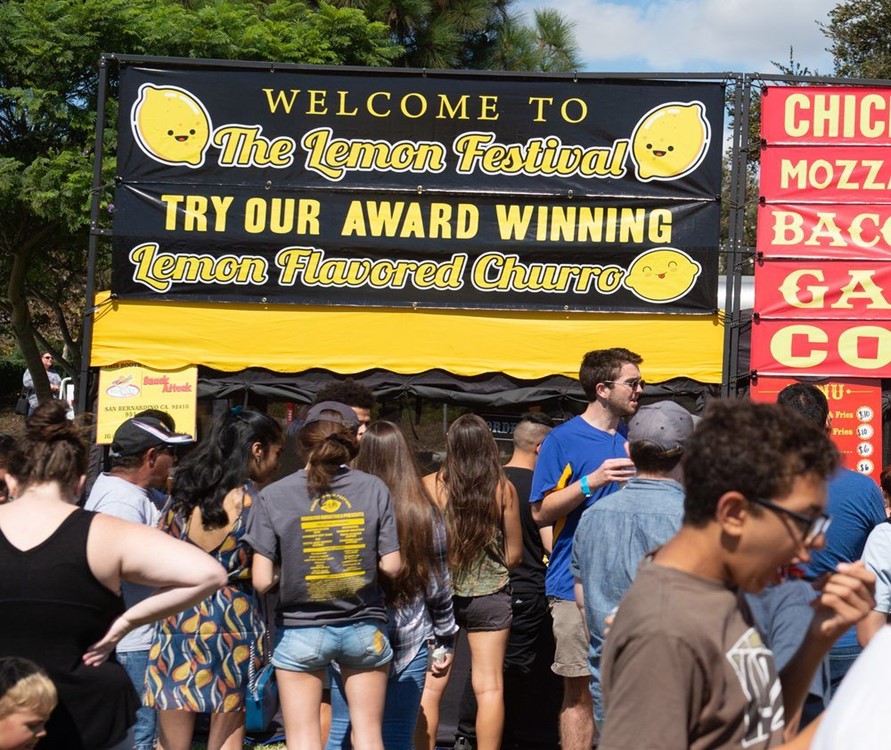
I became involved with community events like the Lemon Festival and July 4th celebrations, where I met residents who wanted to live in a unique community. Many of them had already made several attempts to form their own city to control its development.

I thought the Goleta Valley, an area with more than 50,000 inhabitants, should become a city. Its revenues for needed improvements were spent elsewhere in the county rather than for the benefit of the Valley. And Goleta continued to attract high tech businesses due to its closeness to the top-ranked physics and engineering schools of the University of California’s Santa Barbara campus.

The unplanned expansion had not been preserving the open spaces and pedestrian-friendly commercial centers that residents and sustainable development principles required. The third largest oil spill in U.S. history (behind the Gulf of Mexico and the Alaska oil spills) occurred in the Santa Barbara Channel in 1969. More than three million gallons of crude oil leaked from a deep water well and coated 35 miles of South Coast beaches for months, requiring massive cleanup.

The oil spill mobilized the whole South Coast community, searing the memories of those living there, helping to spawn the national environmental movement.

Goleta had a wonderful history, from its earliest Chumash Indian inhabitants to its discovery in the 1500s by Spanish explorer Juan Cabrillo, which led to the founding of California’s mission system. It then became known as “The Good Land”, an agricultural paradise named by a local historian for its abundant and fruitful soils and climate.

But as a bedroom community to Santa Barbara, the Goleta Valley had no real community organization of its own other than the Goleta Valley Chamber of Commerce. It needed an established entity to ask for what was needed to improve the valley’s aging and dilapidated infrastructure, and to reduce chaotic development. More public transportation, water resources, and just smart community planning were needed to mitigate the effects of a growing population.

There was much opposition to any organizing effort that would create more than a bedroom community in the Goleta Valley. There were those who wanted to “belong” to the City of Santa Barbara so their property values would be the beneficiary of Santa Barbara property values. They wanted no part of a new, more rural city. Then there were the environmentalists that tended to cluster around UC Santa Barbara with its strong environmental studies program. They were afraid a new city would encourage more development.

But in fact, being unincorporated didn’t prevent development: property owners and developers had only to convince one County Supervisor that represented a larger area, rather than a city council responsible for the entire community.

Goletans couldn’t agree on what was unique about their own community. Was it a farming culture, bedroom community, or just funky adjunct to UC Santa Barbara? Many thought that, with prosperous Santa Barbara next door, what was the need for another city on the already crowded South Coast? Hence the impasse that had defeated earlier cityhood attempts.

The first step in building a livable community, in my view, had to be creating a town center that could focus planning efforts, and Old Town Goleta seemed just the place to do it. Old Town had been the historical center of the Goleta Valley with stores, a saloon, and a blacksmith for farmers in the early days.

There were marsh lands and the large Goleta slough to the south. Goleta Valley and Santa Barbara have the only southern facing coastlines in California due to a geological quirk. Early schooners could sail into what was then a bay at high tide, refill their water caskets at a natural spring where UC Santa Barbara is now located, and even dock near Old Town’s center.

Spanish explorers in the 1700s who were looking for mission sites originally thought it could be an ideal site for a mission, as a large island in the center of the slough had originally held five indigenous Chumash Indian villages and was surrounded by water making it easily defensible. But when the Spaniards returned several years later during a drought, there was very little water to protect it. So, they chose to build the mission in Santa Barbara, which had no natural harbor but a seasonal creek that could provide an adequate water supply.

Old Town, with its own past, could give Goleta Valley residents a sense of their own history and separate community identity. It even had a Community Center that hosted many community activities. An associate County Planner at that time, Dan Gira, also thought Goleta should become a city able to determine its future as part of the County’s General Development Plan update.

The update was required by the state of California to accommodate the changes necessitated by a growing population. I was one of many moving to this beautiful area of the South Coast with its unique climate sheltered by east-west mountains and south facing beaches. Santa Barbara and the South Coast has always been a beautiful and very desirable place to live, and the people kept coming.

The County would apply to the state of California for the formation of a Goleta Old Town Redevelopment District, which would allow some tax monies to be withheld for use in Old Town to upgrade its housing and infrastructure. While I loved the beautiful outdoors and the nature that surrounded us, more housing was needed in Old Town. Many Mexican agricultural workers—mostly undocumented—were living in Old Town because of its cheap rents, but landlords were taking advantage by housing ten to twenty of them in a single dilapidated housing unit.

I had to raise $50,000 in the community: 50 percent of the expense the County would incur to do the studies necessary to classify Goleta Old Town as a redevelopment district. The County would chip in its 50 percent in the form of time and labor, and whatever was needed for the feasibility study that would determine if Goleta Old Town fulfilled the state requirements for its redevelopment.

The study would include a report on degraded infrastructure, such as inadequate surface transportation, and the number of bars and other “nonproductive” businesses in Old Town. The point was to determine the extent of blight, or physical deterioration, of the Old Town community, and a cost estimate for fixing those problems.

There was plenty of blight. Goleta’s Old Town had become run down in the 1980s as competing malls were built elsewhere to accommodate the new auto-dependent subdivisions built to hold the growing population. Bars had proliferated as businesses left Old Town. A fire partially destroyed a ten-unit apartment building. A Santa Barbara News-Press reporter covering the fire reported that residents thought the popping noise from breaking Windows sounded like gunfire from gang warfare.

We raised the $50,000, the County Planning Department hired a consultant to write the feasibility study, and it was approved within a year. That gave us the means to begin planning for a new town center, and maybe a city.

Harlan Green © 2022

Follow Harlan Green on Twitter: https://twitter.com/HarlanGreen