Showing posts with label livable communities. Show all posts

Tuesday, June 13, 2023

 Answering Kennedy’s Call

 CHAPTER ELEVEN

Old Town’s Revival

Chapter Eleven is an excerpt from my memoir that discusses tools needed to form a community consensus. Our effort was dedicated to redevelopment of Old Town Goleta, prior to forming the new City of Goleta.

But such techniques to build consensus could apply to climate change. The Biden administration’s Inflation Reduction Act will begin to implement the new legislation in disadvantaged communities with tax credits and outright grants to start up new projects and clean up their communities of toxic wastes.

The dream of forming a new city of Goleta was revived once its former Old Town center has been approved for redevelopment by Santa Barbara County, but what are the requirements for a livable community?

As recently as 2005, the Institute of American Architects said that

. . . broadly speaking, a livable community recognizes its own unique identity and places a high value on the planning processes that help manage growth and change to maintain and enhance its community character.

There had been several unsuccessful efforts to form a city since the 1970s.

The Goleta Old Town Revitalization Committee, a mix of local officials and residents that wanted Old Town’s infrastructure and services upgraded, was now created, and I was appointed its chairman.

The first task was to find such an identity that could unite a diverse community. The Goleta Valley’s Old Town was its 100-year-old historical center that could provide a unique sense of identity to a new city.

Hearings were held in Old Town’s Community Center so county planners could learn what Goleta’s residents wanted for a future town center. We were following the precepts of community organizing in bringing citizens together to solve some of the problems afflicting such a diverse community.

The Goleta Valley in many ways was a microcosm of small-town America and all that had happened to those communities since the sixties: rapid population growth with little concern for the environment. It had an early history combining both rural and urban life with industrial and research centers while being adjacent to the Santa Barbara Airport.

Our new organization (that included several future Goleta city mayors) was more than a redevelopment district because we believed it could aid in giving the Goleta Valley its “own unique identity” that planners and architects deemed requisite for a livable community.

I had read and was influenced by M. Scott Peck’s book The Different Drum, describing the elements that bring a community together to achieve whatever they want. His approach epitomized for me the essence of community development. Dr. Peck, a medical doctor, psychologist, and author of a better-known prequel, The Road Less Traveled, broke down the steps that a community goes through to come together in a meaningful way in The Different Drum.

He warned that the process could take time. Any community usually goes through four stages to reach agreement and to be able to function effectively, whatever its goals. He characterized these stages as Pseudo community, Chaos, Emptiness, and (true) Community.

Pseudo community is the first gathering of any group with the initial pleasantries and avoidance of conflict in the desire to be nice to each other. But it is a false community, because until the second stage of Chaos is reached, individual differences aren’t revealed, and a discussion of the real problems doesn’t surface.

Chaos described the early stages of our hearings when open discussions brought out the conflict between those residents who loved Old Town’s funkiness and cheap rents, and those landlords and landowners who wanted to improve their properties. The goal of the Old Town Advisory Committee was to bring the sides together. There was also a Goleta Beautiful organization that wanted to preserve and restore some of the more historic Old Town structures.

Dr. Peck’s third stage is Emptiness: a time of resignation, when the group or organization gives up their individual prejudices, ideologies, control needs, and begins to see what can be accomplished as a group. In Old Town, it wasn’t until the second year of the hearings that this happened. More Old Town residents were put on the committee, and we began to see a vision of what a revitalized Old Town could be for the Goleta community.

After many hearings and dialogues with planners, architects, developers, and residents that included a weekend Design Charette that I will discuss in a later chapter, the committee members began to have a sense that we were all in this together and would be able to create something beneficial that was a (true) community.

Dr. Peck wrote:

. . . initially I thought this book’s title should be “Peacemaking and Community”. But that would put the cart before the horse. For I fail to see how we Americans could effectively communicate with the Russians, (or any peoples of other cultures) when we don’t even know how to communicate with the neighbors next door, much less the neighbors on the other side of the tracks.

In our culture of rugged individualism— in which we generally feel that we dare not be honest about ourselves, even with the person in the pew next to us—we bandy around the word, “community”. . . [but] if we are to use the word meaningfully, we must restrict it to a group of individuals who have learned how to communicate honestly with each other.1

The Old Town Revitalization Committee needed two years and 100 hearings to form the Old Town Revitalization Plan.

The final report approved by the County on June 16, 1998, stated: “The purpose and objectives of this Redevelopment Plan are to eliminate the conditions of blight existing in the proposed Project Area and to prevent the recurrence of blighting conditions in said Area.”

It took four more years and another election to transfer what we learned in revitalizing Old Town to create the new City of Goleta in 2002 encompassing most of the Goleta Valley, but this was its start.

_______________________

1 Peck, M. Scott. The Different Drum. Simon & Schuster, 1987. P. 56

Harlan Green © 2023

Follow Harlan Green on Twitter: https://twitter.com/HarlanGreen

Saturday, March 4, 2023

Goleta's Old Town Flood

 CHAPTER THIRTEEN

Designing a New City Center

Goletahistory.com

    Many of us believed that a re-design of Old Town Goleta
would be an ideal location to practice some of the precepts of
True Urbanism, or Smart Planning, that could aid in the design
for a new city. These were labels attached to what is now a
worldwide movement.

    Flooding was also a major concern, despite periodic
droughts. Santa Barbara and the South Coast had suffered
several devastating floods during the 1990s that ended a prior
8-year drought.

    The flood that broke the drought was called the March
Miracle: in March 1991, 23 inches of rain fell, even flooding the
Santa Barbara Municipal Airport and closing it for several days.

    A second flood in 1995 caused another flooding of Old
Town Goleta’s main street. A three-foot deep stream of water from a
torrential rainfall overflowed San Jose creek at one end of Old
Town’s boundaries adjacent to a Nissan car dealer’s lot.

    More than 40 cars parked in the lot were swamped with several thrown into a culvert that diverted the flood waters onto Old Town’s main street.

    A climate scientist later said that the creek
would no longer be adequate for containing flooding because
the hard paved streets and roof surfaces in the surrounding
neighborhoods had replaced the soil that had absorbed excess
rainfall.

    Now the creek carried almost all of the rain’s runoff.
Hence flood control improvements, such as an enlarged
creek bed to carry the increased runoff, were required in the
CEQA report as the first step in any redevelopment effort.

    The droughts and consequential flooding also made everyone
aware of the limited water supplies in California, as well as the
potentially devastating drought/flood cycle. In fact, California’s
latest six-year drought ended (in 2017) with the greatest rainfall totals for Northern California since the 1880s.

Harlan Green © 2023

Follow Harlan Green on Twitter: https://twitter.com/HarlanGreen

Sunday, February 26, 2023

Chapter Eleven - Building a Livable Community


Old Town’s Revival

As we began to redesign Goleta’s Old Town District, we realized our efforts might apply to a livable city as well.

As recently as 2005, the Institute of American Architects defined a such a community as. . . “broadly speaking, a livable community recognizes its own unique identity and places a high value on the planning processes that help manage growth and change to maintain and enhance its community character.”

Thoughts of forming a new city of Goleta were also revived, as the actual planning of Old Town’s future began. There had been several unsuccessful efforts to form a city since the 1970s. The Goleta Old Town Revitalization Committee, a mix of local officials and residents that wanted Old Town’s infrastructure and services upgraded, was now created, and I was appointed its chairman. Hearings were held in Old Town’s Community building so county planners could learn what Goleta’s residents wanted for a future town center. We were following the precepts of community organizing in bringing citizens together to solve some of the problems afflicting such a diverse community.

Goleta in many ways was a microcosm of small-town America and all that had happened to those communities since the sixties: rapid population growth with little concern for the environment. It had an early history combining both rural and urban life with industrial and research centers while being adjacent to the Santa Barbara Airport. I wanted to participate in this organization (that included some future Goleta city mayors), because it could aid in giving the Goleta Valley its “own unique identity” that planners and architects deemed requisite for a livable community.

I had read and was influenced by M. Scott Peck’s book The Different Drum, describing the elements that bring a community together to achieve whatever they want. His approach epitomized for me the essence of community development. Dr. Peck, a medical doctor, psychologist, and author of a better-known prequel, The Road Less Traveled, broke down the steps that a community goes through to come together in a meaningful way in The Different Drum.

He warned that the process could take time. Any community usually goes through four stages to reach agreement and to be able to function effectively, whatever its goals. He characterized these stages as Pseudo community, Chaos, Emptiness, and (true) Community.

Pseudo community is the first gathering of any group with the initial pleasantries and avoidance of conflict in the desire to be nice to each other. But it is a false community, because until the second stage of Chaos is reached, individual differences aren’t revealed, and a discussion of the real problems doesn’t surface.

Chaos described the early stages of our hearings when open discussions brought out the conflict between those residents who loved Old Town’s funkiness and cheap rents, and those landlords and landowners who wanted to improve their properties. The goal of the Old Town Advisory Committee was to bring the sides together. There was also a Goleta Beautiful organization that wanted to preserve and restore some of the more historic Old Town structures.

Dr. Peck’s third stage is Emptiness: a time of resignation, when the group or organization gives up their individual prejudices, ideologies, control needs, and begins to see what can be accomplished as a group. In Old Town, it wasn’t until the second year of the hearings that this happened. More Old Town residents were put on the committee, and we began to see a vision of what a revitalized Old Town could be for the Goleta community.

After many hearings and dialogues with planners, architects, developers, and residents that included a weekend Design Charrette that I will discuss in a later chapter, the committee members began to have a sense that we were all in this together and would be able to create something beneficial for the community.

Dr. Peck wrote:

". . . initially I thought this book’s title should be “Peacemaking and Community”. But that would put the cart before the horse. For I fail to see how we Americans could effectively communicate with the Russians, (or any peoples of other cultures) when we don’t even know how to communicate with the neighbors next door, much less the neighbors on the other side of the tracks."

In our culture of rugged individualism— in which we generally feel that we dare not be honest about ourselves, even with the person in the pew next to us—we bandy around the word, “community”. . . [but] if we are to use the word meaningfully, we must restrict it to a group of individuals who have learned how to communicate honestly with each other.1

The Old Town Revitalization Committee needed two years and 100 hearings to finally form the Old Town Revitalization Plan.

Once the Plan’s CEQA (California’s Environmental Quality Act) study was approved—a study required to name and mitigate the environmental hazards we might encounter—the County applied to the state of California for the formation of a Goleta Old Town Redevelopment Plan, which would allow a percentage of the tax monies to be withheld for use in Old Town to upgrade its housing, improve San Jose Creek that flowed under its main thoroughfare, and infrastructure.

The final report approved by the County on June 16, 1998, stated: “The purpose and objectives of this Redevelopment Plan are to eliminate the conditions of blight existing in the proposed Project Area and to prevent the recurrence of blighting conditions in said Area.”


1 Peck, M. Scott. The Different Drum. Simon & Schuster, 1987. P. 56

Wednesday, August 17, 2022

Building Community Answering Kennedy's Call

 The Second Year Can Be Most Difficult

Chapter Four

It was becoming obvious that I wasn’t tolerating village life well by the end of my second year in Ismet Pasha, a village settled by Bulgarian Turks in the 1920s after the breakup of the Ottoman Empire. Though I involved myself as much as possible in village activities, and even donated a set of the annotated Koran in Turkish to their new library, I began to make longer trips to visit other volunteers to know what they were seeing and doing.

Clair, my female counterpart, had left after the first year and married another volunteer in our group. I was sad to see them leave because they were terrific workers, but Peace Corps rules were no cohabitation of partners unless already married!

I was even anxious when riding the buses for fear of being in an accident, becoming a nervous wreck who smoked a pack- a-day of their “Askerli” cigarettes in that second year. Its brand name was the Turkish word for soldier, and I never knew if it was created to provide the poorly paid Turkish soldier with something he could afford, since a pack cost 40 Kurush, $0.04 cents at the current exchange rate.

The tediousness of becoming a single volunteer was spelled by 45 days of paid vacation leave allowed by the Peace Corps during the two years of service, and semi-annual conferences that brought everyone together for progress reports.

We village volunteers were considered well paid at 60 dollars per month, the equivalent of a Turkish teacher’s salary. To put that in perspective, we could have a good restaurant meal for one dollar, and a haircut for 25 cents. In addition, we were allowed $7.50 per day of vacation allowance. I had money to travel on, as my rent for a small, one room adobe cottage was just $3 per month that second year.

Our own volunteer liaisons were made during holidays and our vacations. I and a female volunteer unfortunately overstayed our vacation time on the island of Rhodes during the winter school break because of a severe Mediterranean storm that capsized a tourist boat with the loss of 40 lives, isolating us long enough so that she was late for her assignment teaching English at a high school.

I was reprimanded for assisting in her delinquency through no fault of her own, and our Peace Corps country director at the time withdrew his offer to put me on training staff after completion of my two years. My loneliness had cost me the possibility of remaining in Turkey for a third year.

Not spending another year in Turkey was probably a good thing, as I was feeling more sad than happy as my two years of service came to an end. As difficult as it was to live in and absorb so much of a foreign culture, it was just as difficult to leave such an intensely emotional and personal experience. Turkish culture was based on very intense relationships; close emotional bonds of either love or hate in friendships as well as families, including strict behavioral guidelines we had to follow between the sexes.

We of Turkey V, the first volunteer rural community development group to serve in any Muslim country, were finally discharged in June of 1966, and it could not have been a day later for me. I had dodged attacks by Turkish sheepdogs, part of the feared and famous Anatolian Mastiff breed, ridden on horseback through sparkling winter snows under the clearest blue skies, weathered some scary illnesses, and was ready to return to western culture.

Had I made a difference, and what did the villagers end up thinking of me? There were so many highs and lows—the companionship with other volunteers that broke the tedium of village life, the vacation travel, visits to ancient, storied civilizations, and being part of such an ancient way of life that was barely changed by a few tractors and combines that sped up the planting and harvest.

Turkey in Later Years

As the Vietnam War dragged on, Americans and the American way did not look so peaceful to the rest of the world. This was one reason Peace Corps left Turkey after 10 years during which some 1600 hundred volunteers had served.

Opposition to the Vietnam War had grown in many European countries, and educated Turkish students were no exception. There were also serious gaffes by American officials, such as appointing former CIA employee Robert Comer to be the next U.S. Ambassador to Turkey. He had overseen the South Vietnamese village pacification plan, and his appointment as Ambassador to Turkey so enraged students that they overturned and burned his car during one of the many anti-war protests.

His predecessor, our own Peace Corps director, had earlier killed an elderly woman dressed in black while driving in Ankara one dark and rainy night. Because he had diplomatic immunity, he was spirited out of Turkey to avoid being charged with manslaughter.

That was not well-received by the students, either. Turkey and the Peace Corps administration agreed it was time to phase out the Peace Corps program that had lasted from 1961 to 1971, after students at several of the technical schools where Peace Corps volunteers taught held a vote and decided that the Peace Corps was no longer welcome.

My last year had been a very lonely, but productive, year, and I had no illusions that most villagers in this part of Anatolia with its semi-arid and mostly treeless environment would stay in their villages much longer. Their industrial revolution was now in full swing.

I hoped our presence there as volunteers had helped them consider us as their friends rather than obnoxious foreigners. I also hoped they saw us presenting a better, more peaceful side of American foreign policy that was more in line with the true face of the America I believed in, despite the Vietnam War.

I believe the Peace Corps Volunteers serving in Turkey did make a difference. We encouraged many of our villagers to work to develop their own land, instead of moving to the cities. Ismet Pasha’s villagers that remained were usually the most prosperous landowners that could exploit more modern farming techniques that I had helped to develop.

There was also talk of the Turks forming their own domestic volunteer corps that had a Turkish precedent. Educated Turkish males already had the option to teach in a village school instead of wearing a military uniform because Turkey had universal male military conscription. But I never knew if it was expanded into something that resembled the Peace Corps, in part because Turkey was changing so fast.

The Return to Turkey

Though today Turkey’s rural population has continued to grow, the percentage of the total population living in villages has declined because of rural-to-urban migration.

In 1970 about 67 percent of the population lived in villages. In 1980 the rural population had declined to 54 percent. Less than 21 percent of Turkey’s population still lived in villages in 2020, according to the World Bank.

That is why I was so startled on a return trip to Turkey. More than 30 years had passed since I left in 1966 and I wanted to know what remained of my work in Ismet Pasha. I had organized a tour group that landed at Istanbul’s Ataturk Airport during a national holiday. It was a shock to see the streets lined with many women covered from head to foot in traditional clothing as we were driven to our hotel. They had to be from the villages to dress so conservatively. It was evidence of the mass migration to cities and how much Istanbul, Turkey’s most European and cosmopolitan city, had changed.

I made a point of visiting Ismet Pasha during the tour, but it seemed a shell of its former self on my return. The mill that produced their flour was gone, a sign of the decline of village life. Its huge grindstone lay beside the road in front of the abandoned bakery building. The villagers no longer baked their own stone ground wheat bread that I remembered; giant kilo loaves steaming just out of the oven that I had enjoyed at meals when invited to dine with them.

The ethnic Turks who still lived in Ismet Pasha, including the son of the Mukhtar I had worked with during my two years, were doing well. Irrigation water was now plentiful from a fully developed irrigation system that watered a large sugar beet crop via elevated concrete canals that funneled water into the fields.

Ismet Pasha that had dirt roads and no electricity when I lived there, now had electricity and a paved main road that give them greater access to markets for their produce in all seasons, so their economic future looked bright.

But the village was also full of Kurds newly arrived from their homeland in eastern Turkey. They were the victims of Turkey’s ongoing war with Kurdish militants belonging to the PKK, their most radical political party that wanted an independent country of their own.

The war had dragged on for years and did not look like it would come to any resolution soon. Millions of Kurds still lived in Turkey and were forbidden to teach their language in the schools at the time.

The ethnic Turks to whom I spoke looked down on the Kurds as bad farmers, transplants that really did not fit in. The Kurds were thought of as a semi-nomadic herding culture, since many of them still lived in the mountains of Syria, Iran, and Turkey. But maybe all the good land around Ismet Pasha was taken, so there was nothing else for the Kurds forcibly transplanted from their homeland to do than raise lifestock? It looked like only families with the largest landholdings were able to take advantage of the new irrigation wells I first brought to the village.

But will Turkey ever become a sectarian democracy ruled by civil law rather than religious law? Or will they be saddled with their current devoutly religious President, Recep Tayyip Erdoğan, an aspiring President-for-life intent on imposing a more religious theocracy rather than continuing their sputtering attemp and most of the remote rural villages ts to join the European Union?

I also saw that the community development precepts I learned in Peace Corps training worked in a Turkish village, because they were much like us, a practical people who believed success in the secular world was as important as the world promised by Islam. Who knows what future might be possible for such a hardworking people?

I felt good about what I had done, and it was now time to move on to find another community I might contribute to.

Harlan Green © 2022

Follow Harlan Green on Twitter: https://twitter.com/HarlanGreen

Tuesday, June 28, 2022

Developing a Livable Community

 Answering Kennedy’s Call


What are the requirements for a livable community? I will be posting excerpts from my new memoir, Building Community Answering Kennedy's Call, just out on Amazon. 

As recently as 2005, the Institute of American Architects said that

“. . . broadly speaking, a livable community recognizes its own unique identity and places a high value on the planning processes that help manage growth and change to maintain and enhance its community character.”

The Goleta Valley still had a rural feeling. It had been settled by immigrant farmers after the Civil War when the huge Spanish rancheros—made up of tens of thousands of acres—were broken up following an especially severe drought that killed the livestock that were the livelihood of the earliest settlers. Now it was a valley filled with lemon and avocado groves.

But a battle had erupted between developers building new subdivisions and environmentalists who wanted to keep the valley as rural and agricultural as possible. The developers had been winning until the environmentalists succeeded in passing a water moratorium that stopped new building projects that didn’t have existing water allotments.

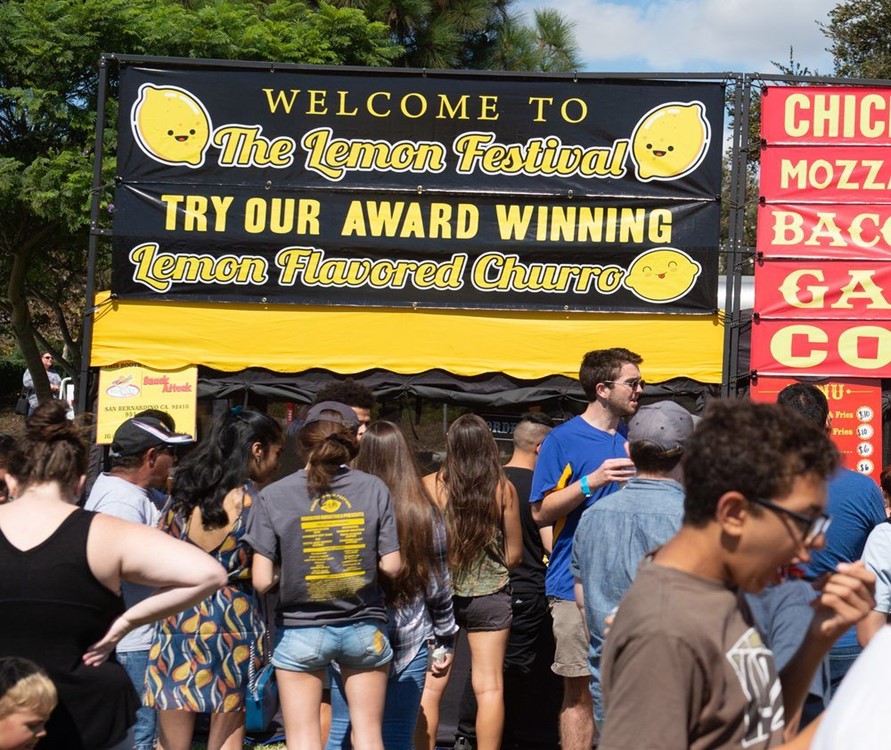
I became involved with community events like the Lemon Festival and July 4th celebrations, where I met residents who wanted to live in a unique community. Many of them had already made several attempts to form their own city to control its development.

I thought the Goleta Valley, an area with more than 50,000 inhabitants, should become a city. Its revenues for needed improvements were spent elsewhere in the county rather than for the benefit of the Valley. And Goleta continued to attract high tech businesses due to its closeness to the top-ranked physics and engineering schools of the University of California’s Santa Barbara campus.

The unplanned expansion had not been preserving the open spaces and pedestrian-friendly commercial centers that residents and sustainable development principles required. The third largest oil spill in U.S. history (behind the Gulf of Mexico and the Alaska oil spills) occurred in the Santa Barbara Channel in 1969. More than three million gallons of crude oil leaked from a deep water well and coated 35 miles of South Coast beaches for months, requiring massive cleanup.

The oil spill mobilized the whole South Coast community, searing the memories of those living there, helping to spawn the national environmental movement.

Goleta had a wonderful history, from its earliest Chumash Indian inhabitants to its discovery in the 1500s by Spanish explorer Juan Cabrillo, which led to the founding of California’s mission system. It then became known as “The Good Land”, an agricultural paradise named by a local historian for its abundant and fruitful soils and climate.

But as a bedroom community to Santa Barbara, the Goleta Valley had no real community organization of its own other than the Goleta Valley Chamber of Commerce. It needed an established entity to ask for what was needed to improve the valley’s aging and dilapidated infrastructure, and to reduce chaotic development. More public transportation, water resources, and just smart community planning were needed to mitigate the effects of a growing population.

There was much opposition to any organizing effort that would create more than a bedroom community in the Goleta Valley. There were those who wanted to “belong” to the City of Santa Barbara so their property values would be the beneficiary of Santa Barbara property values. They wanted no part of a new, more rural city. Then there were the environmentalists that tended to cluster around UC Santa Barbara with its strong environmental studies program. They were afraid a new city would encourage more development.

But in fact, being unincorporated didn’t prevent development: property owners and developers had only to convince one County Supervisor that represented a larger area, rather than a city council responsible for the entire community.

Goletans couldn’t agree on what was unique about their own community. Was it a farming culture, bedroom community, or just funky adjunct to UC Santa Barbara? Many thought that, with prosperous Santa Barbara next door, what was the need for another city on the already crowded South Coast? Hence the impasse that had defeated earlier cityhood attempts.

The first step in building a livable community, in my view, had to be creating a town center that could focus planning efforts, and Old Town Goleta seemed just the place to do it. Old Town had been the historical center of the Goleta Valley with stores, a saloon, and a blacksmith for farmers in the early days.

There were marsh lands and the large Goleta slough to the south. Goleta Valley and Santa Barbara have the only southern facing coastlines in California due to a geological quirk. Early schooners could sail into what was then a bay at high tide, refill their water caskets at a natural spring where UC Santa Barbara is now located, and even dock near Old Town’s center.

Spanish explorers in the 1700s who were looking for mission sites originally thought it could be an ideal site for a mission, as a large island in the center of the slough had originally held five indigenous Chumash Indian villages and was surrounded by water making it easily defensible. But when the Spaniards returned several years later during a drought, there was very little water to protect it. So, they chose to build the mission in Santa Barbara, which had no natural harbor but a seasonal creek that could provide an adequate water supply.

Old Town, with its own past, could give Goleta Valley residents a sense of their own history and separate community identity. It even had a Community Center that hosted many community activities. An associate County Planner at that time, Dan Gira, also thought Goleta should become a city able to determine its future as part of the County’s General Development Plan update.

The update was required by the state of California to accommodate the changes necessitated by a growing population. I was one of many moving to this beautiful area of the South Coast with its unique climate sheltered by east-west mountains and south facing beaches. Santa Barbara and the South Coast has always been a beautiful and very desirable place to live, and the people kept coming.

The County would apply to the state of California for the formation of a Goleta Old Town Redevelopment District, which would allow some tax monies to be withheld for use in Old Town to upgrade its housing and infrastructure. While I loved the beautiful outdoors and the nature that surrounded us, more housing was needed in Old Town. Many Mexican agricultural workers—mostly undocumented—were living in Old Town because of its cheap rents, but landlords were taking advantage by housing ten to twenty of them in a single dilapidated housing unit.

I had to raise $50,000 in the community: 50 percent of the expense the County would incur to do the studies necessary to classify Goleta Old Town as a redevelopment district. The County would chip in its 50 percent in the form of time and labor, and whatever was needed for the feasibility study that would determine if Goleta Old Town fulfilled the state requirements for its redevelopment.

The study would include a report on degraded infrastructure, such as inadequate surface transportation, and the number of bars and other “nonproductive” businesses in Old Town. The point was to determine the extent of blight, or physical deterioration, of the Old Town community, and a cost estimate for fixing those problems.

There was plenty of blight. Goleta’s Old Town had become run down in the 1980s as competing malls were built elsewhere to accommodate the new auto-dependent subdivisions built to hold the growing population. Bars had proliferated as businesses left Old Town. A fire partially destroyed a ten-unit apartment building. A Santa Barbara News-Press reporter covering the fire reported that residents thought the popping noise from breaking Windows sounded like gunfire from gang warfare.

We raised the $50,000, the County Planning Department hired a consultant to write the feasibility study, and it was approved within a year. That gave us the means to begin planning for a new town center, and maybe a city.

Harlan Green © 2022

Follow Harlan Green on Twitter: https://twitter.com/HarlanGreen


Friday, June 17, 2022

What is a Livable City?

 Answering Kennedy’s Call

Chapter Twelve


I and several others living in Santa Barbara and the Goleta Valley were interested in a more ecologically friendly and less auto-dependent community. Drs. Susanne Lennard, architect, and her husband, child psychologist Henry Lennard, were two disciples of “livable cities”. They influenced our thinking.

The Lennards founded the Making Livable Cities organization in 1986. It began holding Livable Cities conferences, hosting mayors and urban planners from throughout the world.

In one of those conferences that I attended, the Dean of Urban Planning from Venice, Italy, extolled the virtues of pedestrian-friendly Venice and Venice’s many public spaces that created its close-knit community. He even offered his listeners a personal tour of Venice, should we decide to visit him one day!

Mayors and planners from as far away as India, South America, and Singapore attended and presented papers—all wanting to show off their cities’ people-friendly plans that had evolved over centuries of traditional living.

Central to their ideas was that communities had to be safe from crime, with sustainable economic growth that did little environmental damage. This was achieved by creating town centers built around squares, or plazas that became central community meeting places.

The Greeks and Romans had their public forums and amphitheaters that served their communities. Traditional European cities have open squares or plazas surrounded by shops and apartments from which families can watch their children while doing their own work.

The safety of children must be paramount. Its website, MakingCitiesLivable.org, states:

To be sustainable, a neighborhood, town or city must SUSTAIN ITS CHILDREN [their emphasis]. It must provide a physical environment that ensures children’s health, develops their faculties, and fosters their love for community, and for nature. In this way, children grow up to become agents of sustainability.

It is a messianic statement, but saving cities from themselves is a messianic endeavor. These conferences were tremendously exciting for those interested in building sustainable communities that combined good jobs with a human-scale environment. Dr.

Henry Lennard had developed the concept of child-centered communities where children are able to roam and explore their neighborhoods on their own. They could get to school on streets safe for children without being ferried around by a soccer mom, or anyone in a car that prevented them from exploring their surroundings, creating a sense of autonomy and personal responsibility so important for success in later life.

Many Goleta residents were idealistic former UC Santa Barbara students opposed to anything that hinted at urban; that might disturb the largest Monarch Butterfly Preserve in the west coast, for example. Their vision had to be included in a community plan. Similarly, Goleta and the South Coast in general was becoming another Silicon Valley with major tech startups like Mentor and Citrix corporations located there.

Goleta had also been a major aerospace center in the 1970s and 1980s with Raytheon, General Motor’s Delco and other defense contractors. UC Santa Barbara’s technical expertise was nearby, as was Vandenberg Air Force Base where spy and weather satellites were launched into north-south polar trajectories.

How could we accommodate all this diversity in a well- functioning city?

Harlan Green © 2022

Follow Harlan Green on Twitter: https://twitter.com/HarlanGreen

Saturday, October 10, 2020

Is the Age of Narcissism About to End?

Answering the Kennedys’ Call

Are we nearing the end of what historians and psychologists have called the Age of Narcissism, an era that has spawned populist governments and closed borders, the breakup of traditional families and communities, and the election of Donald Trump?

The Greeks may once again be an example for western liberal democracy after a multi-year struggle to reject their own neo-fascist autocracy that attempted to capitalize on this modern age of discontent.

Foreign Policy Magazine reports that the leaders of Greece’s Golden Dawn political party were found guilty on Wednesday of a range of criminal activity, including using the party as cover to run a criminal organization.

“The ruling followed a trial that lasted five-and-a-half years. Several dozen party members and associates, including 18 former lawmakers and party leader Nikos Michaloliakos, were found guilty on a variety of charges, including murder, attempted murder, assault, and possession of weapons.”

Does this sound familiar? The FBI and Michigan’s State Police just arrested 13 members of two neo-fascist Michigan militia groups for plotting to kidnap Michigan’s Governor Gretchen Witmer and try her for treason, after their plan for an armed occupation of its state capital fell through.

This is while President Trump has refused to disavow white supremacist violence as well as autocratic foreign leaders for their abuse of human rights.

Trump is the man that has been diagnosed by multiple mental health professionals with a Narcissistic Personality Disorder (NPD), “using other people as instruments of gratification even while craving their love and approval,” in the words of social historian Christopher Lasch.

While suffering from COVID-19, Trump has held several coronavirus super-spreader campaign events that infected some 34 supporters, Senators, and White House staff with COVID-19 to date; showing no concern for their health and safety.

Christopher Lasch was perhaps the first to broach the subject in various critiques of modern American society. This included his 1979 best-seller, The Culture of Narcissism: American Life in an Age of Diminishing Expectations that took “what was still mainly a narrow clinical term and used it to diagnose a pathology that seemed to have spread to all corners of American life,” per a recent NY Times summary of his book.

Lasch saw this as a societal pathology that took individualism to its destructive extreme of ‘me first’ over concern for others that broke up communities in the headlong rush to a post-WWII, consumer-driven economy. The extended family was transformed into the nuclear family of a married couple with children; grandparents migrating to senior living centers; as the growing middle class moved to  suburbs and away from traditional family and community values.

“In Lasch’s definition (drawn from Freud), the narcissist, driven by repressed rage and self-hatred, escapes into a grandiose self-conception, using other people as instruments of gratification even while craving their love and approval,” said the review. “Lasch saw the echo of such qualities in “the fascination with fame and celebrity, the fear of competition, the inability to suspend disbelief, the shallowness and transitory quality of personal relations, the horror of death.”

I contend that Greece’s example may be the first sign of the demise of the culture of narcissism, and its white supremacist, neo-fascist roots that have spawned so-called populist governments in Hungary, UK’s Brexit movement, and Presidents for life in Turkey and Russian.

We are now seeing its demise in the return to traditional households within the American populace, where families are once again coming together. NY Times’ Timothy Egan wrote a wonderful Op-ed on his yearning for the extended family that he saw returning in the face of the coronavirus pandemic.

“The PEW Research Center reported that 64 million Americans were living in multigenerational households—the highest number on record, and an increase of almost 70 percent from 1980. Last year, for the first time in 100 years, the average number of people in the American household started going up instead of down, to 2.63 people per unit,” he reported.

The Age of Narcissism was probably a historical anomaly anyway, said Egan, which probably began its demise before the pandemic, as millennials remained stuck in their parents’ home during the Great Recession because of the lack of jobs and failure of Wall Street. It’s really an indictment of what our narcissistic culture has spawned since the 1970s—a modern, self-interested capitalism that enshrined “greed is good” and maximization of profits as the sole responsibility of modern corporations.

Tens of thousands of people gathered outside the courthouse to await the verdict of Greece’s Golden Dawn trial, reported Foreign Policy. When the news came, the crowds erupted in applause and cheers. “The mood here today is resonant of the celebrations we saw with the liberation of Athens from the Nazis. It’s a great day,” said Petros Constantinou, a leading anti-racism activist.

Harlan Green © 2020

Follow Harlan Green on Twitter: https://twitter.com/HarlanGreen
 

Friday, February 21, 2020

What Makes A More Livable Community?

The Mortgage Corner


There is a budding national movement to build more affordable housing with the growing housing shortage (and homeless) problem. It is just one more facet of the so-called Livable Cities movement begun in the 1980s that searched for ways to make cities safer for children as well as adults in a friendlier environment less dependent on the automobile.

The YIMBY movement is taking hold in cities all over America, from California to Massachusetts. It stands for ‘Yes in My Backyard’, a movement to build denser residential units near city centers and transportation hubs, as opposed to the NIMBY, ‘Not in My Back Yard’ syndrome affecting many upscale housing communities that have managed to keep such housing out of their backyards.

NIMBYism is really a local community incarnation of the outlawed redlining by banks that once would not loan or invest in ‘certain’ lower-income neighborhoods, but must do so today to keep their charters. NIMBYism prevails in predominately single-family based communities that have found ways to discourage the creation of high zoning densities near their housing tracts that would enable the building of more affordable housing for ‘those’ people.
“Look around, and YIMBYs are a growing presence,” said a 2017 Atlantic Monthly article as the movement took hold. “There’s a YIMBY group in Somerville, Massachusetts, and one in Los Angeles; there’s a San Francisco YIMBY party and a YIMBY group in Portland. YIMBYtown, a national conference, will take place in Oakland this month; Helsinki is hosting Yimbycon in August (2107).
The situation is most dire today in California. Its homeless population has risen to more than 150,000 in 2018, up 17 percent just from 2017, and the median home price is now $561,000, according to Zillow, with many workers priced out of living in the coastal communities that hold the best jobs.

Hence the one and two-hour commute times for those that work in Silicon Valley, but live in the Livermore.and Castro Valleys or further eastward, at least 40 miles and a two-hour drive during commuting hours, in part because alternate transportation modes such as the Bay Area’s BART light rail have yet to connect to Santa Clara County where most of Silicon Valley is located.

SB50, California’s attempt to override local zoning laws to enable smarter urban planning concepts failed for a second time, which makes it even more urgent to find a solution to California’s perennial housing shortage. It was a valiant effort that sank when some minority and homeless advocates opposed it, of all people.

Their concern was that it would gentrify in some way the areas around transportation hubs by destroying older, existing neighborhoods. It’s really hard to understand that reasoning, as 

“Developers, landlords, Facebook, construction unions, the state Chamber of Commerce, Realtors, environmental groups and even the AARP wanted to see the bill pass,” said Cal Matters, a legislative blog that announced its demise:
“Nonetheless Senate Bill 50, a measure that would have forced cities to allow more mid-rise apartment buildings around public transit and next to some single-family homes, failed to get enough votes in the California Legislature to survive in 2020 before time ran out,” it continued.
Younger social activists are behind much of the push for YIMBY housing and new zoning laws that create more affordable housing. Sonja Trauss, a former High School mathematics teacher, co-founded YIMBYlaw.org in 2018, a San Francisco lobbying effort whose mission is to make housing in California more accessible and affordable.

“Our method is to enforce state housing laws like the Housing Accountability Act. We send letters to cities considering zoning or general plan compliant housing developments informing them of their duties under state law, and sue them when they don’t comply,” said Ms. Trauss.

She said her efforts grew out of the frustration in getting approvals for entry-level, affordable housing, because rent control supporters could not unite with those that wanted more housing, resulting in fragmented efforts to build more affordable residences.

An earlier, rural version of YIMBYism sprang up in Washington State called pccfarmlandtrust.org is a nonprofit land trust working to protect and steward threatened farmland in Washington, and purveyors of organic produce from sustainable farming. “We work to keep land in production by making it accessible to future generations of farmers.” is part of its mission statement.

So the drive to provide more housing for a growing population is taking many forms, and signals the demise of suburban sprawl, as we know it. The missing piece in this effort seems to be transportation networks, which need to be improved to connect where we live to where we must work to support such housing.

Harlan Green © 2020

Follow Harlan Green on Twitter: https://twitter.com/HarlanGreen

Thursday, September 5, 2019

Answering the Kennedys’ Call


I recently attended the 10th anniversary of the Goleta Dam Dinner held at Lake Los Carneros, on a dam built long before the City of Goleta, California was formed.

Here in this relatively new and still small city, founded in 2002 and nestled beside its famous neighbor, Santa Barbara, were families of all ages and stages happily celebrating not only their sense of community spirit, but the natural beauty of its surroundings that is a unique blend of mountains and ocean located on the central California coast.

This made me realize how successful was the formation of this new, very livable, California city, where I had been privileged to live and help establish, in spite of the many obstacles to the formation of new governmental entities in recent years.

It was a successful community because of the attention paid to both the environment and safety concerns of its citizens—especially the children.

I know Goleta won’t make the list of The Economist Intelligence Unit’s annual Global Liveability Index that really only pays attention to larger cities, where we don’t see this community spirit and camaraderie.

Vienna was the top city on The Economists’ list, with Australia and Canada each having three cities in its top 10 listing of the better-known cities that made The Economists’ Liveability Index. .
  1. 1. Vienna, Austria
  2. 2. Melbourne, Australia
  3. 3. Sydney, Australia
  4. 4. Osaka, Japan
  5. 5. Calgary, Canada
  6. 6. Vancouver, Canada
  7. 7. Toronto, Canada
  8. 8. Tokyo, Japan
  9. 9. Copenhagen, Denmark
  10. 10. Adelaide, Australia
No U.S. city was in the top 20, with Honolulu ranking highest at No. 22. Atlanta came in 33rd place; Pittsburgh, 34th; and Seattle, 36th. New York was all the way down in the 58th spot, in part because of low scores for infrastructure, stability and possible crime issues.

That could be because it’s easier for the residents of smaller cities to confront city councils with their concerns—at least in the U.S. of A. It has to be why the City of Goleta became one of the 50 safest American cities in 2017, fifteen years after its formation, according to a survey by Safewise, a security firm.

What then does “liveability” mean? The Economist is a UK Magazine, which might serve as a bias for a more European civic viewpoint, perhaps. But the issue of safety is certainly at the forefront of making any community livable—especially for children.

And the rising tide of violence in American cities—so much so that in 1992 U.S. Surgeon General Everett Koop declared violence a public health emergency—means the situation in American cities hasn’t improved.
 
And now even more so when U.S. Surgeon General Vivek Murthy was fired by President Trump in 2017 after he spoke against gun violence, calling it a public health issue that needs public investment, and stood in support of the victims in Orlando, Florida, where one of the worst mass shootings in American history had just occurred.

It also has much to do with so-called Smart Urban Planning. Architect Suzanne Lennard, and Psychiatrist Henry L. Lennard have written extensively on what makes communities livable in books such as The Forgotten Child (2000, Gondolier Press, Carmel, CA).


Children are safest where there are neighborhood adults with ‘eyes on the streets’ that watch over them, as in many densely-packed European cities with their public squares. Children are also safer where streets are designed and neighborhoods zoned to allow children to roam and explore, rather than be dependent on the auto to transport them to school, for instance, as is the case in many poorly-planned American suburbs.

Such concerns were incorporated into the City of Goleta—that made it such a close-knit, ‘liveable’ community, in my opinion. It was also why attending the Goleta Dam Dinner’s 10th anniversary was such a special event.

Harlan Green © 2019

 Follow Harlan Green on Twitter: https://twitter.com/HarlanGreen