Showing posts with label coronavirus pandemic. Show all posts

Monday, December 1, 2025

Trump Imitates Putinism

Popular Economics Weekly

“Russian mathematician and Putin critic Andrey Piontkovsky characterized Putinism as "the highest and final stage of bandit capitalism in Russia; and also as a war, 'consolidation' of the nation on the ground of hatred against some ethnic group, attack on freedom of speech and information brainwashing, isolation from the outside world and further economic degradation". Wikipedia

Medium.com

The latest Ukrainian peace proposal was negotiated between President Trump and Vladimir Putin without Ukraine’s involvement. This is another example of Donald Trump’s attempt to curry favor with Vladimir Putin by literally allowing Putin to dictate the terms of the peace proposal.

Why has Trump turned into Putin’s messenger, whose policies mirror Putinism? Why has the oldest liberal democracy in the world, a nation of immigrants founded on the principle of every member’s inalienable right to be free become the “bandit capitalism” of Vladimir Putin, a dictator who allows no freedoms and kills his own people?

Late-stage capitalism doesn’t fully explain why Donald Trump, a real estate developer with no political experience, could convert a weakened American Democracy into a version of capitalism that concentrates power and wealth in the hands of his oligarchic supporters blatantly ignoring America’s founding principles and laws of the land.

But epidemiologic disease models studied by medical researchers can explain how capitalism could morph into Putinism and bandit capitalism. Such models have shown that there are predictable paths that all epidemics, pandemics, or other contagious disease outbreaks follow from beginning to end.

The body politic of countries and regions (i.e., “the people of a nation, state, or society considered collectively as an organized group of citizens) have endured political outbreaks with similar characteristics. Even civil wars fit this infectious disease model, because they originate internally—brother or sister against each other—and may last longer than years, and suddenly end in unexpected ways.

How do diseases infect? The Black Plague epidemics usually infected people that had been weakened by famines or dysfunctional governments, and the more recent Spanish Flu and COVID-19 pandemics as well that infected and killed millions.

When do such pandemics wane or disappear? They run a recognizable course from inception to a maximum infection rate, then subsided when disease-infected populations eventually found ways to cause their decline. It was quarantines in early times, and vaccines in modern times.

Trumpism, Putinism, and like autocracies or dictatorships have captured weakened political systems. In Russia it was breakup of communism and the Soviet Empire that fostered a Vladimir Putin. In Trump’s case, he took advantage of a democratizing order that had united to win World War II but no longer served many Americans.

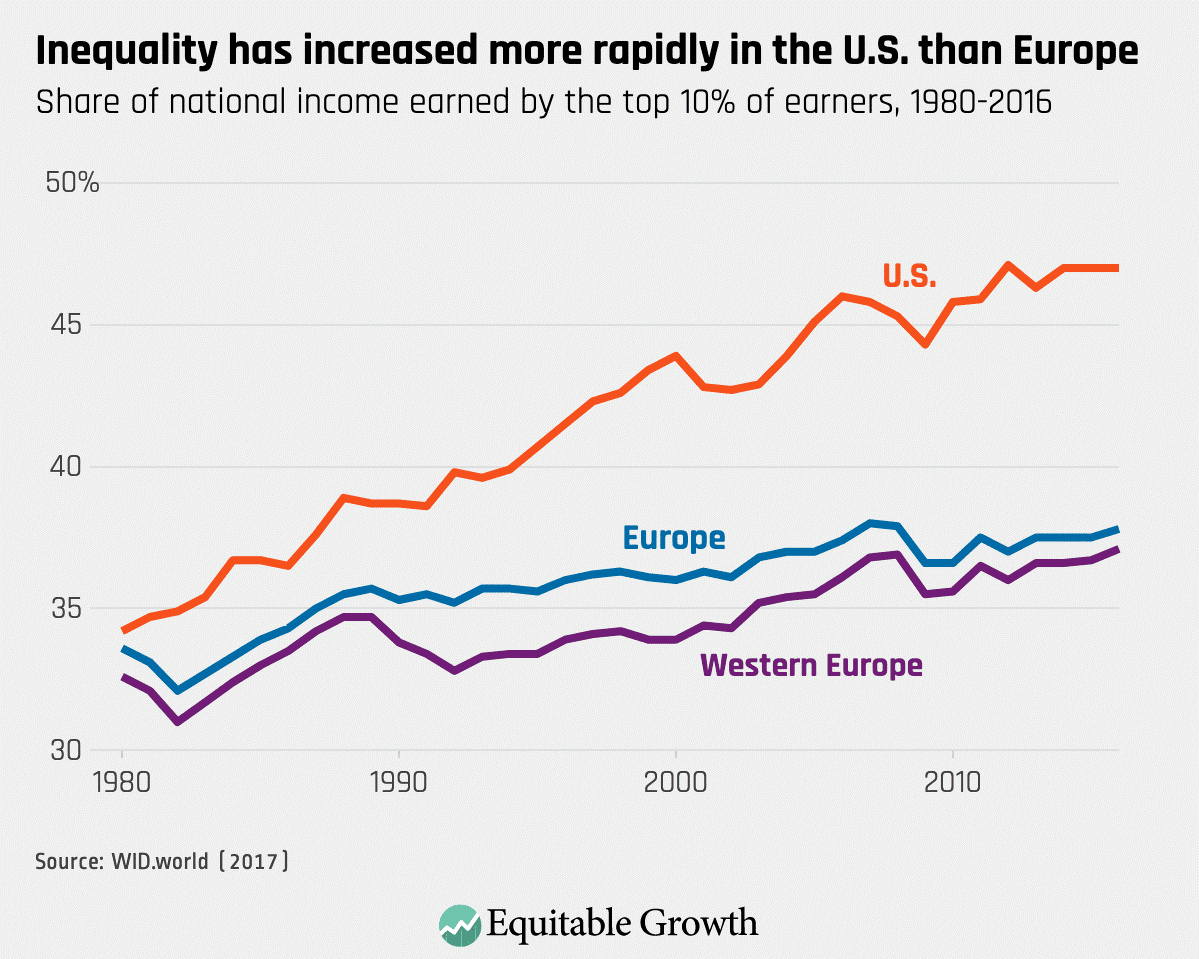
Oligarchism, or the Gilded Age model has supported Trump’s version of bandit capitalism with his illegal tariffs that are creating the worst income inequality in the developed world. Trump is promoting a similar hatred of immigrants as Putin, also non-white ethnic and religious groups, attacks on freedom of speech in universities, and Depression-level tariffs that is isolating America from the “outer world”.

The AP just reported that President Donald Trump says he wants to “permanently pause migration” from poorer nations and is promising to seek to expel millions of immigrants from the United States by revoking their legal status. He is blaming immigrants for problems from crime to housing shortages as part of “social dysfunction” in America and demanding “REVERSE MIGRATION.”

He has also followed Putin’s strategy by weakening foreign alliances such as NATO, and breaking up long held foreign trade alliances, all to centralize his power.

But the MAGA movement itself may be in a late-stage decline, as it is slowly disintegrating from internal divisions, with the resignation of major leaders such as Marjorie Taylor Green, growing disputes over policies including tariffs and the treatment of immigrants.

And Donald Trump, its leader, is showing signs of declining health—with fewer public appearances (that also afflicted former president Biden), irrational outbursts and making sudden policy changes without explanation. The MAGA movement has blindly followed him, believing in totally irrational conspiracies until the conspiracies are debunked or and fade away (just as did the flu and COVID-19 pandemics).

The first Gilded Age was defeated by the election of President Teddy Roosevelt riding on the wave of a progressive movement that uncovered the corruption and concentrated wealth of the time.

Trump doesn’t even attempt to hide his blatant corruption nor his promotion of the disease of Putinism that is attempting to destroy American Democracy. So it will take constant vigilance to identify and combat such a widespread contagion, as we have defeated past diseases of the 'body politic', and bring Americans together once again in common purpose to preserve our democracy.

Harlan Green © 2025

Follow Harlan Green on Twitter: https://twitter.com/HarlanGreen


Thursday, July 23, 2020

Our 'Whac-A-Mole' Recovery

Financial FAQs


Initial jobless claim for the week ending were slightly up at 1,416,000 for the week ending July 18, which means that the reversal of business openings as COVID-19 infection rates soar again have flattened the wrong curve—applications for unemployment insurance are no longer declining.

They are remaining at a level that creates a very prolonged U-shape at the bottom of any curve for GDP growth. It almost looks like an L-shape, in fact, which means stagnant growth if we want to use letters to describe the recovery rate.

It’s becoming more and more like the ‘Whac-A-Mole” game, because when we knock down the infection rate in one state, it pops up in another.

The first Q2 estimate of GDP growth comes out July 30, and GDP could fall as much as minus -20 percent, according to most estimates. But just when we would expect growth to resume in the July-September quarter, COVID-19 infections have surged at an alarming rate.


Former FDA Commissioner Scott Gottlieb told MSNBC that testing demand will only continue to rise heading into the flu season, which means infection rates will plateau rather than fall, as well.
“If you look what’s happening in Southern California right now, Texas, Arizona, Florida — there are indications perhaps that the epidemics in those states are starting to peak. It’s likely to be a long plateau (also, L-shaped?). It’s not going to be like the New York experience, where there was a sharp up but a sharp down — granted, excess mortality, excess death and disease along the way.”
Perhaps the easiest way to understand the relationship between COVID-19 and economic growth, hence jobs, is to look at both letter-shaped curves—as long as they are ‘flattened’; the stagnation in economic growth is mirroring the stagnation in infection rates, the slower the economic recovery.
“But they (New York) came down pretty quickly from their epidemic,” continued Gottlieb. “These are likely to be more extended, but, even when these states start to peak — if you look at the data, it looks like Georgia is getting hot, Ohio is getting hot, Missouri has an epidemic under way, Tennessee, Montana — so even as certain states start to peak and maybe have a reduction, other states are heating up.”
Maybe we should call this the ‘Whac-A-Mole’ recovery after the Japanese game of same name. The faster we can ‘whack’ down the virus outbreaks in individual states and regions with a coordinated plan of testing, contact-tracing and isolation of infections, the faster will be the economic recovery.

Harlan Green © 2020

Follow Harlan Green on Twitter: https://twitter.com/HarlanGreen

Monday, May 11, 2020

Government Was Never the Problem

Popular Economics Weekly


President Reagan’s all-encompassing campaign slogan that “government is the problem” was never the problem. But competent governance has been a problem; in as much as incompetent leaders have been the problem dogging the overall prosperity and sustainable economic growth in our free enterprise capitalist system.

Herbert Hoover was an incompetent leader who was very image conscious (as is our current President). He helped to precipitate the Great Depression by ignoring the changing times—and a stock market crash due to record income inequality of that time. The “roaring twenties” unleashed so much irrational exuberance that the public came to believe anyone could become a Great Gatsby that lived beyond their means if they played the financial markets right.

It took one of our greatest presidents to look behind the mirrors to lift our spirits and win World War II. But then President Roosevelt had already a lifetime of experience running government as an Assistant Navy Secretary in the 1920s, then as the Governor of New York.

Hoover was a mining engineer before entering politics. President Reagan, the ‘Great Communicator’, was also image conscious as a former actor. His rise to power came from being the great communicator for Big Business that wanted to gain more power and globalize its work force; therefore Reagan reduced the power of labor unions to bargain for their rights and instituted trickle-down economics.

We know how that ended. Whole industries were deregulated in the name of free enterprise and allowed to form monopolies. Very little of our national wealth has consequently trickled down to the rest of us; except maybe for the top 10 percent income earners since the end of the Great Recession.

Corporate CEOs now earn more than 300 times the average salary of their employees. AT&T’s CEO is apparently scheduled to retire with a lifetime $274,000 per month pension.

President Reagan became a great leader for the wealth-holders in extracting more wealth for themselves, in other words, but not for those workers that actually produced it. And now we need competent governance more than ever to extract us from this oncoming Great Recession, or Depression, depending on how quickly Americans can return safely to work from the damage done by COVID-19.

Even Treasury Secretary Mnuchin predicts we could reach a Great Depression level unemployment of 25 percent, if we don’t return to work sooner. But studies show that the recession will be prolonged if we return to normal before implementing all the CDC-administrations guidelines of social isolation, testing, and contact tracing until an effective vaccine is created.
“We need to find ways of getting the people who are healthy, who are at lower risk, back to work and then providing the assistance to those who are most at risk, who are going to need to be quarantined or isolated for the foreseeable future,” Minnesota Federal Reserve Governor Kashkari said in a recent CBS Sunday interview.
But such a plan depends on leaders that can lead all Americans, the poor as well as wealthy. Whereas, Jennifer Senior New York Times Op-ed contributor has perhaps described the current administration best: “Vice President Pence may talk about a “whole-of-government approach” to the pandemic, but what we really have is a government of holes,” she said recently.

We will have to slog a long, hard road until we get to either an effective therapy or a vaccine, even with good leadership. It’s hard for me to see a quick, V-shaped recovery because of what we are facing, and now we have so much mixed-messaging coming from Washington that creates even greater uncertainty.

The only competent leadership is in states like New York, California, and Michigan—mostly blue states with Democratic governors. So I ask, why must the response to a pandemic that doesn’t recognize borders be so partisan?

Harlan Green © 2020

Follow Harlan Green on Twitter: https://twitter.com/HarlanGreen

Wednesday, May 6, 2020

The Coming Anxiety Pandemic

Popular Economics Weekly


Americans’ confidence in their future is sinking fast as they decide who to trust during the COVID-19 pandemic. Hence what Nobel laureate economist Robert Shiller has called the rise of its result—an anxiety pandemic.

Dr. Shiller’s predictions on financial behavior include a psychological element. As can be seen from the rising debate over masks, or when and how to open public spaces, the level of anxiety over this pandemic is already sky high.

This, unfortunately, will slow down any sustainable recovery that doesn’t take into account how consumers in particular react to the remedies being proposed to tame COVID-19. A good outcome doesn’t look good at the moment because of the mixed messages coming from on high—the federal government vs. states, Trump’s advisors vs. actual scientific experts.
“It is not good news when two pandemics are at work simultaneously,” Shiller said in a recent Project-Syndicate column. “One can feed the other. Business closures, soaring unemployment, and loss of income fuel financial anxiety, which may, in turn, deter people, desperate for work, from taking adequate precautions against the spread of the disease.”
The University of Michigan’s final April sentiment survey sank to a 7-year low of 71.8. The current conditions component bore the brunt of the deterioration, falling 33 points to 74.3.  Expectations posted a smaller decline, with that index falling just ten points, albeit to a lower level of 70.1.  The record low for the monthly Michigan headline index is 51.7, set 40 years ago, and that could be repeated.

Expectations for the recovery are now running all other the map. The White House has revised its estimate of coronavirus deaths from 100,000 to more than 200,000 back to more than 100,000, while the latest Washington state and Johns Hopkins survey raised it latest estimate from 135,000 to 200,000 deaths, in part because of some states opening too early and thus ignoring White House guidelines of at least two weeks of declining infection rates before lifting stay-in-home orders.

Why so much confusion? Major economists are becoming alarmed at the uncertainty being manifested by the messaging.

Nobel economist Paul Krugman attributes the uncertainty of message to Trump and the Republican Party’s refusal to rely on scientists for advice.
”The disdain for experts, preference for incompetent loyalists and failure to learn from experience are standard operating procedure for the whole modern G.O.P.,” he said recently.
Obama economic advisor Austin Goolsbee said as much on the struggles to provide recovery money:
“The administration has been adamant that it is not required to be fully transparent or accountable in handling these (recovery) funds…They undermine the credibility of the crisis response, which the government will desperately need soon enough.”
Add to this the latest employment numbers. Private payroll data service ADP just predicted a loss of 20 million payroll jobs in its latest private sector survey.

ADP

In other words, we will be seeing much darker days ahead if the American public cannot trust the words of our leaders. They cannot unite if they are listening to different voices. “It’s not about red or blue states,” New York Governor Andrew Cuomo has been saying at his daily press conference. “It’s not about ‘you’ or ‘me’, it’s about ‘we.”

Harlan Green © 2020

Follow Harlan Green on Twitter: https://twitter.com/HarlanGreen

Sunday, May 3, 2020

When Will the Consumer Recover?

Popular Economics Weekly


The key to a robust recovery will depend on how American consumers react to the novel coronavirus pandemic and business shutdown.

We were slipping into a recession, anyway. COVID-19 just sped up the inevitable result of economic mismanagement since the 1990s of U.S. growth, in what is the longest economic expansion since World War II.

Why? Can you imagine what could have been accomplished with $2 trillion if it had been put into upgrading our infrastructure, instead of tax cuts for the wealthiest that corporations used to boost their stock prices? We might have avoided what may become another severe, maybe Great Recession that put some 8 million Americans out of work for years.

Economists had been conjecturing what might have been a mild recession beginning in March, anyway, as corporations (-$13T) and the federal government (-$22T) became so heavily indebted that default rates were already climbing—whether with students and consumers, or corporations falling behind on their debt payments amid declining profits this year.

Sustainable economic growth was no longer possible, in other words. COVID-19 was the nail in the coffin oof this recovery from the Great Recession, when the most basic investments that would prolong future growth had been drastically curtailed by a deadlocked congress through much of the Obama administration—in infrastructure, education, R&D, except healthcare.

First Quarter Real gross domestic product (GDP) decreased at an annual rate of 4.8 percent in the first quarter of 2020, according to the "advance" estimate released by the Bureau of Economic Analysis. In the fourth quarter of 2019, real GDP increased 2.1 percent, said the Commerce Department today.
“The decline in first quarter GDP was, in part, due to the response to the spread of COVID-19, as governments issued "stay-at-home" orders in March, said the BEA. This led to rapid changes in demand, as businesses and schools switched to remote work or canceled operations, and consumers canceled, restricted, or redirected their spending. The full economic effects of the COVID-19 pandemic cannot be quantified in the GDP estimate for the first quarter of 2020 because the impacts are generally embedded in source data and cannot be separately identified.”
It is a stark reminder of what has happened to economic growth since the nationwide shutdown. The question haunting economist will be the shape of the contraction—whether it is V, U, or L shaped—i.e., whether it will be a sharp and short contraction, or something more prolonged.

Any decent economic recovery will depend on whether consumers can weather the COVID-19 pandemic and maintain their jobs, of course. And that will depend on how quickly the pandemic curve flattens and so-called coronavirus ‘clusters’ are identified and isolated.

There is also a curve that measures consumers’ behavior. The moment consumer confidence begins to rise again from the dumps will be the earliest indicator of a revival—when American consumers feel secure enough to buy again, which is 70 percent of economic activity.

The Confidence Board is a survey that measures consumer confidence, and it has been sinking due to the shutdown.  It weakened significantly in April, driven by a severe deterioration in current conditions, said Lynn Franco, Senior Director of Economic Indicators at The Conference Board.

“The 90-point drop in the Present Situation Index, the largest on record, reflects the sharp contraction in economic activity and surge in unemployment claims brought about by the COVID-19 crisis.(But) “Consumers’ short-term expectations for the economy and labor market improved, likely prompted by the possibility that stay-at-home restrictions will loosen soon, along with a re-opening of the economy. However, consumers were less optimistic about their financial prospects and this could have repercussions for spending as the recovery takes hold.”

President Roosevelt most famously said, “The only thing we have to fear is fear itself,” in his first inaugural address at the beginning of the Great Depression.

We could be entering another such depression, though this downturn will probably be much shorter because so sudden. The unexpected 8.7 percent plunge in March retail sales was another sign of its depressing effect on consumer behavior.

I have seen even more pessimistic scenarios. For instance, if the pandemic lasts into 2021, it could reduce the level of global GDP by 8 percent compared with the baseline, says Gita Gopinath, the IMF’s top economist.

New York Governor Cuomo is now echoing President Roosevelt’s call to unite to fight this pandemic with his words, “It’s not about me, it’s about we.” And that means consumers have gain confidence and can unite behind and believe in the science that will ultimately defeat the virus.

 It would be nice if we had more confidence in our federal government, but that's not possible for the moment.  Yet we can support each other, and that’s what 'we' must do to conquer this pandemic.

Harlan Green © 2020

Follow Harlan Green on Twitter: https://twitter.com/HarlanGreen

Friday, April 24, 2020

How Do We Recover From This War—Part II?

Answering the Kennedys’ Call

“Every human society must justify its inequalities: unless reasons for them are found, the whole political and social edifice stands in danger of collapse, says economist Thomas Piketty in his latest book, “Capital and Ideology” (Harvard). “War, recession, religion—every facet of human existence has its roots in inequality.”
It is a sweeping charge but correcting the record income inequality where the top 10 percent income earners now garner 48 percent of national income will be the only way we achieve a sustainable recovery.

This really means do we want perpetual wars and/or recessions, whether it is due to recurring pandemics, or real wars between the Haves and Have nots?

It has been a long time coming, but the COVID-19 pandemic is the major reason we are witnessing the collapse of a united response and record suffering of Americans with infection and death rates far exceeding that of every other country.

The financial aid to date has focused not on the recovery but First Aid to businesses, with no longer term plan in place to restart the larger economy that has in effect come to a dead halt.

We are a society dependent on consumer spending by ordinary Americans that work in the service sector, which is why it’s bad news that another 4.4 million people filed new jobless claims last week to push the total above 26 million since much of the U.S. economy stopped working more than a month and a half ago.

The spike in unemployment has likely pushed the jobless rate to between 15 and 20 percent, economists estimate per MarketWatch’s Jeffry Bartash. “The only other time in American history when unemployment was that high was in the early stages of the Great Depression almost a century ago,” said Bartash.

The flash services PMI that measure service sector activity fell to 27 from 39.8 in March while the manufacturing PMI dropped to 36.9 from 48.5. Any reading below 50 indicates worsening conditions. It is a preliminary read, with a final read at the end of March but doers anyone doubt it will look better then?

The biggest help to ordinary American consumers that would lead to a sustainable recovery would be reformation of the U.S. health care system, since medical bills are the largest source of private bankruptcies. COVID-19 will probably make a universal health care plan inevitable as most Americans now support it; the question is what its final form will be. There are lots of models as all other developed countries have some private-public version of universal health care for all citizens.

Six-in-ten Americans say it is the federal government’s responsibility to make sure all Americans have health care coverage, including 31 percent who support a “single payer” approach to health insurance, according to a 2018 national survey by Pew Research Center.


Another recent PEW study showed how difficult an economic recovery from the COVID-19 pandemic will be. It has already exacerbated the lack of trust in our body politic between red and blue states, the Haves and Have-nots.

Although there are many reasons for the lack of trust, said the PEW study, a key element is ordinary citizens’ belief that elites are placing their own interests above broader shared values.
“The challenge for the existing political order in affluent countries is to show that it can effectively address problems like poverty and precarity (meaning insecure employment or income),” said a recent New Yorker review of Piketty’s new book. “In America, poverty is increasingly concentrated and thus more corrosive, while absolute economic mobility looks to be at a low point.”
COVID-19 is exposing and exploiting the weaknesses of every country that cannot unite behind a common foe. It will make a recovery even more difficult. Need we say more on the distrust engendered by an unlevel economic playing field?

Harlan Green © 2020

Follow Harlan Green on Twitter: https://twitter.com/HarlanGreen

Monday, April 20, 2020

How Do We Recover From This War?

Answering the Kennedys’ Call 


Robert Hormat, a former ambassador and national security advisor in three administrations, has warned in a recent article that we are already fighting a Third World War.
“This is not a confrontation of countries with nuclear and other advanced weapons, but it does involve massive numbers of countries throughout the world in a very different way. They are not fighting one another but, instead, this Third World War is against a small, unseen virus that threatens all nations — regardless of the nature of their governments or their political philosophies — and millions of their people.”
Then why call it a war? The novel coronavirus can only be defeated if we create a worldwide alliance to heal the real enemy—massive poverty levels that could result once the virus is conquered, which will be once science perfects a vaccine.

Whereas worries are growing that COVID-19 will worsen the record income and wealth inequality that already exists in America. So much so, that some studies are predicting a coming poverty epoch rather than episode, one that lasts decades instead of years. We could then have an actual World War III, as the world plunges into deeper recessions.

Studies have shown what happens when nations compete for what they see as scarce resources in a zero-sum, winner-take-all game, rather than the win-win sharing in alliances that have kept us out of major wars since World War II.
“For seven decades after World War II, the notion that global trade enhances security and prosperity prevailed across major economies,” said a recent Sunday NYTimes Op-ed by Peter Goodman, et. al. ”But in many countries—especially the United States—a stark failure by governments to equitably distribute the bounty has undermined faith in trade, giving way to a protectionist mentality in which goods and resources are viewed as zero-sum.”
And that is what we are seeing now, the ascendancy of authoritarian regimes that foment fear and breed chaos to maintain power in countries such as Hungary, where the Prime Minister has taken this opportunity to disband parliament and rule by decree.
Columbia’s Center on Poverty and Social Policy predicts poverty levels will worsen even with a normal recovery.
Our projections demonstrate that if unemployment rates rise to 30 percent, the poverty rate in the United States could increase to 18.9 percent from 15.1 percent (an increase of 21 million people) and would mark the highest recorded rate of poverty since at least 1967. Even if unemployment rates return to normal after the summer, our projections suggest poverty rates that rival those of the Great Recession.”
If we don’t confront this possibility, we might lose the opportunity to create an economic and social response to the pandemic that also lessens the occurrence of future pandemics, and the economic damages they will inevitably cause.

There will be incredible suffering at the bottom of the economic ladder, if we don’t implement policies that lessen the inequality. Without a more equitable distribution of our wealth, we remain a country divided with record suicide, alcohol and drug abuse rates of white, working class males in rust belt America that Princeton economists Anne Case and Angus Deaton, a 2015 Nobel Prize recipient, have documented in Deaths of Despair and the Future of Capitalismtheir best-seller of that title.

Richard Wilkinson and Kate Pickett, sociologists and epidemiologists, in the Spirit Level and other books, have been sounding the need for greater equality.
“More equal societies are marked by strong community life, high levels of trust, a greater willingness to help others and low levels of violence,” they said recently in The Guardian. “As inequality rises, all this goes into reverse. Community life atrophies, people cease to trust each other, and homicide rates are higher.”
The urgency is there in the face of a another looming Great Recession or Depression. The U.S. congress has already agreed to three recovery programs, such as the $2 trillion CARES Act to distribute income directly to individuals, as well as grants and loans to large and small businesses.

It won’t be easy. As Keynesian economist John Kenneth Galbraith once said about the wealth-holders, “...the privileged feel also that their privileges, however egregious they may seem to others, are a solemn, basic, God-given right.”

Americans are really staring at the possibility of a second Great Depression.  The first lasted 1o years from 1929-39 and the outbreak of World War II. The unemployment rate is expected to soar, as more than 20 million members of our 150 million work force will be out of work for a prolonged time due to COVID-19.

It will be the communities and countries that know how to care and share their wealth, rather than isolate and compete with each other for resources and knowledge, that will create a more peaceful future.

Harlan Green © 2020

Follow Harlan Green on Twitter: https://twitter.com/HarlanGreen

Wednesday, April 15, 2020

'It’s Not About Me…"

Popular Economics Weekly


New York Governor Andrew Cuomo is sounding like President Roosevelt when he intones, “It’s not about me, it’s about we.” in his morning COVID-19 press conferences.

President Roosevelt, who was also a New York Governor before becoming president, most famously said, “The only thing we have to fear is fear itself.” in his first inaugural address at the beginning of the Great Depression. Roosevelt was telling us we could conquer a Great Depression if we conquered our fears and came together to fight economic collapse.

We could be entering another such depression, though this downturn will probably be much shorter. The March 8.7 percent plunge in U.S. retail sales is the first major indication of the effects of the business shutdown and shelter-in-place mandates.

The severest part of the oncoming recession could  last only a matter of months if we listen to the health care experts and do the testing and contact tracing required to prevent a further spread of the novel coronavirus in all 50 states.

But the abrupt shutdown of businesses with consumers unable to shop outside of buying necessities will cause a horrific decline in economic growth—on the order of 3 to 6 percent, according to the IMF, depending on how closely Americans follow the stay-at-home recommendations.

And there are more pessimistic scenarios. For instance, if the pandemic lasts into 2021, it could reduce the level of global GDP by 8 percent compared with the baseline, said Gita Gopinath, the IMF’s top economist.

March retail sales sank a breath taking 27 percent at auto dealers and 17 percent at gas stations, two of biggest segments of the retail industry, according to the U.S. Census Bureau. Fewer people are buying cars with millions of Americans losing their jobs and millions more worrying about their next paycheck.
“Americans also drove less as an economic shutdown spread across the country, exacerbating already steep price declines caused by a global price war that has cut the cost of crude oil by two-thirds in just a few months,” said MarketWatch’s Greg Robb, commenting on the retail sales figures.

It may console us a bit that the 1930s were a much different time. The Great Depression only became ‘Great’ because it lasted 10 years over two successive recessions, until the beginning of World War II.  This COVID-19 pandemic doesn’t have to be a repeat if we keep the necessary safeguards in place long enough to prevent successive recurrences of the pandemic.

Governor Cuomo’s words could end up to be as historically significant in helping to inspire Americans, for they signal what Americans must also conquer—the narcissism exemplified by our Narcissist-in-Chief and his political party—in order to work together and ignore political affiliations and ethnic divisions.

It takes a certain kind of selflessness when many are banding together to supplement the shortage of PPE masks and clothing, while states work together to supply each other with medical equipment, like ventilators.

This is while we see President Trump’s fumbling responses to the pandemic that so exemplifies the personality disorder we seem to have been living through as a country. Maybe this worldwide pandemic will bring us out of the Age of Narcissism itself, the ‘me first’ attitude that has been the byword for the fragmentation of the U.S. into blue states and red states, white vs. brown skins, and native-born vs. immigrant divisions that our Narcissist-in-Chief has fomented to enhance his own political power.
President Roosevelt in his 1932 speech also said, “…we now realize as we have never realized before our interdependence on each other; that we can not merely take but we must give as well; that if we are to go forward, we must move as a trained and loyal army willing to sacrifice for the good of a common discipline, because without such discipline no progress is made, no leadership becomes effective.”
Simply put, we can no longer think of just ‘me’, if we want to survive this pandemic and prevent another Great Depression.

Harlan Green © 2020

Follow Harlan Green on Twitter: https://twitter.com/HarlanGreen

Monday, April 13, 2020

Collaboration vs. Confrontation—Who Wins?

Financial FAQs


Is the era of trickle-down economics, of Reagonomics that saw so much wealth redistributed to the top 1 percent, finally ending? Yes, if we want to really ‘cure’ the pandemic decimating the U.S. and world economies, because the pandemic has brought out all the weaknesses of an economic system that has boosted the wealth of the top 10 percent of college-educated and left everyone else to the mercies of globalization and a service economy that barely pays living wages.
“For seven decades after World War II, the notion that global trade enhances security and prosperity prevailed across major economies,” said a recent Sunday NYTimes Op-ed by Peter Goodman, et. al.…”But in many countries—especially the United States—a stark failure by governments to equitably distribute the bounty has undermined faith in trade, giving way to a protectionist mentality in which goods and resources are viewed as zero-sum.”
So it turns out that to defeat the ‘novel’ coronavirus we must create a new sharing society and caring world that prevents the hoarding of the resources to defeat it, which will also preserve our democracy that was built in the seventy years after WWII expressly to prevent another Stalin, Hitler and Emperor Hirohito of Japan.

Americans are now staring at the possibility of another Great Depression because of Covid-19. The unemployment rate is expected to soar, as more than 20 million members of our 150 million work force will be out of work for a prolonged time due to COVID-19.

Unless we find a new capitalist model of sharing—that mitigates the record income disparities of rich and poor last seen before the Great Depression—neither a novel coronavirus solution nor a robust economic recovery is possible.

Compounding the problem of returning to economic health is that the ‘cure’ of a prolonged national lockdown will be worse than the ‘problem’ of returning to economic growth to achieve it.There will be incredible suffering at the bottom rung of the economic latter, and it will be the communities and countries that know how to collaborate rather than compete with each other for resources and knowledge that will recover most quickly.

That is because in the words of Robert Shiller, the 2013 Novel Prize recipient, there is a second, anxiety pandemic that we must live through, and that white, non-college educated males, in particular, are still living through.

Princeton economists Anne Case and Angus Deaton, a 2015 Nobel Prize recipient, say such men are dying of drug overdoses, drink-induced liver disease and suicide — what they call Deaths of Despair and the Future of Capitalismin their best-seller of that title.
“We are feeling the anxiety effects of not one pandemic but two,” said Dr. Shiller in a recent Project-Syndicate article. “First, there is the COVID-19 pandemic, which makes us anxious because we, or people we love, anywhere in the world, might soon become gravely ill and even die. And, second, there is a pandemic of anxiety about the economic consequences of the first.”
And that is what only governments can do—enforce the cooperation needed to defeat the virus and consequent anxiety. It is what President Roosevelt did in the New Deal, because of the necessity of recovering from the Great Depression and a 25 percent unemployment rate.

This is also what a historical study of the other major international pandemic in the past century—the Spanish flu pandemic—has shown. It was those communities and cities that learned the art of cooperation and banded together to help each other, pooled their resources that had the lowest death rates and recovered most quickly.

Like the Spanish flu, this pandemic has no borders that can be shut down, no particular region or ethnic group that is immune. This is a borderless disease that requires a borderless response from every member of humanity to defeat it.
Former Obama UN Ambassador Samantha Power sounded the alarm in a recent NYTimes Op-ed: “…despite Washington’s own bungled domestic response, we nonetheless must immediately begin to build a broad and determined global anti-covid coalition. Such a coalition must create hubs for sharing scientific data in the virus, testing and vaccine efforts, taking advantage of our ability to learn from infection cycles that have peaked earlier…Unless the United States exerts leadership to prevent Covid-19 from raging out of control abroad, the crisis will not end at home.”
So let us jettison the myth of self-reliance that ignores the welfare of others in the name of private ownership of everything, and the government ownership of nothing, except military weaponry.
Richard Geldard, Author of ‘Emerson and the Dream of America: Finding Our Way to a New and Exceptional Agetitled this chapter “The New Self-Reliance”, “…because it is clear now that since Emerson’s first assertions of this theme 140 years ago, we may have assimilated personally and culturally some of the language and substance of his intention, but what remains is the actual work and its realization to a larger sphere.”
By that larger sphere, Geldard means self-discovery must lead to a greater meaning of life—the recognition we all belong to one species, and only as one family of nations can we survive a worldwide pandemic—whether it is COVID-19, or the lingering effects of overwhelming anxiety—by recognizing our inter-connectedness.

Harlan Green © 2020

Follow Harlan Green on Twitter: https://twitter.com/HarlanGreen

Friday, April 10, 2020

Consumer Sentiment in the Dumps

Financial FAQs


Consumer sentiment is plunging.  And why not? With an additional 6.6 million initial unemployment compensation claims this week, it brings the total in just the past three weeks to 16.8 million since the COVID-19 national lockdown of businesses and stay-in-home orders, according to the Labor Department.

It has already pushed the revised March unemployment rate to 5.4 percent, but it could easily top 10 percent in future months if unemployment claims rise to +20 million, say economists. That would top numbers for the Great Recession.

The University of Michigan preliminary April sentiment survey sank to a 7-year low of 71.0. The current conditions component bore the brunt of the deterioration, falling 31 points to 72.4.  Expectations posted a smaller decline, with that index falling just ten points, albeit to a lower level of 70.0.  The record low for the monthly Michigan headline index is 51.7, set 40 years ago, and that could be repeated.

“Consumer sentiment plunged 18.1 Index-points in early April, the largest monthly decline ever recorded,” said surveys chief economist Richard Curtin. “When combined with last month's decline, the two-month drop of 30.0 Index-points was 50% larger than the prior record. Of the two Index components, the Current Conditions Index plunged by 31.3 Index-points, nearly twice the prior record decline of 16.6 points set in October 2008.”
This is serious for a number of reasons. It affects consumer spending, the main engine of economic growth, but we also can’t ignore the psychological effects of such a worldwide pandemic, which Nobel laureate economist Robert Shiller labels a second anxiety pandemic that causes irrational behaviors—both financially and personally—in a prolonged business shutdown.
“It is not good news when two pandemics are at work simultaneously,” he said in a recent Project-Syndicate column. “One can feed the other. Business closures, soaring unemployment, and loss of income fuel financial anxiety, which may, in turn, deter people, desperate for work, from taking adequate precautions against the spread of the disease.”
An anxiety pandemic can cause a deeper recession, as consumers save more and spend less over a longer period as well. Starbucks is already reporting a drop in same-store coffee sales of 60-70 percent, reports MarketWatch. Its only business during the lockdown is takeout or drive-thru pickups, which might become even more prevalent during and after lifting of the lockdown if such changes in consumer behavior become permanent.

Such a jarring economic disruption—even if it doesn’t rise to the level of a Great Depression or Recession—has to cause permanent changes in behavior.

The loss of consumer confidence can be deadly to any recovery. We already know about the mounting Deaths of Despair with the rise in drug addiction, alcoholism, suicides among the long term unemployed, and can only hope this ‘medically induced’ work stoppage isn’t prolonged.

Harlan Green © 2020

Follow Harlan Green on Twitter: https://twitter.com/HarlanGreen

Tuesday, April 7, 2020

When Will It End?

Popular Economics Weekly


When will the pandemic end and recovery begin, is the question asked of every expert and non-expert.  Foremost of the experts is former Federal Reserve Chairman Janet Yellen who in a recent CNBC interview commented on just when the U.S. economy might be taken out of its “medically-induced coma” (to use Paul Krugman’s words), and return to growth.

She and other leading economists are saying it will depend on how quickly and thoroughly the novel coronavirus testing and contact tracking (tracing of infected persons back to their source) is done.

Research from the 1918 Spanish flu pandemic has shown that cities and regions with the strictest lockdown protocols, including longer lockdown periods, had the lowest death rates and strongest recoveries.

Los Angeles and Oakland, California were among cities that had the lowest death rates and strongest recoveries in 1918, whereas heavily industrialized Pittsburgh and Philadelphia didn’t follow as strict guidelines and suffered the most, said the study.

Calculated Risk’s above graph portrays the increase in testings from the COVID Tracking Project today, and just how daunting is the challenge to track all infected persons. The total U.S. percent positive over the last 24 hours was 19 percent (red line).  The US needs enough tests to push the percentage below 5 percent (probably much lower), said Calculated Risks’ Bill McBride.

Today’s results also prove the 1918 Spanish flu outcomes. New York, late in calling for a statewide lockdown, is the center of the pandemic with 131,000 that have tested positive, and 190,000 tested negative as of Monday.

Whereas California with the largest U.S. population was one of the first to call for the statewide lockdown and had 14,336 testing positive and 115,364 testing negative. The difference in mortality is also stark: California had 343 deaths, whereas New York 4,758 deaths as of Monday.

Economists are looking at various recovery scenarios for this worldwide contraction that in no way resembles either the Great Depression or Great Recession. In those cases there was a sharp decline in aggregate demand—the collective spending of consumers, investors, and governments—which induced a collapse in industrial production. The unemployment rate had soared to 25 percent, the highest on record—until now.

But today’s pandemic has halted both production (the business shutdown) and consumption (because of stay-in-home requirement) simultaneously when the economy still was fairly strong, hence the induced coma.

Here is the Conference Board’s graph for the three most common scenarios once again. Professor Yellen said she hopes a Fall scenario (per graph) is most likely; or what is called a ‘U’ shaped recovery that needs at least two quarters to return to actual GDP growth.


But that can’t happen until and unless this novel coronavirus is tamed sufficiently to allow our country to return to work. And that is dependent on a better coordinated response that brings down the infection and death rates within months.

But there is the possibility COVID-19 may return in the upcoming winter, as did the 1918 Spanish flu, and even continue to recur annually if a majority of Americans aren’t vaccinated and immunity isn’t built up in at least 75 percent of all U.S. residents.

If this is like a World War, as some have intimated, then we need a Commander-in-Chief who knows how to lead a coordinated strategy, and not be the “back-up” General.

Harlan Green © 2020

Follow Harlan Green on Twitter: https://twitter.com/HarlanGreen
Friday, April 3, 2020

Housing in the Time of COVID-19

The Mortgage Corner


I reported in January that housing construction was slowly recovering, in part due to the extreme housing shortage and record low interest rates.  Well, rates are even lower today, but purchase applications are now plunging as will new-home sales, whereas I believe refinancing will continue to surge because of even lower mortgage rates.
So it’s good to know the Fed is also supporting the mortgage-backed securities market with its Quantitative Easing from the latest $2 billion bailout bill, since the mortgage market is suffering from the same credit crunch as every other part of the finance industry.
And who wants to buy a home in this lockdown that could last months, anyway?  Reports are coming in that homebuying is also frozen in place, while everyone waits out the pandemic.
Wolf Richter for the financial blog Wolf Street writes, “In states where lockdowns started first – they were kicked off in the San Francisco Bay Area – the year-over-year plunge in purchase-mortgage applications was the most severe:

California: -36.4%
New York: -35.6%
Washington: -32.5%

Purchase mortgage applications plunged another 11 percent after dropping 24 percent from the equivalent week a year ago.  Since the multi-year peak in January, purchase-mortgage applications have plunged by one-third, said the Mortgage Bankers Association (MBA).
Whereas the MBA’s Market Composite Index, a measure of mortgage loan application volume, increased 15.3 percent on a seasonally adjusted basis from one week earlier. This is because refinancing per the Refinance Index increased 26 percent from the previous week and was 168 percent higher than the same week one year ago.
"Mortgage rates and applications continue to experience significant volatility from the economic and financial market uncertainty caused by the coronavirus crisis. After two weeks of sizeable increases, mortgage rates dropped back to the lowest level in MBA's survey, which in turn led to a 25 percent jump in refinance applications," said Joel Kan, MBA's Associate Vice President of Economic and Industry Forecasting.
"The bleaker economic outlook, along with the first wave of realized job losses reported in last week's unemployment claims numbers, likely caused potential homebuyers to pull back," he continued.
There will be an even more severe housing shortage, in other words, with more than 500,000 homeless living on the streets in January.  Homelessness will now increase with the new coronavirus pandemic, as the many without government-insured mortgages (GSEs) from Fannie, Freddie, FHA, and the VA will probably lose their homes, if they cannot keep up their loan payments.  HUD’s Federal Housing and Finance Authority has said the requirement that lenders hold off on foreclosures for one year only applies to the GSEs the FHFA regulates.
 And so the housing shortage will continue.  In many markets, this will mean no open houses (for new-home purchases). Face-to-face closings are to be avoided.
 “But exchanging signed documents through car windows in a parking lot is OK. Under the pressure of social distancing, the doors have opened to modern document technology. In theory, homes can be sold, and mortgages can be written, but it’s now a different ballgame,” says Richter.
The housing shortage will require even greater government support to keep people in their homes for the duration of the novel coronavirus pandemic, and beyond.

Harlan Green © 2020

Follow Harlan Green on Twitter: https://twitter.com/HarlanGreen

Thursday, April 2, 2020

Can We Expect More Than One Pandemic?

Popular Economics Weekly


Yes, says behavioral economist Robert Shiller, who won his Nobel prize for the study of human behavior in financial markets. Why? Financial market investors are panicking because of the COVID-19 pandemic, for starters, which could affect the general public’s financial behavior as well, and so wreak even more damage to crashing financial markets.
“We are feeling the anxiety effects of not one pandemic but two,” said Dr. Shiller in a recent Project-Syndicate article. “First, there is the COVID-19 pandemic, which makes us anxious because we, or people we love, anywhere in the world, might soon become gravely ill and even die. And, second, there is a pandemic of anxiety about the economic consequences of the first.”
The first indication of a looming loss of confidence in the economy and jobs is showing up in consumer sentiment surveys, per Wrightson’s above graph. The University of Michigan’s consumer sentiment index fell by 12 percent in March. 
The Conference Board’s confidence survey fell as well.
“Consumer confidence declined sharply in March due to a deterioration in the short-term outlook,” said Lynn Franco, Senior Director of Economic Indicators at The Conference Board. “The Present Situation Index remained relatively strong, reflective of an economy that was on solid footing, and prior to the recent surge in unemployment claims. However, the intensification of COVID-19 and extreme volatility in the financial markets have increased uncertainty about the outlook for the economy and jobs. March’s decline in confidence is more in line with a severe contraction – rather than a temporary shock – and further declines are sure to follow.
Dr. Shiller knows a lot about human behavior, and the irrational behavior of financial market investors. He wrote about irrational exuberance in his best-seller of that name in 2000, just as the Dot-com bubble burst from overinvestment building the digital infrastructure (remember all those fiber-optic cable networks being laid?).

And the Great Recession was caused by the busted housing bubble—due to home buyers bidding up housing prices to stratospheric heights because of the popular thought that housing prices could never decline—another example of irrational exuberance.

Now what about its opposite—irrational pessimism, or a contagion of fear that stock prices have no visible bottom; or a cure or vaccine will not be found in time to save many companies from bankruptcies, due to a prolongation of social isolation and business shutdowns?
“The effects financial anxiety has on the stock market may be mediated by a phenomenon that psychologist Paul Slovic of the University of Oregon and his colleagues call the “affect heuristic,” said Shiller. “When people are emotionally upset because of a tragic event, they react with fear even in circumstances where there is no reason to fear.”
Dr. Shiller’s research has found that people tend to react to rumor, word-of-mouth, or popular media stories rather than actual facts.

In a joint paper with William Goetzmann and Dasol Kim, for example, Shiller found that people living within 30 miles of the epicenter of a substantial earthquake significantly raise their expectation that there could be a 1929- or 1987-size stock market crash.

Similar fears may have caused the plunge in market asset values today, where interest rates and Treasury bond yields have plunged to historic lows as investors flee to save haven investments in order to preserve their cash.

While many Americans might have faith in upcoming cures for COVID-19, they might not have such faith in a restoration of the economy and jobs. It took years for markets to recover from the Great Recession, even with the Fed holding their rates to almost zero.

I maintain that we will need some form of a New Deal, or even Green New Deal—prolonged market interventions by government in a word—to reassure Americans and the rest of the world that the second, anxiety pandemic can be controlled as well.

Harlan Green © 2020


Follow Harlan Green on Twitter: https://twitter.com/HarlanGreen

Thursday, March 26, 2020

The Coronavirus, A New World War

Popular Economics Weekly


Nobel laureate Paul Krugman has said it might take an alien invasion to bring Americans together again to counter the threat of another economic downturn possibly as great as the Great Depression.

Well, the new threat has arrived—COVID-19, the ‘new’ coronavirus. The only way it will be defeated is if Americans can come together as we once did with the creation of the New Deal under President Roosevelt.

Today, unfortunately, we have a president who would like us to gather together in churches on April 12, Easter Sunday, to celebrate our deliverance from a pandemic that will not end for months, if not years.

He has named himself a “wartime” president yet wants to declare an armistice before the enemy has been vanquished. Why? He said, “We cannot let the cure be worse than the problem.”

But the cure will be worse because the social isolation and business shutdown required to keep the coronavirus pandemic even in check can take months; enough time to bring on a recession or depression.  And in fact it will take another New Deal, or Green New Deal to defeat the economic damage caused by new coronavirus.

Economists such as Nouriel Rubini predict we could be entering a “greater” Great Depression, even with the just-passed $2 trillion aid package that gives extended benefits to all business sectors and the unemployed.
“With the COVID-19 pandemic still spiraling out of control, the best economic outcome that anyone can hope for is a recession deeper than that following the 2008 financial crisis. But given the flailing policy response so far, the chances of a far worse outcome are increasing by the day,” he said in Project-Syndicate.
The Conference Board has predicted in three scenarios just what could be the effects of this worldwide pandemic on the U.S. economy.
  1. May reboot (quick recovery): Assuming a peak in new COVID-19 cases for the US as a whole by mid-April (with some possible variation by region), economic activity may gradually resume beginning in May.
  2. Summertime V-shape (deeper contraction, bigger recovery): The peak in new COVID-19 cases will be higher and delayed until May, creating a larger economic contraction in Q2 but a stronger recovery in Q3 than in the scenario above.
  3. Fall recovery (extended contraction): Managed control of the outbreak helps to flatten the curve of new COVID-19 cases and stretches the economic impact across Q2 and Q3, with growth resuming by September.
The April scenario is President Trump’s wish, but he would have had to act as fast and methodically as China’s Premier Xi Jinping. That can’t happen when Trump has labeled himself as a “wartime” president but has been reluctant to use the War Powers Act that would order private industry to produce what health care workers lack now to protect themselves while treating the mushrooming population of COVID-19 victims.

The other two scenarios are called ‘V’ and ‘U’-shaped recoveries by economists, meaning the recoveries would take longer. The V-shape means a quicker recovery with a more severe downturn, as can be seen in the Conference Board graph. The ‘U’ shape means the downturn and return to growth is more gradual and over a longer term.

All of the Conference Board’s predictions posit a return to GDP growth in the fourth quarter of 2020.
But not so fast, says Dr. Rubini: “While most self-serving commentators have been anticipating a V-shaped downturn – with output falling sharply for one quarter and then rapidly recovering the next – it should now be clear that the COVID-19 crisis is something else entirely. The contraction that is now underway looks to be neither V- nor U- nor L-shaped (a sharp downturn followed by stagnation). Rather, it looks like an I: a vertical line representing financial markets and the real economy plummeting.”
Which scenario will it be? It’s obvious that the just-passed $2 trillion recovery package will keep this economy alive for a few months only. Additional aid will be required, when the initial jobless claims for just this week reported 3.28 million new unemployment claims.

The Great Depression lasted 10 years, and the layoffs have just begun for this downturn. Our best hope is that a new vaccine and treatment regimen is discovered sooner rather than later. But also that Americans are able to band together to create a ‘new’ econo,ic New Deal that protects all Americans.

Harlan Green © 2020

Follow Harlan Green on Twitter: https://twitter.com/HarlanGreen

Tuesday, March 24, 2020

Housing Market Will Survive Coronavirus

The Mortgage Corner


What happens to housing with the COVID-19 pandemic? It had been on the road to recovery with record low interest rates; so much so that single-family housing starts have been soaring since 2019 as more millennials have formed families and entered the housing market.

But can this last? A recent LATimes survey of homebuilders showed that builders were continuing to complete projects and selling them online (sales offices have closed, so no onsite visits allowed for prospective buyers), but not starting new construction or buying new housing sites, until there is more certainty about the U.S. economy that could lose as many as 3 million jobs during the current downturn, according to some forecasts.

HUD estimates there were 1.5 million housing starts in February, The three-month moving average for single-family construction is currently at a post-recession high. Single-family starts increased 6.7 percent to a 1,072,000 seasonally adjusted annual pace in February. Multifamily starts for units in 5+ unit properties declined 17 percent to a 508,000 annualized rate after a strong yet unsustainable start for 2020 for apartment construction.

There’s a reason for the sky-high demand for housing, especially in California. Rents have soared 40 percent from 2000 to 2018, whereas incomes have risen just 8 percent after inflation, according to UC Berkeley’s Turner Center for Housing Innovation.

Surprisingly, housing may be one of those getting the most support from government—in part because there is already a severe housing shortage, which has put governments in charge of what has become the 1.3 million unit shortage of affordable housing for low income buyers in California, alone. California’hopes to mitigate the shortage with last year’s $6 billion housing bill to provide more affordable housing.

The Census Bureau just reported sales of new U.S. single-family homes are up 14.3 percent from last February. And January’s new-home sales were already at a 12-1/2-year high. It is pointing to housing market strength that could help to blunt any hit on the economy from the coronavirus and keep the longest economic expansion in history on track.


Builder confidence in the market for newly-built single-family homes fell just two points to 72 in March, according to the latest National Association of Home Builders/Wells Fargo Housing Market Index (HMI). Sentiment levels have held in a firm range in the low- to mid-70s for the past six months.
“Builder confidence remains solid, although sales expectations for the next six months dropped four points on economic uncertainty stemming from the coronavirus. Interest rates remain low,” says chief economist Robert Dietz, “and a lack of inventory creates market opportunities for single-family builders. However, down payment requirements are a limiting factor amid lower mortgage interest rates.”
But a housing market that remains healthy depends on a recovering economy, and we don’t know when that may be. Estimates run from 6 months to 18 months, if job loss estimates go to the 3 million extreme end of forecasts.

MarketWatch’s Jeffery Bartash reports a “flash” reading by the forecasting firm IHS Markit showed declines in its composite activity indexes. The manufacturing index slipped to 49.2 from 50.7, when anything below a reading of 50 indicates contraction. The flash service index sank to 39.1 in March from 49.4, marking the lowest level recorded since similar data became available in October 2009, IHS said.
“Although exports have suffered, most manufacturers continue to make necessary items, especially consumer goods for Americans stuck in their homes. Some large companies are even shifting production to help make critical medical equipment that’s in short supply,” said Bartash.
Why? Interest rates are plunging to new lows as investors rush to safe-haven bonds, driving down conforming 30-year fixed interest rates to as low as 3 percent.

This also caused refinance applications to surge more than 50 percent in a recent week, according to the Mortgage Bankers Association.

The housing market is in a holding pattern, in other words, with government aid a big factor, including directives not to evict renters behind in rent, or foreclose on homeowners behind in their payments for government-insured mortgages.

Harlan Green © 2020

Follow Harlan Green on Twitter: https://twitter.com/HarlanGreen

Friday, March 20, 2020

Why Do We Need a (new) New Deal?

Financial FAQs 


COVID-19 has finally done it. The new bi-partisan legislation working through congress that apportions money to the people and businesses that really need it—working (salaried) folk and small businesses with less access to credit—tell us why we are finally returning to an era when government was the solution (not the problem) to a more level playing field that distributed the products of work more equitably.

This is urgent not just because of the coronavirus pandemic. There will be little work as we have known it in coming decades for ordinary Americans, because of the onrushing ‘gig’ economy that will ultimately replace people in large segments of the economy with machines and more intelligent software.

Is this legislation a harbinger of a (new) New Deal?

It is taking more than a Great Recession that caused temporary pain to the one percent to return to bipartisan deal-making. Their profits came roaring back after it ended, thanks to the $700 TARP bank-Wall Street bailout and no prosecutions of the miscreants that caused it.

Such deal-making during the Great Depression was possible because we had a president and administration that understood when government should step in to soften adversity.

Government only works when there is a national consensus, in other words, such as when the unemployment rate reached 25 percent during the 1930s, there was no work to be had, and policymakers saw no other alternative.

What has triggered the sudden political consensus that has even Republican Senator Leader Mitch McConnell becoming a patriot, and now says, “this is the time for us to work together,” is the fact that the bottom seems to have fallen out of the economy. Treasury Secretary Steve Mnuchin is predicting as much as a 20 percent unemployment rate if congress doesn’t act quickly on the proposed legislation.

There are a lot of reasons for the Great Depression that plenty of economists have taken the time to explain, but not here. Just accept the fact that the private sector no longer wanted to spend, because consumers and private businesses had run out of money to buy and there was none to borrow—except from our government that creates the money, of course.

The Roosevelt administration went heavily in debt by lending to everyone that needed it—up to 120 percent of GDP, of what we produced—so that workers were hired directly by government to build our modern infrastructure, develop the Internet, build schools, and modern technologies that sent us to the moon.

Private industry couldn’t or wouldn’t do it then, as they aren’t doing it now. Treasury Secretary Mnuchin is negotiating with House Speaker Pelosi to inject as much as $1.5 Trillion into sectors that have suffered the most during the most recent recovery from the Great Recession.

What is needed? Mnuchin and Pelosi are proposing to give “most adults” $1,000 (earning less than $150,000 for a couple, maybe?) and every child $500. Aside from the money sent to families, the White House is asking for hundreds of billions of dollars to bail out the airline and other industries that have mostly been shut down as the nation to slow down the spread of COVID-19, extend unemployment insurance and boost Medicare spending due to the illnesses resulting from the new coronavirus.
MarketWatch’s Jeffery Bartash says “The short-term outlook is grim, though. A JP Morgan analyst estimated the economy could shrink by as much as 14 percent on an annualized basis in the second quarter. Such a decline — the most alarming on Wall Street — would be the biggest in modern times, even surpassing the worst of the 2007-2009 Great Recession.
It could take us back to the 1930s and Great Depression, in other words. The economy did come roaring back then; thanks in part to World War Two, unfortunately. Today there is even a better reason to put government back into the growth equation, to build in more of the safeguards that protect people and banks from the worst excesses like Dot-com or housing bubbles.

What will happen to all those less-skilled workers replaced by robots in the gigabite economy?

Books, such as Professor James Livingston’s No More Work, Why Fill Employment Is a Bad Idea, are telling us we have to think of work in new ways, as we research how to build a better economy and social safety net for those freed from the need to work to produce the things and services in the new gig economy.

Rather than having to produce the necessities anymore via work as we have known it—robots and Artificial Intelligence will be doing those jobs—people will then be able to find more creative ways to fulfill their need to have a meaningful life.

Harlan Green © 2020

Follow Harlan Green on Twitter: https://twitter.com/HarlanGreen