Showing posts with label New Deal. Show all posts

Thursday, November 13, 2025

U.S. Economy Is Freezing!

 Popular Economics Weekly

“…while the economy is growing thanks to AI spending, it’s a K-shaped expansion: People who were already affluent are becoming more so, but the less well-off are under severe pressure. For example, there are clear signs that middle-to-low income consumers are struggling: car loan and credit card delinquencies are rising, and grocers report that shoppers are buying cheaper varieties of food. At the same time, the affluent are spending freely: the top 10% of the income distribution now accounts for nearly half of all consumer spending.Paul Krugman

PBS.org

This was the wrong season for President Trump’s Republicans to freeze Democrats out of the just passed continuing resolution or demolish the East Wing. We already have a record fall freeze hitting the Midwest and southern states.

Americans already feeling the freeze is also a good way to describe the Democrats landslide victories in the November elections. The record government shutdown put the U.S. economy on pause, but in fact much of the damage was already done, says Nobel Laureat Paul Krugman, just as Trump seemed oblivious to the timing of the damage being done to the White House,.

Republicans had been losing in the popularity polls this year because they chose to ignore the signs. So they believed that flying blind by keeping the federal government closed without official economic data on employment and inflation was the better option than knowing the truth.

But there are other data to fill the government void in data collecting that affect how consumers behave. The ADP, for instance, a private sector payment provider said private-sector employers shed an average of 11,250 jobs a week in the four weeks ending Oct. 25.

This hit the “middle-to-low income” consumers particularly hard that Krugman is talking about. What about inflation?

Ordinary grocery prices are climbing, forcing consumers to shop for “cheaper varieties of food.” Grocery prices have risen 18.2 percent since January 2022, making a $100 grocery bill approximately $118 today, per CBS News.

And President Trump is flailing in his attempt to mask the damage his tariff war is causing. Overall consumer inflation is stuck at 3 percent in large part because of the tariffs, so he wants to offer $2,000 rebates to consumers while the Fed is cutting interest rates. This would cost more than the import taxes he has already collected, enlarging the federal debt that has ballooned from his Big Beautiful Bill tax cuts.

And his proposed cuts to legal immigration from the longer term, historical average of one million to 7500 annually, will continue to shrink the workforce, even the number of H-1B work visas for highly qualified workers that are badly needed in the tech sector.

All of this will continue to damage economic growth at a time when worldwide economic growth is being affected by the chaos Trump has generated in tearing up existing foreign trade agreements.

No economy can tolerate such uncertain weather over the longer term. Hence investment decisions remain frozen while consumers find shelter for the coming economic winter. How severe will it be?

Harlan Green © 2025

Follow Harlan Green on Twitter: https://twitter.com/HarlanGreen

Monday, November 3, 2025

Are We Flying Blind?

 Popular Economics Weekly

"The United States economy is like a poker game where the chips have become concentrated in fewer and fewer hands, and where the other fellows can stay in the game only by borrowing. When their credit runs out the game will stop." Marriner Eccles


wallpaperaccess.com

The famous above quote by Roosevelt’s Federal Reserve Chairman, Marriner Eccles on what he believed caused the Great Depression is a warning that the U.S. economy is now flying blind during this government shutdown.

Eccles should know. He guided Federal Reserve policy during the Great Depression that implemented the New Deal.

Economic downturns occur when consumers are tapped out and begin to borrow more than they spend. It is the reason that retail sales and consumer confidence surveys are important signs of whether consumers will continue to shop, or drop, as the saying goes.

And given the economic chaos being sown by the Trump administration during what looks like a record government shutdown, we don’t have any official data being released on when it might happen and what it will look like. So we are flying blind.

There are past recessions that economists look at; the Dot-com bubble that burst in 2001 from over investment in fiber optics that didn’t pan out immediately because it took years for the Internet to be adopted. Now there is over-investment in AI that could follow the same path as the so-called Dot-com recession.

And the Great Depression was largely due to the Herbert Hoover administration allowing tariff rates to rise to unacceptable levels that choked off foreign trade on which many countries, including America, relied on.

There was also the too easy credit conditions of the “Roaring Twenties” that weren’t regulated yet, which allowed the American public to borrow and invest in the stock market for the first time. The October 1929 “Black Friday” market crash followed that precipitated the Great Depression.

So we can take our pick: Trump’s too high tariffs, or too little market regulation allowing shadow lending markets (or junk bonds) to flourish outside of regulated lending channels might cause the next downturn.

Trump’s newest Federal Reserve pick, and former chief economic advisor, Stephen Miran, is even sounding the alarm in calling for larger Federal Reserve rate cuts.

“If you keep policy this tight for a long period of time, then you run the risk that monetary policy itself is inducing a recession,” Miran said in a recent interview cited by the NYTimes.

Another danger sign is The Institute for Supply Management’s (ISM) latest report that American manufacturers contracted for the eighth month in a row with no end in sight because of the Trump administration tariffs, reports MarketWatch, which cited several anecdotes in the ISM Manufacturing report.

“Business continues to be severely depressed. Profits are down and extreme taxes (tariffs) are being shouldered by all companies in our space,” said one executive at a maker of transportation equipment.

“Steel tariffs are killing us,” another manufacturer told ISM.

“The tariffs are still causing issues with imported goods into the U.S.,” an executive at a chemical maker said. “The inflation issues continue.”

The closely followed manufacturing index slipped to 48.7% in October from 49.1% in the prior month, the Institute for Supply Management said Monday. Any number below 50% signals contraction.

I’ve already reported that consumers are feeling less confident in the University of Michigan Sentiment survey.

“Consumers continue to express frustration over the persistence of high prices, with 44% spontaneously mentioning that high prices are eroding their personal finances, the highest reading in a year. Interviews this month highlight the fact that consumers feel pressure both from the prospect of higher inflation as well as the risk of weaker labor markets,said Survey Director Joanne Hsu

The real danger is that we are gleaning all these signs from industry reports outside of the ‘official’ government reports on employment, inflation, and consumer spending just before the holidays.

So, the U.S. economy is flying blind without the usual flight data that tells us where we are headed. Is there a soft landing, or crash landing ahead?

Harlan Green © 2025

Follow Harlan Green on Twitter: https://twitter.com/HarlanGreen

Tuesday, October 21, 2025

When Will It End?

 Popular Economics Weekly

The government shutdown is a good time to look at how Donald Trump’s economy is doing in his second term, if we want any peace and prosperity at all once the real costs of the tariff war and his tax cuts become obvious.

“With yet another round of tariffs taking effect this week — this time on cabinets and other furniture, timber and lumber — the White House insists that its policies are about “fairness” and “reciprocity.” The evidence now tells a different story of higher prices for Americans, lower margins for U.S. firms, collapsing exports in flagship industries, investment paralysis and mounting risks of an economic slowdown.” Veronique de Rugy LATimes

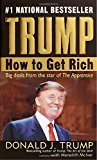
Part of the problem is that Trump has always needed a lot of help to survive his storied temper tantrums, multiple business failures and bankruptcies. He learned how to play a successful businessman that he was not in “The Apprentice” TV show that he touted in his early book, Trump: How to Get Rich.

Huffington Post

With his luxury buildings, award-winning golf courses, high-stakes casinos, and glamorous beauty pageants, Donald J. Trump is one of a kind in American business. Every day, he lives the American dream. Now he shows you how it’s done, in this rollicking, inspirational, and illuminating behind-the-scenes story of invaluable lessons and rich rewards,” said Amazon’s “How To Get Rich” book blurb.

His “American Dream” was never meant for the many, just the few. Many Americans are not living the dream that Trump promised because raising the tariffs to Great Depression levels in the name of “fairness and reciprocity” is raising the prices for all Americans, and slowing economic growth.

The LATimes reported a recent KPMG survey finds that “60% of businesses reported decreased overseas sales” in the first six months of Trump’s tariffs. KPMG finds that nearly half of American companies have already raised prices because of tariffs; two-thirds have passed at least part of those costs on to shoppers; and nearly 40% have paused hiring, with a third cutting jobs.

CEOs overwhelmingly expect tariffs to weigh on business for years. Goldman Sachs estimates U.S. consumers are now footing 55% of the total tariff bill, while foreign exporters bear only a sliver of the costs.

“So much for draining the swamp. All of this explains the wild uncertainty business leaders have experienced in recent months. Retailers are now bracing for 100% tariffs on Chinese goods scheduled for Nov. 1, right before the holiday rush. Some firms have scurried to ship early, but even a few days’ delay at sea could blow up their margins. With deadlines set, delayed and often re-announced with each news conference, companies can’t plan or invest,” said de Rugy.

The NYTimes cites a Moody’s Analytics report that the top 10 percent of U.S. households now account for nearly half of all domestic spending. And the Federal Reserve just reported that consumers’ revolving credit shrank (-5.5%) for the first time since 2020 during the COVID-19 pandemic.

Republicans and Donald Trump have put on quite a show to convince Americans that they are better off by cutting government jobs and benefits in the name of a better use their benefits.

But it’s turning out “How To Get Rich” is a scheme to benefit the very few whose taxes have been reduced. The shutdown will end when enough Americans realize it is being paid for with higher inflation and taxes (tariffs) for the many.

Harlan Green © 2025

Follow Harlan Green on Twitter: https://twitter.com/HarlanGreen

Thursday, October 16, 2025

Whose Inflation Is It?

Financial FAQs

“Still, despite multiple offsetting drivers, the tariff shock is further dimming already lackluster growth prospects. We expect a slowdown in the second half of this year, with only a partial recovery in 2026, and, compared to last October’s projections, inflation is expected to be persistently higher. Even in the United States, growth is weaker and inflation higher than we projected last year—hallmarks of a negative supply shock.” IMF Global Economic Outlook 2025

FREDcpi

No one wants to admit who is responsible for the sharp rise in consumer prices since April 2. Democrats and the Biden administration had worked to bring the Consumer Price Index (CPI) portrayed in the above graph down to 2.3% from its high of 9% that occurred in 2023 from the COVID-19 pandemic.

But it began to rise again in this April at the same time that Trump announced retaliatory tariffs on the rest of the world. Republicans say the inflation was caused by Biden’s massive government spending programs that sped up the COVID-19 pandemic recovery.

Most economists maintain that the inflation spike was caused in large part because of the supply shortages during the pandemic. President Trump’s tariff war on imports from the rest of the world that he announced on April 2 exacerbated the product shortages as exporters scrambled to find cheaper supply routes to avoid the higher tariffs.

Add to this the looming worker shortage from tighter immigration policies that are shrinking the foreign-born labor supply—another negative supply shock on top of that from tariffs—that is beginning to affect labor productivity.

The International Monetary Fund (IMF) in its latest Global Economic Outlook report says both the tariffs and a looming worker shortage are “hallmarks of a negative supply shock” that will eventually slow down world economic growth.

China is now restricting the export of rare earth minerals, for which Trump has threatened to add an additional 100 percent tariff on China’s exports to US. And the government shutdown will only make things worse in closing down the statistical departments that tell us where we are and might be in six months.

“Overall, despite a steady first half, the outlook remains fragile, and risks remain tilted to the downside,” reports the IMF. “The main risk is that tariffs may increase further from renewed and unresolved trade tensions, which, coupled with supply chain disruptions, could lower global output by 0.3 percent next year. Apart from this, four simmering downside risks are especially worrying.”

What are they? U.S. financial markets are overinvested in AI with little to show for it, while AI is already causing white-collar layoffs, exacerbating the job losses incurred by the ICE roundup of undocumented immigrants.

And we have a record $39 trillion federal debt weighing on the credit markets that is competing with the private capital needed for new plants and equipment investment.

The Trump administration is vainly attempting to equate the record tariff rates, now at Great Depression levels, let us not forget, with some promised domestic industrial revival.

And Trump wants an easy money Federal Reserve to help grease its wheels. How do you think interest rates and inflation will respond to easier credit? The same way inflation and interest rates responded to Joe Biden’s New, New Deal?

We can’t borrow our way out of this debt mess with tax cuts for the wealthiest.

Harlan Green © 2025

Follow Harlan Green on Twitter: https://twitter.com/HarlanGreen


Tuesday, October 14, 2025

A Different Federal Reserve

Financial FAQs

“Warsh would chart a new course that de-emphasizes the inflationary impact of factors such as supply chains and tariffs in favor of a views of inflation driven by government spending and the money supply.” Barron’s

Graph: Last Tech Age

The Federal Reserve is about to go through a regime change. Though President Trump initially appointed current Fed Chairman Jerome Powell, he hasn’t been happy with Powell’s leadership in his second presidential term because he wants easier credit conditions.

The Fed Governors had been resisting Trump’s pressure to lower interest rates until their rate cut in September, fearing the inflationary effects of Trump’s ongoing tariff wars, which have been boosting inflation.

So what does President Trump want to do? Move the goalposts, so that higher inflation is no longer the danger that the current Fed Board of Governors believe in maintaining their 2% inflation target. This is despite Trump’s promise to bring down inflation on “Day One”.

And Kevin Warsh, a bright young conservative economist who was just interviewed in Barron’s might be the next Fed President to do just that, along with other recently-appointed Fed Governors that are more Trump-friendly.

Do what? The fact that he is the husband of an Estee Lauder heiress worth $billions should tell us all we need to know. He, or someone as conservative, is being groomed as the new Fed Chair to protect great wealth.

A summary of Warsh interview in Barron’s above quote tells us how. He is following the Republican line that most inflation comes from government overspending, for which government must print money. The cure is to cut the size of government in every way rather than raise taxes to pay for it.

So they would blame President Biden and Chairman Powell for the skyrocketing inflation that happened when the Fed printed $2.9 trillion in less than three months, bought roughly $543 billion worth of debt in a week, and reduced interest rates to nearly zero, according to Powell’s Britannica bio.

It caused the Fed’s extensive intervention in the U.S. economy after the COVID-19 crisis of 2020 because consumer inflation then skyrocketed to a high of 9% so that the Fed began to raise short term rates to bring down inflation.

Republicans then made it a cause celebre even though it’s now obvious Trump never intended to bring down inflation on “Day One” or any other day.

In fact, most of the government largesse (with Republicans’ bipartisan support) was meant to be spent on the pandemic recovery and modernization of the American economy, which would take at least a decade. And it would largely pay for itself over the longer term with higher economic growth.

The result was that the American economy recovered from the pandemic faster than the rest of the world and resulted in several quarters of +3% GDP growth.

But now Trump has raised tariffs back to 1934 levels that prevailed during the Great Depression without congressional approval, per Nobel Laureate Paul Krugman, which is raising the cost of everything for ordinary Americans.

And it was a major cause of the Great Depression because it restricted the flow of goods and services from other countries that were badly needed to recover from the Great Depression, just as the COVID-19 pandemic shut down the whole world’s economy and resulted in a brief recession.

So we know what a new Federal Reserve regime will look like with Kevin Warsh, or another such conservative at its helm. Less interference in private sector business, which means combatting inflation isn’t its only priority (therefore allowing higher inflation). And a smaller government paid for with lower taxes and fewer regulations, which means slashing federal government jobs as DOGE is still doing and cutting more public services that benefit all Americans.

It is following a frighteningly similar trajectory to the economy of the 1930s, the last time tariffs were this high, that led to the Great Depression. The question will be how long Americans will tolerate the corruption and favor-seeking that goes with protecting the wealthy, before looking for another Roosevelt and a New Deal.

Harlan Green © 2025

Follow Harlan Green on Twitter: https://twitter.com/HarlanGreen


Wednesday, March 12, 2025

What Happened to Animal Spirits?

 Financial FAQs

"We're seeing a strong divergence between animal spirits of the stock market and what we're actually seeing unfold from businesses and business leaders," a White House official told reporters Monday, CNBC reported, adding, "The latter is obviously more meaningful than the former on what's in store for the economy in the medium to long term."

The White House admission that the rise in “animal spirits” over Trump’s reelection had waned and that business leaders with were guiding the financial markets lower “in the medium to long term” because of Trump’s on again, off again tariff announcements, thereby doubting the possibility that the Republican campaign promises of lower taxes and fewer regulations will be of much benefit.

Such market enthusiasm couldn’t last when it became obvious that Trump’s contradictory messaging and his lack of knowledge about foreign trade could lead to tariff wars, which in the words of a growing number of business leaders, showed “he doesn't know what he is doing”.

Consumers are beginning to catch on as well, which is resulting in the decline of their own animal spirits. The above chart of declining consumer confidence as measured by the University of Michigan last peaked in January 2024 with Donald Trump’s re-election, when consumers believed in Trump’s promises to bring down inflation on “Day 1” of his second term.

But that hasn’t yet happened, and consumers are not happy about it. In the words of the U. of Michigan’s survey director Joanne Hsu:

“Consumer sentiment fell for the second straight month, dropping about 5% to reach its lowest reading since July 2024. This decrease was pervasive, with Republicans, Independents, and Democrats all posting sentiment declines from January, along with consumers across age and wealth groups.”

The term, “Animal Spirits”, was first coined during the Great Depression to explain why consumer behaved the way they did. Roosevelt’s New Deal that gave workers more benefits, such as the 8-hour work day, workers compensation, and social security, was created to boost their spirits and led to the recovery from the Great Depression.

Nobel Laureates George Akerlof and Robert Shiller even wrote a book about it that was entitled, Animal Spirits; How Human Psychology Drives the Economy and Why It Matters for Global Capitalism.

It was an important book because it refuted the long-held theory that so-called free market, or Laissez Faire, economic theories create more sustained growth with fewer regulations.

But Republicans’ touting of the benefits of sless regulated markets was a giant lie that led to President Reagan’s trickle-down economic theories, because with little or no oversight or regulations of their trades, the wealthiest always prospered the most because they had the time and money to research the markets.

Therefore conservatives that favored less regulation had to create a myth that some of that wealth was bound to “trickle down” to Main Street and benefit ordinary wage-earners to placate voters.

Professors Akerlof and Shiller showed it was a lie. Most consumers in fact do not have the resources or knowledge to adequately research what they buy or invest in. They discovered in their research that most consumers act on hearsay, or word of mouth, in making purchase decisions, including when to buy real estate.

And because consumers didn’t or wouldn’t do the necessary historical research in early 2000 when buying homes, but believed that housing prices could never decline, they pushed up housing prices so much that builders built too many homes, which was a major reason for the busted housing bubble and resultant Great Recession.

History has shown that the tax cuts and market regulations the Trump campaign promised will make the wealthy even wealthier, and 80 percent of Americans that are wage earners, less wealthy.

It’s the real reason Trump has unleashed “Chainsaw Musk”—to terrorize government workers into quitting their jobs and destroy as much as possible of Roosevelt’s New Deal, and the laws and regulations that have benefited most Americans since then.

Harlan Green © 2025

Follow Harlan Green on Twitter: https://twitter.com/HarlanGreen

Thursday, February 27, 2025

Who Is Going to Mars?

 Answering Kennedy’s Call

“There is nobody in this country who got rich on their own. Nobody. You built a factory out there - good for you. But I want to be clear. You moved your goods to market on roads the rest of us paid for. You hired workers the rest of us paid to educate. You were safe in your factory because of police forces and fire forces that the rest of us paid for. You didn't have to worry that marauding bands would come and seize everything at your factory...

Now look. You built a factory and it turned into something terrific or a great idea - God bless! Keep a hunk of it. But part of the underlying social contract is you take a hunk of that and pay forward for the next kid who comes along.” Senator Elizabeth Warren

Both Elon Musk and Jeff Bezos are in a race to land on the moon, and maybe beyond. Their enthusiasm is infectious, but also dangerous. It doesn’t prepare America for future generations. They are also propagating a giant lie that Oligarchs have used to hoard their wealth—that they are exceptionally beings who deserve special treatment (such as tax cuts paid with borrowed money).

It appears in Bezos stated rationale for taking the Washington Post’s editorial page to the right and not allowing opposing viewpoints.

“I am of America and for America, and proud to be so,” Mr. Bezos said. “Our country did not get here by being typical. And a big part of America’s success has been freedom in the economic realm and everywhere else. Freedom is ethical — it minimizes coercion — and practical; it drives creativity, invention and prosperity.”

The problem with conservatives’ ethos of personal freedom and free markets is that it doesn’t build forward or think of future generations. It doesn’t provide seed money for future growth as the Biden administration provided in its infrastructure, Inflation Reduction, and CHIPs Act bills that the Trump administration is trying to dismantle—further enlarging the budget deficit.

Musk’s and Republicans’ short-sightedness also applies to the dismantling of USAID. By working to improve the lives of the poorest in the world—mainly Africans today—it lifts up the ability of future generations to provide for themselves. It also prevents future worldwide pandemics, such as Bird Flu, and even the deadly Eboli-like virus now ravaging in war-torn Congo.

The result of Republicans’ belief in free markets has been five recessions since 1980 that were mainly caused by Republicans’ insistence of tax cuts without paying for them. It has led to record budget deficits and a record federal debt of $32 trillion.

The lie they continually foment, in other words, is based on pure greed. The future be damned, let’s go to the moon and beyond! Senator Elizabeth Warren, a former Harvard Law Professor, knows something about this. She has studied the poor, and written a book with her daughter on their dilemma, The Two-Income Trap: Why Middle-Class Parents Are (Still) Going Broke.

“In this exposé, says the Amazon summation, Elizabeth Warren and Amelia Warren Tyagi show that modern middle-class families are increasingly trapped by the grinding reality of flat wages and rising costs. Warren and Tyagi reveal how a ferocious bidding war for housing and education has silently engulfed America's suburbs, driving up the cost of keeping families in the middle class, and placing unprecedented pressure on hard-working families.”

And just as big a lie is that creativity, invention, and prosperity isn’t already happening with the AI revolution that has fueled the Big Seven U.S. companies, such as Microsoft, Facebook, to new market highs.

And much of it is being fueled by the Biden administration’s New, New Deal that has already created tens of thousands of manufacturing jobs, and kept US fully employed.

The Donald Trump, Elon Musk and Jeff Bezos Oligarchs of the world are not particularly exceptional people, just greedier in wanting to add to their wealth by making ordinary Americans less healthy, wealthy, and safe.

If Musk and Bezos want to end up on Mars, They can use their own massive wealth, not ours!

Harlan Green © 2025

Follow Harlan Green on Twitter: https://twitter.com/HarlanGreen

Friday, February 7, 2025

Was It a Good Employment Report??

 Popular Economics Weekly

Total nonfarm payroll employment rose by 143,000 in January, and the unemployment rate edged down to 4.0 percent, the U.S. Bureau of Labor Statistics reported today. Job gains occurred in health care, retail trade, and social assistance. Employment declined in the mining, quarrying, and oil and gas extraction industry.

The economy added just 143,000 new jobs in January as massive California wildfires and a cold snap in much of the country acted as a drag on hiring. The details of the employment report point to a robust labor market that gained strength at the end of 2024. The economy averaged 233,000 new jobs from November to January, well above the 180,000

One economist determined that most of the new jobs were in the service sector, as I’ve been reporting, hence favored immigrants who tend to fill the lowest paying jobs that native Americans don’t want. 

But it’s not just more wildfires we will have to worry about this year as world temperatures rise, but more hurricanes and floods, such as hit the east coast.

So what does that mean for 2025? It depends on what tariffs are enacted, what the Federal Reserve does with interest rates, and how many immigrants are deported, for starters. Then we still must worry about the effects of continuing wars and more climate disasters.

It would be nice if consumers continued to shop, in spite of what’s happening, which means they remain somewhat optimistic about their future.

However, the latest University of Michigan sentiment survey was a downer. Its gauge of consumer sentiment fell to 67.8 in a preliminary February reading, down from 71.1 in the prior month and the lowest reading since July.

Inflation was still their biggest worry. Americans’ expectations for overall inflation over the next year jumped to 4.3% in February from 3.3% in the prior month, according to the survey. That’s the highest level since November 2023, and it is only the fifth time in 14 years that there has been a one-month gain of that size.

It’s really how American consumers react that determines economic growth and hence the job market. The Los Angeles fires were one reason the January nonfarm payroll total was low. The recent hurricanes also punched another hole in employment. Forbes Magazine reported last October that Hurricane Helene was expected to cause a reduction of 40,000 to 50,000 payroll jobs with Hurricane Milton adding to the total.

And I won’t even try to predict when the Gaza and Ukraine conflicts will be resolved, or what it might do to the world economy with energy prices soaring.

The bottom line seems to be that the U.S. economy is escaping much of the damage because the Fed has been proactive over the inflation danger, and has been saying it wants to lower interest rates further to support the job market.

President Biden’s massive new, New Deal investments with the infrastructure, CHIPS, climate change, and healthcare legislation will be benefiting U.S. economic growth for years to come.

Economists are also estimating that the 3 million new immigrants added to the workforce over the past two years has made such growth possible. Will that continue if our worker shortage worsens?

“The flood of fresh labor eased a worker shortage after the pandemic and allowed the economy to add more jobs without driving up wages and inflation. Normally, rapid job creation tends to exacerbate inflation,” says MarketWatch’s Jeffry Bartash.

Did the influx of new immigrants hurt American workers? Economist Wendy Edelberg, director of the Hamilton Project at the Brookings Institution, estimates the labor force is about 172.6 million strong, instead of a reported 169.6 million at the end of 2024. Edelberg said the newly revised figures should show employment for native-born workers also rose in 2024.

So what are consumers to do? It is really too early to know what the 2025 job market will look like.

Harlan Green © 2025

Follow Harlan Green on Twitter: https://twitter.com/HarlanGreen

Tuesday, January 14, 2025

No Art of the Deal

 Answering Kennedy’s Call

'Insanity is doing the same thing over and over again and expecting different results,’ Einstein?

Huffington Post

Insane behavior could describe the actions that President-elect Trump is promising to implement after January 20. He has said he wants to deport millions of immigrants, impose higher tariffs on many countries (especially China), cut taxes, expand cryptocurrency, reduce wind powered energy, and “Drill baby Drill” for more fossil fuels.

These policies would damage economic growth at the least, maybe even cause a recession, with no change in the outcome, as happened in his first term. Trump has nominated his cabinet picks on the basis of extreme loyalty to him rather than their abilities, which added to Trump’s own limited intelligence will not be able to implement his goals. 

Wanting to restrict wind and solar power investment will increase global warming, for starters, which has caused the LA fires.

So why do he and his supporters keep expecting different results? Because it would enhance his wealth and that of his main financial supporters led by Elon Musk, the world’s wealthiest Oligarch.

And, even partially implemented would keep red states from receiving the benefits blue states receive, such as higher minimum wages, better healthcare, laws protecting labor unions and collective bargaining by reducing regulations and cutting taxes that benefit their ruling elites.

His supporters still believe in a win-lose world that ceased to exist when the industrial revolution and new technologies began to produce more than could be consumed. It took the progressive movement that culminated in Roosevelt’s New Deal to prove that there were enough resources to benefit working Americans as well as the holders of the wealth created by workers.

His supporters have been willing to give up such benefits in return for cultural values they still believe in such as banning new immigrants and most abortions, as well as censoring libraries in red states so that their followers only have access to propaganda instead of facts.

President-Elect Trump and Republicans’ singular success in his first term has been another tax cut that has continued the transfer of wealth from working Americans to the wealthiest since the Reagan administration.

He may fail in implementing most of his agenda, but we can be sure he will be as vindictive in seeking revenge in Trump 2.0 for his perceived slights as in his first term, now that he is a convicted felon.

Fortune Magazine reported in 2016 on candidate Trump’s negotiating tactics: “The legal actions provide clues to the leadership style the billionaire businessman would bring to bear as commander in chief. He sometimes responds to even small disputes with overwhelming legal force. He doesn’t hesitate to deploy his wealth and legal firepower against adversaries with limited resources, such as homeowners. He sometimes refuses to pay real estate brokers, lawyers and other vendors.”

And what about reducing the size of government that Republicans promise will reduce graft and waste? Who does it really help?

"Pretty much the whole Republican Party--and, if we're going to be honest, too many Democrats--talked about the evils of 'big government' and called for deregulation," Senator Elizabeth Warren said in 2016 at a AFL-CIO National Summit on Raising Wages. "It sounded good, but it was really about tying the hands of regulators and turning loose big banks and giant international corporations to do whatever they wanted to do."

"These families are working harder than ever, but they can't get ahead. Opportunity is slipping away. Many feel like the game is rigged against them--and they are right," Warren said. "The game is rigged against them.... The world has changed beneath the feet of America's working families."

Many did listen to this warning and elected President Biden because of it. But the message was lost because many Americans thought Democrats were no longer up to the task of protecting them.

Yet we already know who Republicans intend to protect.

Harlan Green © 2025

Follow Harlan Green on Twitter: https://twitter.com/HarlanGreen

Wednesday, December 11, 2024

Why Another Gilded Age?

 Financial FAQs

"I remember '29 very well ... the drugged and happy faces of people who built paper fortunes on stocks they couldn't possibly have paid for. ... In our little town bank presidents and track workers rushed to pay phones to call brokers. Everyone was a broker, more or less. At lunch hour, store clerks and stenographers munched sandwiches while they watched stock boards and calculated their pyramiding fortunes. Their eyes had the look you see around a roulette wheel ...but despondency, not prosperity was just around the corner.”—John Steinbeck

This is what happened in the 1920s that led to the Great Depression and Roosevelt’s New Deal.

Marriner Eccles, Rooselvelt’s New Deal Federal Reserve Chairman was one of the first to characterize the cause of the Great Depression, when he said in testimony before congress that it was the record income inequality of that time:

The United States economy is like a poker game where the chips have become concentrated in fewer and fewer hands, and where the other fellows can stay in the game only by borrowing. When their credit runs out the game will stop—Mariner Eccles, Federal Reserve Chairman during the Great Depression.”

The current Gilded Age began in earnest with the election of President Ronald Reagan and his credo that “government is the problem.” It has resulted in the huge transfer of wealth from workers to the owners of capital—as much as $1trillion, according to some economists—by cutting their taxes and deregulation of whole industries.

Laws were also enacted to weaken labor unions and monoply laws were not enforced so that corporations could transfer their factories overseas where labor was cheaper, basically gutting America’s middle class industrial base that has been the cause of so much anger and despair of America’s workers.

The U.S. is in 106th place of the 149 countries in income inequality as ranked by the CIA’s World Factbook; with a Gini inequality index of developing countries like Peru and Cameroon. Whereas Finland and the Scandinavian countries are at the top of equality rankings, Germany and France are 12th and 20th, respectively, as I’ve highlighted in past columns. The higher the index, the greater the gap between wealthy and poorer citizens of a country’s population.

It’s had to believe that we have reached that point once again, a time when today’s wealthiest exceed the wealth of the Vanderbilt’s, Rockefeller’s and Morgan’s tenfold that built those massive 5th Avenue mansions at the turn of the 20th Century to show off their wealth, before there was an income tax or Federal Reserve.

It was spawned by an economy fueled by oil, railroads, and a banking system that enabled so many consumers to go into debt, until the stock market crashed on Black Friday of 1929.

History is repeating itself with $Trillioners instead of the $Billionaires (and $Millionaires) of that era because of Sillicon Valley and the Internet that have made an Elon Musk, now the richest person in the world.

But it is at the cost of a greater concentration of wealth than ever. Today’s moguls duplicate the 20th Century robber barons in wanting to share as little of their wealth as possible—instead, they use their wealth to elect conservative policies that lower tax rates and cut government benefits that protect the other 99 percent of Americans.

Is President Biden’s Bidenomics’s spending of $trillions to modernize America’s industrial base, infrastructure, and mitigate disasters caused by a changing climate the last gasp of Roosevelt’s New Deal programs that protect ordinary Americans?

The incoming Trump administration has tasked the richest man in the world to set up a “Department of Government Efficiency”, they say, to downsize or eliminate some of those programs to eliminate waste, but really to shrink or eliminate the health and safety programs; such as the US Environmental Protection Agency, Health and Education department, and even shrink the IRS once again to enable the $Trillionaires to better evade taxes.

Trump is clear about his intentions. He intends to pick a cabinet based on their loyalty to him as he did in his first term. Many have no qualifications; most were lobbyists with blatant conflicts of interest which resulted in many having to resign when their corruption was uncovered.

Such dysfunctional behavoir was a reason President Trump lost the House of Represetatives to Nancy Pelosi and the Democrats in 2018, and Trump lost to President Biden in 2020.

Sadly, the incoming all-Republican congress will probably give him the tax cuts, inflationary tariffs and the mass deportation of undocumented immigrants that will also be a repeat of Trump’s first term.

And many in the working class who voted for him will suffer again, and as they have throughout Trump’s working life; thanks in large part to the Elon Musk’s of the world that don’t believe in sharing their wealth.

Harlan Green © 2024

Follow Harlan Green on Twitter: https://twitter.com/HarlanGreen
Monday, November 11, 2024

No Art of the Deal

 ANSWERING KENNEDY’S CALL

After all, it is mathematically impossible to cut taxes for corporations and billionaires, sustain basic programs like defense and Social Security, and lower the deficit simultaneously:” Nobel Laureate Joseph Stiglitz.

Historians will puzzle over the results of our latest presidential election for decades. A majority of Americans have just voted in a con artist and sexual predator for the second time who has failed in most of his business ventures and left investors holding the tab.

One conclusion will be that identity politics won, after all. Enough white women chose Donald Trump over the East-Asian/Black Kamala Harris who advocated more rights for women, while enough Hispanic and Black males put their faith in a misogynist who has sexually assaulted women.

Identity politics has moved much of the Democratic Party to the left with the Black Lives Matter and LBDGQ movements. But most exit polls said it was the economy that decided the vote—everything became too expensive after COVID-19.

My conclusion is that it has taken very special presidents to lead such a diverse populace that will defend the constitution. In modern times it was Roosevelt creating the New Deal to bring America out of the Great Depression and win World War 2.

But post-WWII generations eventually forgot what the New Deal had accomplished and voted in a Republican Party that by 1980 had begun to drain the federal budget by continually cutting taxes for their wealthy supporters creating massive federal deficits; Reagan (-$400 billion), GW Bush (-$1 trillion), and Donald Trump (-$5 trillion).

Democratic presidents wanted government programs that benefited more Americans, so President Clinton created actual budget surpluses in his last four years, President Obama brought America out of the Great Recession spawned by the GW Bush administration’s fiscal mismanagement and created Obamacare.

President Biden created a second New, New Deal to bail us out of the COVID-19 pandemic and begin to pay down Trump’s massive deficits, thereby creating the fastest economic recovery from the pandemic among developed countries. It is designed to protect Americans from climate change and modernize the economy for decades to come.

And now a peculiar American form of amnesia has set in once again; a majority of Americans have voted in Donald Trump for a repeat performance with the hope he will cure their economic malaise, even with his record of multiple bankruptcies. And Republicans will surely run up massive deficits in their quest to siphon even more of the federal budget as they did in his first term.

His stated policies will also endanger us because Trump not only wants to weaken America militarily by weakening military alliances such as NATO, but weaken environment protections as well by gutting the U.S. Environmental Protection Agency once again for the fossil fuel industry in the face of more frequent and greater hurricanes, tornadoes, and wildfires.

We know this because one of Trump’s first actions when elected in 2017 was to leave the Paris Accord. He has called climate change a hoax.

We currently have the second highest carbon emissions per capita after China, but would become the highest emitter among developed countries if Republicans succeed in rolling back 30 years of environmental regulation.

Why did he leave the Paris Accord I in 2017 when it is a voluntary accord to reduce carbon emissions? It was to help the coal industry, where Commerce Secretary Wilbur Ross is heavily invested in coal and has already made $millions with the 50 percent bump up in coal stocks since Trump took office.

And the Koch Brothers $millions that were spent to elect Tea Party candidates paid off as Trump initiated an immediate review of President Obama/s Clean Power Plan, which restricts greenhouse gas emissions at coal-fired power plants.

Surrounded by coal miners at the time, the president described the Paris Accord as a “crushing attack” on workers and vowed to nix “job-killing regulations. “We’re going to have safety, we’re going to have clean water, we’re going to have clean air, but so many [regulations] are unnecessary, so many are job-killing,” he said.

And Trump now says he wants Elon Musk to become the efficiency czar, which will cause even more economic damage, since Musk has promised to cut as much as $2 trillion “of waste”—the amount of the current budget deficit—from the next federal budget, at the same time that Trump and Republicans have promised more tax cuts for their wealthy supporters.

But in the words of Nobel Laureate Joseph Stiglitz in Project-Syndicate,After all, it is mathematically impossible to cut taxes for corporations and billionaires, sustain basic programs like defense and Social Security, and lower the deficit simultaneously.”

The next four years of Republican rule will be a measure of how much many Americans have fooled themselves once again, as they did in 2017. For a second time Americans will have the chance to learn from that experience, especially the young who may not have been of voting age, to see how Trump and the Republicans mishandled the economy that mostly profited themselves.

And it will be another bitter lesson for our women, minorities, the poor and even many in the middle class, as well as those that will suffer from the effects of a warming atmosphere.

Harlan Green © 2024

Follow Harlan Green on Twitter: https://twitter.com/HarlanGreen

Monday, November 4, 2024

The Harris Presidency

 ANSWERING KENNEDY’S CALL

What would it mean for Kamala Harris to be our first female President? It’s a historical turning point that affirms women have finally attained equal political rights to men, and American citizens s confirm they want greater personal rights—to expanded health care, abortion, and environment protection that has been held back by a dominant male culture until now.

Should Harris and the Democrats win it would also signal the end of the Second Gilded Age, an age characterized by record income inequality that began in earnest when President Ronald Reagan’s supply-side economic policies began to transfer massive amounts of wealth from working adults (small business and salaried) to the owners of wealth (capital assets) in the 1980s.

It would give President-Elect Harris a mandate to begin to reverse the tax structures that were the major cause of the record inequality by raising corporate and personal tax rates back to Reagan-era levels, and thus begin to reduce the massive budget deficits that resulted.

President Reagan and Republicans cut the maximum personal tax rate for the wealthiest from 50 percent to 28 percent and reduced corporate taxes from 34 to 28 percent to initiate what economists call the Second Gilded Age, which resulted in our first massive deficit--$400 billion—by the end of his administration.

The massive deficits continued to grow under successive Republican administration tax cuts that resulted in curtailing our social safety net. GW Bush’s deficit grew to $1 trillion, and the Trump administration’s to more than $5 trillion.

A Harris Presidency could also mean an end to our ongoing civil war, a war originally between the industrial North vs. slave-holding South that never really ended with General Lee’s surrender at the Appomattox Courthouse in 1865.

Though slave-owning was banned with the Emancipation Proclamation and Abraham Lincoln’s north winning the civil war, southern states found ways to continue to impoverish former slaves by terrorizing them under Jim Crow laws that even the civil rights acts of the 1960s couldn’t completely eradicate.

Today’s manifestation of our civil war has morphed into a battle between red states controlled by Republicans with a white male/Oligarchic culture continuing to impoverish their own citizens vs. more prosperous blue states with a dominant female/minority majority.

Kamala Harris has promised in her platform and speeches that she would be a President for all Americans. That would mean policies benefiting red state citizens as well, such as raising the federal minimum wage from $7.25 that was last raised in 2009.

Currently 14 states haven’t raised their minimum wage since then, or at all. Five red states have not even adopted a state minimum wage: Alabama, Louisiana, Mississippi, South Carolina and Tennessee. Two states, Georgia and Wyoming, have a minimum wage below $7.25 per hour, so that in all seven of these states, the federal minimum wage guarantees at least a $7.25 per hour wage. New Hampshire and Pennsylvania are the only blue states still with the federal minimum wage.

There are other ways the red states have kept workers’ salaries lower that Harris should remedy: lobby to repeal so-called right-to-work laws in 26 states that say members of a union aren’t required to pay union dues even though they enjoy the benefits. The result is that membership in unions has declined, along with workers’ rights to bargain collectively. And those 26 states now have a Supreme Court majority to enforce those state laws.

Democratic majorities have always found ways to benefit more Americans since the New Deal. President Obama was able to pass Obamacare, or the Affordable Care Act, the first universal health insurance that meant insurance companies couldn’t ban clients with existing conditions.

Climate change has become a clear and present danger causing more hurricanes, floods, wildfires threatening Americans that Donald Trump has called a hoax, and would rather “Drill baby drill” for more fossil fuels.

The Biden administration has already begun work on reducing global warming with the Inflation Reduction Act subsidizing alternative energy sources that don’t increase global warming but that the Republican Party vociferously opposes to protect its fossil fuel constituents.

We have lived through a Gilded Age before. The first Gilded Age came in the late 1800s, when the Industrial Revolution made Robber Barons such as railroad titan Cornelius Vanderbilt, banking titan JP Morgan, and Standard Oil’s John D Rockefeller the richest men in their time.

It ended with the death of President William McKinley in 1901, and revelations of rampant corruption followed by Teddy Roosevelt’s Progressive Party and Franklin Roosevelt’s New Deal that created government institutions such as the Federal Reserve to regulate banking and social security, as well as empowering labor unions to level the playing field for workers.

If elected, Kamala Harris and Democrats should be able to continue the new New Deal legislation that President Biden’s Bidenomics’ policies have initiated with more than $5 trillion invested in keeping America great and creating 16 million jobs that have benefited all of our citizens, not just Oligarchs such an Elon Musk.

Musk warned, after all, what would happen if he became the efficiency czar Trump says he wants him to be and cuts $2 trillion from the $6.75 trillion federal budget. There would be no money left for social programs, the military, and drastic cuts in social security and Medicare benefits, say economists such as Nobel Laureate Paul Krugman.

It would also mean Husband Doug Emhoff would become the first, First Gentleman, which wouldn’t diminish the historical record of great First Ladies. Men should take heart that women have equaled men in all ways, not just in intelligence and courage, but have shown a heart large enough to create a United States, not a Divided States of America, when Kamala Harris becomes our new President.

Harlan Green © 2024

Follow Harlan Green on Twitter: https://twitter.com/HarlanGreen

Tuesday, October 29, 2024

Why Does Bidenomics Work?

 Financial FAQs

Elon Musk told a cheering crowd at Sunday’s MAGA rally in New York that if Donald Trump puts him in charge of government efficiency, as planned, he can cut “at least $2 trillion” from the current federal budget.

This would cause an almost immediate recession. Such is the blindness of the world’s richest Oligarch, who has made no bones about his dislike of government regulations and taxes in the way of his dream of reaching Mars.

MarketWatch’s Brent Arends tells us what would happen. “Either Donald Trump and Elon Musk are planning to cut 85% of all spending on highways, disaster relief, federal bank-deposit insurance and the departments of Agriculture, Homeland Security and Justice; close all U.S. embassies; and abolish the Environmental Protection Agency, the Small Business Administration, NASA and nearly all welfare, income-support, food-stamp and childhood-nutrition programs.”

“Or, they are planning on cutting Social Security and Medicare — despite Donald Trump’s protests to the contrary,” said Arends

That is what is behind Republicans’ dislike of Democrats economic policies since President Biden’s election that has created more than 15 million jobs and 3 percent economic growth as we recovered from the COVID-19 pandemic.

It takes government investments to spur private investments; not just in new technologies (the CHIPS Act) but healthcare and the environment (Inflation Reduction Act), and in modernizing our infrastructure (Infrastructure Act) so that Americans will feel more secure from hurricanes and illness and therefore produce more.

That is the real definition of efficiency, not cutting benefits so that Billionaires can keep more of their wealth.

President Obama was the first to turn the tide on President Reagan’s 40- years of trickle-down economic policies after the Great Recession (2008-09) that had transferred $50 trillion in wealth from working Americans to the owners of capital living off their corporate profits, according to a RAND Corporation working paper.

He did it by creating Obamacare (the Affordable Care Act) and making government the protector of people, not of profits, as President Reagan had done. This resulted in economic growth accelerating to 4 percent during the Obama years continuing into Trump’s years, even with a Republican-engineered shutdown. It was the longest economic recovery since World War Two, and the reason Trump could brag that growth has been so good just prior to COVID-19.

The economy unfortunately shrank -7.5 percent in 2020 as businesses shut down due to the pandemic. It roared back to life in the second quarter of 2021 as congress acted quickly to put money back into Americans’ pockets.

In fact, the U.S. economy will continue to provide most of the thrust for global growth through the balance of this year and in 2025, led by robust consumer spending “that has held up through a wrenching bout of inflation and the high interest rates used to tame it,” the International Monetary Fund said on Tuesday.

Such economic policies requiring government investments have worked before. It was Roosevelt’s New Deal that employed more than 8 million people, built 650,00 miles of roads, 120,000 bridges, created the minimum age, 8-hour workdays and started up social security.

Now more than half of the living US recipients of the Nobel Prize for economics signed a letter that called Vice President Kamala Harris’ economic agenda “vastly superior” to the plans laid out by former President Donald Trump.

“While each of us has different views on the particulars of various economic policies, we believe that, overall, Harris’ economic agenda will improve our nation’s health, investment, sustainability, resilience, employment opportunities, and fairness and be vastly superior to the counterproductive economic agenda of Donald Trump,” the economists write in the letter obtained by CNN.

Top this off consumers are now joining the Harris economic bandwagon. The Conference Board’s latest consumer confidence survey surged to 108.7 in October from a revised 99.2 reading in the prior month,the Conference Board said Tuesday.  This is highest level of confidence since January.

“Consumer confidence recorded the strongest monthly gain since March 2021, but still did not break free of the narrow range that has prevailed over the past two years,” said Dana M. Peterson, Chief Economist at The Conference Board. “In October’s reading, all five components of the Index improved. Consumers’ assessments of current business conditions turned positive. Views on the current availability of jobs rebounded after several months of weakness, potentially reflecting better labor market data.” 

Is Bidenomics finally catching on with ordinary Americans, not just economists?

Harlan Green © 2024

Follow Harlan Green on Twitter: https://twitter.com/HarlanGreen

Friday, December 30, 2022

Here's To A Happier New Year!

 Popular Economics Weekly

AtlantaGDPNow

Will US economic growth fall off a cliff in January? Maybe not. The Atlanta Federal Reserves’ GDPNow estimate has just raised their estimate of fourth quarter GDP growth to 3.7 percent and it was right on predicting higher Q3 growth.

Yet the pundit chorus is growing for at least two quarters of negative growth in 2023 due to the Fed’s hawkish stance on inflation.

The GDPNow model estimate for real GDP growth (seasonally adjusted annual rate) in the fourth quarter of 2022 is 3.7 percent on December 23, up from 2.7 percent on December 20,” said the GDPNow report.

After recent releases from the US Census Bureau, the US Bureau of Economic Analysis, and the National Association of Realtors, the nowcasts of fourth-quarter real personal consumption expenditures growth and fourth-quarter real gross private domestic investment growth increased from 3.4 percent and -0.2 percent, respectively, to 3.6 percent and 3.8 percent, respectively.

One reliable indicator, the Conference Board’s Index of leading Indicators (LEI), is predicting a recession next year.

Ataman Ozyildirim, Senior Director, Economics, at The Conference Board said: “Despite the current resilience of the labor market—as revealed by the US CEI in November—and consumer confidence improving in December, the US LEI suggests the Federal Reserve’s monetary tightening cycle is curtailing aspects of economic activity, especially housing. As a result, we project a US recession is likely to start around the beginning of 2023 and last through mid-year.”

But the jury is still out among economists on what may happen next year. Harvard economist Jeffery Frankel, a leading growth expert, believes it’s not so inevitable in a Project Syndicate column.

“Clearly, the reports that the United States was in recession during the first half of the year were premature, especially given how tight the US labor market is. And, despite the confidence with which many again proclaim the inevitability of a downturn, the chances of one in the coming year are well below 100%.”

In fact, there are too many ‘known unknowns’ to paraphrase Bush Defense Secretary Donald Rumsfeld.

Let’s take the unemployment situation for starters. The unemployment rate is still at post-World War II lows, and 4.9 million jobs were created in 12 months, the fastest jobs recovery since the 1990 “Desert Storm” recession (black line in graph).

Calculated Risk

Why are we still at fill employment? There were record levels of government spending, to not only to aid the pandemic recovery but modernize our infrastructure, upgrade our healthcare system and the environment. This is New Deal level spending such as brought us out of the Great Depression.

The $1 trillion infrastructure bill is the largest in history. And it was needed since we had just survived the Great Recession that almost repeated the Great Depression as well as a pandemic that killed more than one million Americans.

Government came to the rescue then, as it is doing now.

The increase in real GDP for the third quarter reflected increases in exports, consumer spending, nonresidential fixed investment, state and local government spending, and federal government spending, per the BEA.

It will do so again, and we have record corporate profits—still the highest as a percentage of GDP ever.

“Consumer confidence bounced back in December, reversing consecutive declines in October and November to reach its highest level since April 2022,” said Lynn Franco, Senior Director of Economic Indicators at The Conference Board. “The Present Situation and Expectations Indexes improved due to consumers’ more favorable view regarding the economy and jobs. Inflation expectations retreated in December to their lowest level since September 2021, with recent declines in gas prices a major impetus. Vacation intentions improved but plans to purchase homes and big-ticket appliances cooled further. “

Consumers, at least, haven’t got the message that a recession is immanent. With so much government support, maybe they see a New Deal in the New Year.

Harlan Green © 2022

Follow Harlan Green on Twitter: https://twitter.com/HarlanGreen

Friday, December 16, 2022

Don't Blame the Workers

Popular Economics Weekly

FREDavghourlywages

What are we to make of Senator Elizabeth Warren’s reaction to Fed Chair Powell’s recent remarks on inflation?

“He’s pushing hard to get more people fired because he thinks that is one way to help bring down inflation,” Sen. Elizabeth Warren (D-Mass.) told HuffPost on Wednesday. “But it’s sure painful for the families who lose their jobs.”

But that is not the only way to bring down inflation, because a tight labor market is not even the major cause of current inflation.

Powell had said in his press conference after last Wednesday’s FOMC meeting, “Really there’s an imbalance in the labor market between supply and demand so that part of it, which is the biggest part, is likely to take a substantial period to get down.”

The Fed Governors didn’t like the November unemployment report that 263,000 nonfarm payroll jobs were created, and average hourly wages are still rising 5.1 percent annually. Jobs were created in every job category except retail/trade and transportation/warehousing.

In other words, the Fed Governors have been saying they won’t know if inflation has been conquered without higher unemployment, which means the unemployment rate rising to 5 or 6 percent from its current 3.7 percent.

Why? Because they believe rising wages are a major cause of inflation since wages and salaries make up two-thirds of product costs. But that doesn’t mean they make up two-thirds of the current inflationary surge.

The Fed has made workers’ wages the culprit of high inflation since the wage-price spiral of the 1970s, when an overly accommodative Federal Reserve kept the credit spigot open to combat soaring oil prices. Unions had bargaining power then and it resulted in wages keeping up with inflation.

So top business leaders formed the Business Roundtable and began spending Big Bucks on lobbying and campaign contributions to weaken labor unions and introduce legislation that cut taxes, resulting in ‘trickle-down’ economic policies that lowered taxes for the wealthiest while asserting that some of their wealth would trickle down to workers.

It was the beginning of an economic counter-revolution, instituted to counter the influence of Keynesian, New Deal, economics that had prevailed since the Great Depression.

But we know that not much trickled down, in part because newly enacted laws not only restricted unions’ bargaining power but cut social programs as well.

We also know that prices have been rising even faster than production costs since the pandemic in various studies, including one such I reported by Nobel Laureate  Joe Stiglitz that showed corporate profit margins are the highest since 1950, and as a percentage of Gross Domestic Product.

This is while the current 5.1 percent average hourly wage rise of employees doesn’t even match the current annual inflation rate of 7.1 percent. Wages after inflation have been falling 1.9 percent annually since the pandemic, so they now make up a smaller portion of costs.

Wages and household incomes haven’t kept up with inflation since the 1970s. So Big Business did its job of suppressing the incomes of salaried workers during all those years of trickle-down economics.

It was also the beginning of record budget deficits, since Big Business justified the tax cuts by invoking President Reagan’s famous assertion that “deficits don’t matter”.

But deficits matter now because of record spending needed to vanquish COVID and assist the Ukraine in its war with Russia. So this is the wrong time to be penalizing workers and shrinking the American economy into a probable recession.

Harlan Green © 2022

Follow Harlan Green on Twitter: https://twitter.com/HarlanGreen


Wednesday, December 8, 2021

COVID-19 is Making US Richer

Financial FAQs

FREDdisposalbleincome

More Americans are richer, thanks to the COVID-19 pandemic, believe it nor not. The pandemic has spurred congress and the Biden administration to act as if we are coming out of another Great Depression.

The U.S. is growing faster than in other developed countries that haven’t invested as much in the recovery. And those investments are going to Americans that need it the most.

Just since the American Rescue Plan passed in March 2020, 4.3 million more people have found employment. Wages and real disposable income are up, especially for low-wage workers, who are disproportionately women and people of color and who have experienced consistent wage growth since April 2021, say Rose Khattar and Andres Vinelli of the Center For American Progress, a progressive think tank.

It’s the New Deal all over again, but instead of the 1930s and a looming World War Two, congress and the Biden administration have acted to save the U.S. economy from the worst pandemic since the Spanish flu pandemic of 1918.

FREDgdp

“The U.S. is the only leading advanced economy to have exceeded its pre-pandemic levels, according to the Organization for Economic Co-Operation and Development,” say Khattar and Vinelli. “In fact, data from the most recent quarter shows that our real GDP—which is GDP adjusted for inflation—is around 13% larger than the end of the COVID-19 recession.”

It is largely due to Biden’s American Rescue Plan of last March that especially raised the lowest income brackets. Economist Gene Sperling, its White House Coordinator, says such growth not only helps lower-income folk, but children most of all with the child tax credit that alone has halved the child poverty rate.

And don’t forget the $1400 payments sent out to most Americans at a time when the pandemic lockdowns were in full force.

More evidence of the record post-pandemic growth is that service-oriented businesses making up two-thirds of economic activity---such as banks, retailers and drug stores—grew in November at the fastest pace on record, even as companies grappled with major shortages of labor and supplies.

The Institute for Supply Management’s services PMI climbed to 69.1 percent last month from 66.7 percent in October, when 50 percent is break-even growth, marking the biggest increase on record.

In a rarity, all 18 of the service sectors tracked by ISM said they grew in November. The biggest problem is supplying all the services that customers want. Companies can’t find enough people to fill a near-record number of open jobs. They’ve also struggled to obtain badly needed supplies.

“It goes back to the pent-up demand,” said Anthony Nieves, Chair of the Institute for Supply Management® Services Business Survey Committee. “You can look at other tangible things such as mall traffic and online distribution increasing, which are contributing factors to business activity being up. Many people are going back to work, and consumer confidence is up.”

And if the newest Omicron variant proves less deadly, as initial test results are showing, then there’s nothing to hold back consumers and businesses from building America back better than ever.

Harlan Green © 2021

Follow Harlan Green on Twitter: https://twitter.com/HarlanGreen


Tuesday, November 23, 2021

Does America Care Again?

 Financial FAQs

PEW Research

The American Rescue Plan, The Infrastructure Investment and Jobs Act, and the soon to pass Build Back Better Plan show that the American ‘can do’ spirit is alive, the innate generosity and optimism that is so much a part of the American spirit is returning.

Will a revival of that spirit last, in spite of the ongoing pandemic, red vs. blue state civil war, and still record joblessness?

The truest expressions of Americans’ character have come out during past catastrophes, such as the Great Depression and World War Two. And almost 10 years of unparalleled growth followed the horrors of World War One and the 1918 Spanish Flu pandemic. 

The coronavirus pandemic is bringing about a similar transformation of character and culture that was always there but sometimes hidden when times were good.

And record economic growth is following the coronavirus pandemic, with Q1 and Q2 2021 GDP up more than 6 percent, and the fourth quarter possibly growing at the same pace after the third quarter pause due to the Delta variant surge.

Americans are showing that they care for each other with these bills—that lifting children and the poorest out of poverty also lifts themselves. That renewing our roads, bridges, energy grids; and confronting the greatest threat to our future, climate change, will ensure a country that our children can be proud of and prosper in.

It’s obvious that the American Rescue Plan saved many lives and livelihoods, and the Infrastructure bill means caring for the planet as well as each other with its $billions spent on climate change and improving health and sanitation.

It’s less obvious what spending on social infrastructure does. Investing in children, improved healthcare, and paid family leave strengthens families, something both political parties should be for, but conservatives have opposed since FDR’s New Deal.

Who will get most of the good jobs in construction from rebuilding our physical infrastructure? Some 80 percent go to less-then-college-educated workers, says the White House in its initial announcement of the Infrastructure Investment and Jobs Act.

In part because of the recovery money already distributed during the pandemic, median household income has resumed its climb for the first time since 2000, as shown in the above PEW research graph. It had dropped from $70,800 in 2000 to $65,100 after the Great Recession.

In 2018, the median income of U.S. households stood at $74,600. This was 49 percent higher than its level in 1970, when the median income was $50,200. (Incomes are expressed in 2018 dollars.)

The pandemic is bringing about a whole transformation of America that will last because it is bringing Americans together again in common cause, and history shows this brings out the best in us.

Harlan Green © 2021

Follow Harlan Green on Twitter: https://twitter.com/HarlanGreen

Wednesday, June 9, 2021

There Are More Jobs Than Ever!

 Financial FAQs

Calculated Risk

The number of job openings reached a series high of 9.3 million on the last business day of April, the U.S. Bureau of Labor Statistics reported last Tuesday. Hires were little changed at 6.1 million. Total separations increased to 5.8 million. Within separations, the quits rate reached a series high of 2.7 percent while the layoffs and discharges rate decreased to a series low of 1.0 percent.

American workers are finally in a position to pick and choose from what is a record number of job openings. As proof, the number of quits jumped to a new all-time high of 4.0 million, versus 3.6 million last month.  These are voluntary exits from one job to a presumably better job.

This is panicking 25 red state governors into terminating the additional $300 per week in unemployment benefits early, believe it or not. They seem to be afraid that their workers might take the time to shop for a job with better pay and benefits, which anecdotal evidence already indicates.

The blue line in Calculated Risk’s graph tells us that hiring has actually returned to a more normal level, but sudden opening of the economy has orders pouring in for goods and services, which is more demand that can be satisfied at the moment, and this is boosting workers’ wages.

Reuters said “Higher worker mobility undoubtedly contributed to the surge in hourly earnings in the past two employment reports, as employers must not only pay higher wages to attract new workers but may feel more pressure to raise compensation to retain their existing employees.”

There are still too many unvaccinated employees that don’t feel safe returning to work, and most schools are still out or having only partial re-openings for many women to return to work.

Treasury Secretary Janet Yellen also claimed data does not support the argument that increased unemployment benefits are leading to a workforce shortage. She said when they looked at states and sectors where supplemental benefits were high, there weren't lower job finding rates as the argument would suggest, and in fact it was the "exact opposite."

 Equitablegrowth.org

The simple truth is that Republican governors en masse that suppress additional aid for their workers is in keeping with their small government principles. Why else give up $26 billion that will flow to them if they allow their workers to keep the additional benefits?

Sadly, research is showing that this hurts those states, report a number of researchers. A report cited by The Center For Equitable Growth concludes that workers salaries increased as much as five percent when their unemployment benefits were extended to 99 weeks in 2010-11 following the Great Recession.

And as of May’s jobs report released last Friday, the country is still down 7.6 million jobs from before the pandemic, reports The Hill. The May jobs report also indicated that there are 9.3 million people who are officially unemployed — meaning they are actively looking for work and unable to find it. In most industries, the number of jobseekers still exceeds the number of job openings.

We are in a different world with COVID-19 that is killing more than all the world wars, a time  much like the Great Depression and New Deal when a small government ideology makes no sense.

Harlan Green © 2021

Follow Harlan Green on Twitter: https://twitter.com/HarlanGreen