Showing posts with label unemployment rate. Show all posts

Thursday, October 3, 2024

NO MORE INFLATION

 Financial FAQs

The Fed is no longer worrying about inflation, since its preferred inflation gauge, the Personal Consumption Expenditure Index (PCE), recently dropped to a 2.2% inflation rate, close to the 2.0% target rate.

Fed Chairman Powell said recently the Fed is more worried that the job market is faltering, hence the -.50% Fed Funds rate cut last week with at least two more rate cuts in the offing this year. It would cut the Bank Loan Prime Rate to 7.50% that is the basis for most credit card and installment loan rates.

It is still too high for most borrowers, but auto sales have picked up, which is a sign consumers are still buying, that in means that Q3 GDP growth could also match second quarter’s GDP growth of 3.0 percent.

This is remarkable growth, even with the labor market slowdown, and the unemployment rate up to 4.3 percent in a year.

From the same month one year ago, the PCE price index for August increased 2.2 percent. Prices for goods decreased 0.9 percent and prices for services increased 3.7 percent. Food prices increased 1.1 percent and energy prices decreased 5.0 percent. Excluding food and energy, the PCE price index increased 2.7 percent from one year ago.

Job formation is slowing, as the BLS JOLTS report showed 8 million job vacancies, with 5.3 million Hires and 5.0 million Separations in the month. The 300,000 difference approximates the net number of new hires in August.

We are still fully employed, in other words, but the number of vacancies posted by employers looking for workers has come down considerably from the 12 million job opening high during the pandemic and lockdowns.

(That’s why it’s called the Job Openings and Labor Turnover Survey.)

Consumer spending is the biggest ‘tell’ on future employment and economic growth and it barely dropped to 2.7 percent annual growth from 2.8 percent in August. The savings rate is still a healthy 4.8 percent, close to historical norms, so the surge in vehicle sales is no fluke.

Business activity in the service sector is soaring (mainly dining out, travel, leisure activities), but the manufacturing sector is still contracting.

“In September, the Services PMI® registered 54.9 percent, 3.4 percentage points higher than August’s figure of 51.5 percent. The reading in September marked the seventh time the composite index has been in expansion territory this year,” said survey Director Sterve Miller.

Whereas, manufacturing “Demand remains subdued, as companies showed an unwillingness to invest in capital and inventory due to federal monetary policy — which the U.S. Federal Reserve addressed by the time of this report — and election uncertainty,” said survey director Timothy Fiore.

I see good growth this year. More reductions in interest rates will certainly boost manufacturing, and consumers are still saving, another sign they aren’t tapped out. 

But with one political party wanting to cut back on Bidenomics, the policies spurring much of the growth, economic and job growth next year could depend on which party wins the White House in November.

Harlan Green © 2024

Harlan Green on Twitter: https://twitter.com/HarlanGreen

Saturday, August 24, 2024

U.S. Economy Has Landed

 Popular Economics Weekly

It’s about time. Fed Chairman Powell has finally admitted in so many words that the U.S. economy has made a ‘soft landing’; economists’ term for inflation to have declined sufficiently that the Fed can begin to ease credit conditions by cutting their interest rates.

This will give a boost to the manufacturing sector that has been in recession, and many other sectors as well. It will most of all aid those consumers who had to borrow heavily just to maintain their lifestyle, and whose savings are exhausted. Most of all, it will avoid a recession that had probably begun in the housing and manufacturing industriesvisio.

"The time has come for policy to adjust. The direction of travel is clear," Powell said in a speech to the central bank's summer retreat in Jackson Hole. "The timing and pace of rate cuts will depend on incoming data, the evolving outlook and the balance of risks," he said.

Even more importantly, he said, we will do “everything we can to support a strong labor market.” That was a huge admission that rising wages and excessive consumer demand wasn’t the inflation culprit. It was the pandemic-induced shutdown that made everything more expensive.

What must have added urgency to his announcement was the Bureau of Labor Statistics downward revision of one year’s job formations by -818,000 nonfarm payroll jobs from March 2023 to March 2024. It turns out the labor market wasn’t as strong as originally thought.

It was mostly in the service sector, which had created the most jobs to date—professional and business services, where employment was revised down by 358,000 during the period. Leisure & hospitality had the second-largest downward revision of 150,000.

This is while the Federal Reserve’s preferred Personal Consumption Expenditure (PCE) inflation measure has remained at 2.5 percent ever since January 2024.

I have opined in past columns that inflation won’t go much lower, as long as we have decent economic growth. If prices do in fact turn negative, which is the meaning of deflation, then we will have a recession.

That is as good a definition of recession. One sees this clearly in the FRED graph above where PCE inflation dipped sharply at the 2020 recession (gray bar) and has fallen in every other recession since 1960.

There is little to fear from such an event at the moment, since predictions for third quarter economic growth are in the 2% range. Both the Atlanta Fed and New York Fed’s GDPNow estimates have dropped to 2%, because there is little investment in the housing market due the high cost of money. But that could change and boost third quarter growth with the Fed’s rate cuts.

The 30-year conventional fixed mortgage rate has dropped from 7.8% to 6.4% in less than one year. It didn’t impress the National Association of Home Builders, in part because there is still a 7.8-month buildup of new homes for sales.

There was a sudden bump in new-home sales in July, up 11 percent and 5.6 percent in a year because of the lower mortgage rates.

(But) “Despite the monthly bump in new home sales data, higher rates continue to sideline buyers as housing affordability challenges remain,” said Carl Harris, chairman of the National Association of Home Builders (NAHB) and a custom home builder from Wichita, Kan. “The only sustainable way to ease high housing costs is to implement policies that allow builders to construct more attainable, affordable housing.”

The Fed’s decision is huge on many fronts. Stock and bond prices should be able to regain the highs reached before the Fed began to raise interest rates, for starters.

Lower interest rates should also help to cure the housing shortage.

Harlan Green © 2024

Follow Harlan Green on Twitter: https://twitter.com/HarlanGreen


Tuesday, July 16, 2024

Retail Sales Falter

 The Mortgage Corner

Fed Chair Powell has said it again. Second-quarter economic data including last week’s consumer price report “do add somewhat” to confidence that inflation is heading down to the central bank’s 2 percent goal at an Economic Club of Washington interview— a condition for rate cuts, report various media. He repeated that labor markets are now in a “better balance,” and an unexpected weakening in labor markets would also be a reason to adjust rates.

That is already happening with the latest revisions to unemployment data and the unemployment rate now up to 4.1 percent. It ticked up to 4.1 percent in June from 3.8 percent in March. The sudden rise in the unemployment rate in the middle of the work year should alarm Fed officials.

Further evidence of slowing job growth is that average hourly wage growth fell to 3.9 percent. It makes up to two-thirds of production costs for most businesses and is now the main driver of inflation.

1another reason a rate cut seems more likely is that retail sales were unchanged in June once again. It actually fell when inflation is factored. It’s now been flat for three consecutive months.

FREDretail

Advance of U.S. retail and food services sales for June 2024, adjusted for seasonal variation and holiday and trading-day differences, but not for price changes, were $704.3 billion, virtually unchanged (±0.5 percent)* from the previous month, but up 2.3 percent (±0.5 percent) above June 2023. Total sales for the April 2024 through June 2024 period were up 2.5 percent (±0.5 percent) from the same period a year ago.

Housing is another reason a rate cut is needed sooner. Though for sale inventories are up to a 3.7-month supply, according to Realtors, builders have been slashing prices because of the sky-high mortgage rates.

Nearly one third of home sellers in Sun Belt cities are slashing their asking prices as the number of properties for sale in those markets surges.

The share of home listings with a price cut was the highest in metropolitan areas across the South as homeowners competed to entice buyers, according to June monthly data from real-estate company Realtor.com. The report includes data for home listings in the 50 largest U.S. metropolitan areas going back to 2016, said the NAR.

Total existing-home sales1 – completed transactions that include single-family homes, townhomes, condominiums and co-ops – retreated 0.7% from April to a seasonally adjusted annual rate of 4.11 million in May. Year-over-year, sales were down from 4.23 million in May 2023.

"Eventually, more inventory will help boost home sales and tame home price gains in the upcoming months," said NAR Chief Economist Lawrence Yun. "Increased housing supply spells good news for consumers who want to see more properties before making purchasing decisions."

It is also putting more affordable housing on the market. In the NAR’s June report, as in the previous four months, the growth in homes particularly priced in the $200,000 to $350,000 range outpaced all other price categories, as home inventory in this range grew by 50.0 percent compared with last year, surpassing even last month’s high 45.1 percent growth rate. This increase is again primarily fueled by a greater availability of smaller and more affordable homes in the South.

Total housing inventory2 registered at the end of May was 1.28 million units, up 6.7 percent from April and 18.5 percent from one year ago (1.08 million). The 3.7-month supply at the current sales pace is up from 3.5 months in April and 3.1 months in May 2023.

All the discounting won’t cure the housing shortage but it will create more affordable housing.

Consumer spending itself has now slowed for three consecutive months because of too high interest rates, as has the job market, which has now taken a dangerous downturn.

So why wait for a September rate cut, as many are predicting? The Fed’s FOMC meets next in July.

Harlan Green © 2024

Follow Harlan Green on Twitter: https://twitter.com/HarlanGreen

Tuesday, January 2, 2024

Why the Irrational Pessimism?

 Financial FAQs

Public polls seem to be saying one thing, economic facts another. Real Clear Politics compendium of 11 opinion polls on whether participants approve or disapprove of President Biden’s handling of the economy show a negative -22.5 percent spread.

Yet we have had the unemployment rate below 4 percent for two years, current inflation is hovering at 2.5 percent and still declining, and consumers continue in record numbers to travel and enjoy leisure activities.

FREDunemployment

Household wealth has also increased 37 percent since 2019, per the New York Fed, the minimum wage has risen to the mid-teens in most states (except a few red states), and there is a labor shortage with nine million job vacancies that has resulted in record wage increases in multiple industries.

Why the disconnect between economic reality and public opinions? Could it be poll takers are asking the wrong questions, like are you better off today than during the pandemic?

Most of the respondents say they are personally better off, but the economy isn’t improving. How can that be?

I maintain it is what I call the Irrational Pessimism of investors, which are most Americans that respond to said polls. It is the opposite of what Nobelist Robert Shiller has called Irrational Exuberance, but for the same reasons.

Yale Professor Shiller is one of the founders of behavioral finance and author of many books that won him the Nobel Prize in 2013. His research has said that most people act irrationally when making financial decisions. Such decisions are mainly based on hearsay, rumors, and plain old irrational exuberance.

For example, the housing bubble was caused by the public’s belief that housing prices only rose but never fell since they hadn’t fallen for decades, said Shiller.

Professor Shiller has written about it in successive editions of his book, Irrational Exuberance. And former Fed Chair Greenspan first brought such behavior to the world’s attention before the 2000 Dot-com recession, as I said recently.

So why would not the public behave irrationally having just weathered the worst pandemic in 100 years—that is, being irrationally pessimistic in the face of so much financial trauma?

His research and that of other Neo-Keynesian (those who essentially believe that government is needed to maintain a healthy economy, as happened with FDR’s New Deal) show that most financial decisions aren’t based on the careful search of facts, but mental laziness, even in the housing market.

It has essentially refuted those economists who believed since the 1970s that financial markets behaved rationally—i.e., that investors carefully thought through their financial decisions, hence unregulated, free markets were the surest way to prosperity.

That didn’t prove the case, of course, as the six recessions since 1980, including the Great Recession, have proven.

So, in fact, poll respondents may not be thinking of their own personal well-being in these polls. They tend to act more rationally when the personal stakes are highest.

But understanding complex markets is another matter, and one that takes more time and effort. Perhaps by November and presidential election time rolls around, the American public will take the economic consequences of their decisions more seriously, and not leave it to hearsay, word-of-mouth and irrational pessimism. Let us hope so.

Harlan Green © 2024

Harlan Green on Twitter: https://twitter.com/HarlanGreen

Tuesday, December 26, 2023

Wasn't the Fed

 Popular Economics Weekly

What more does Chairman Powell and the Federal Reserve Governors need to know to announce the inflation battle has been won? Its preferred inflation indicator has shown zero monthly increases for two months.

The rate of U.S. inflation based on the Federal Reserve’s preferred PCE index actually fell in November for the first time since 2020 and indicated that price pressures continue to subside. The PCE index dipped - 0.1 percent last month, the government said Friday. Inflation was unchanged in October.

FREDpce

This is what is called a ‘soft landing’, I said last week when the unemployment rate dropped back to 3.7 percent. More jobs are being created in November’s unemployment report, though some 50,000 of the 199,000 new nonfarm payroll jobs are strikers returning to work in Hollywood productions and auto factories.

So the Fed’s actions in raising interest rates to multi-decade highs wasn’t the proximate cause of declining inflation, in what looks like an overaction to the effects of the COVID pandemic.

High inflation wasn’t the fault of rising wages, either, when job openings are still at record highs so that everyone who wants a job can find one.

Workers are getting terrific raises now that the strikes have been settled, yet inflation keeps declining. No, broken supply chains were the major culprit. It’s taken almost three years to ramp up enough production to bring down prices.

We are now seeing the results as shoppers have shown in the latest retail sales figures that they are finding more bargains during this record holiday shopping season.

Even industrial production is ramping up; so much so that Q4 projections of growth are rising again.

Orders for durable goods for products that last more than three years (cars, appliances, etc.) rose 5.4 percent in November, the U.S. government said Friday. This is the largest gain since July 2020. It is the second gain in the past three months. Transportation orders had the largest increase, rising 15.3 percent in November. This was in part because orders for motor vehicles and parts jumped 2.8 percent after the end of the UAW strike. Orders for commercial aircraft also soared but tend to fluctuate wildly month-to-month.

The Atlanta Fed raised its estimate of fourth quarter GDP growth as high as 3.0 percent and it could go higher with today’s robust durable orders release by the Commerce Department.

The U.S. Federal Reserve Board suggested that interest rates would be cut by 75 basis points in 2024 after it last FOMC meeting of 2023 in December. Can we now be in what is called a Goldilocks economy?

That is when the Fed’s interest rate isn’t so low that it ushers in inflation, yet not so high that it tips the economy into a recession. Maybe we’ve reached that point.

Once again, consumers will decide on the direction of economic growth. And holiday travel shows they haven’t slowed down much.

Auto club AAA forecasts that 115 million people in the U.S. will go 50 miles or more from home between Saturday and New Year’s Day. That’s up 2% over last year. The busiest days on the road will be Saturday and next Thursday, Dec. 28, according to transportation data provider INRIX.

And MarketWatch reports the Transportation Security Administration screened more than 2.6 million passengers on Thursday, which had been projected to be one of the busiest travel days, along with Friday and New Year’s Day. That’s short of the record 2.9 million that agents screened on the Sunday after Thanksgiving, since travel tends to be more spread over Christmas and New Year’s.

The chorus is growing on the need to begin dropping interest rates. That’s all we need to sustain this recovery.

Harlan Green © 2023

Follow Harlan Green on Twitter: https://twitter.com/HarlanGreen

Wednesday, September 6, 2023

Consumer Services Show Growth Rebound

 Popular Economics Weekly

TradingEconomics

Why are the likes of Goldman Sachs chief economist Jan Hatzius predicting no looming recession and better economic growth ahead?

It’s partly because of Bidenomics, the boost to growth that the infusion of $billions into renewal of the US economy in infrastructure, CHIPs manufacturing, and the conversion to more climate friendly policies has jump started.

But it is also because consumers feel prosperous enough to continue to shop and enjoy more leisure activities such as dining out and travel.

The latest indicator of said prosperity is the Institute of Supply Management’s monthly survey of service sector industries that show a continuing expansion rather than contraction of these services, with any number above 50 in its index indicating expansion.

The ISM non-manufacturing Services PMI unexpectedly jumped to 54.5 in August 2023, pointing to the strongest growth in the services sector in six months, compared to 52.7 in July and forecasts of 52.5.

“Thirteen industries reported growth in August’” said Anthony Nieves, Chair of the Institute for Supply Management® (ISM®) Services Business Survey Committee.. “The Services PMI®, by being above 50 percent for the eighth month after a single month of contraction and a prior 30-month period of expansion, continues to indicate sustained growth for the sector. The composite index has indicated expansion for all but three of the previous 162 months.”

The service sector comprises more than 60 percent of economic activity, and overall consumer spending now almost 70 percent; even more important because of the shrinking industrial sector that Bidenomics is attempting to revive.

And surprise, surprise, Real Estate, Rental & Leasing were the leading service activities, with Accommodation & Food Services next in line. Does it mean the real estate sector (and housing) is recovering and could lead US out of the current malaise?

The construction sector, for instance, continues to expand with a total of 67,000 new construction jobs added in just the past three months.

Bidennomics is also helping decrease the growing income inequality, which has poisoned our politics as well as increased drug use and suicide rates among the working age population.

It’s become so bad that the top 1 percent of income earners corralled 19 percent of incomes earned in 2021, per the NYTimes graph, vs. its low of some 10 percent in the 1970s.

NYTimes

In the words of NYTimes David Leonhardt, “He (Biden) has signed laws (sometimes with bipartisan support) spending billions of dollars on semiconductor factories, roads, bridges and clean energy. He has tried to crack down on monopolies. He has encouraged workers to join unions.”

The ISM non-manufacturing survey reported faster increases were seen in business activity (57.3 vs 57.1), new orders (57.5 vs 55), employment (54.7 vs 50.7) and inventories (57.7 vs 50.4). Also, supplier deliveries increased (48.5 vs 48.1). In the last six months, the average reading of 47.7 percent reflects the fastest supplier delivery performance since June 2009.

This all is a sign that the service sector, comprising more than 60 percent of US economic activity is picking up speed, not slowing down.

Harlan Green © 2023

Follow Harlan Green on Twitter: https://twitter.com/HarlanGreen

Tuesday, August 29, 2023

No More Rate Hikes?

 Financial FAQs

Calculated Risk

The latest Job Openings and Labor Turnover Survey (JOLTS) report by the BLS shows there are still a lot of job openings, but that should continue to decline from the post-pandemic high of 12 million job vacancies in 2022.

Could that mean no more rate hikes by the Fed this year? Pundits and economists are mixed on that possibility in part because Fed Chair Powell gave mixed signals about Fed intentions at his annual Jackson Hole speech—from saying the job market is too tight to the possibility of no recession and a soft-landing scenario maybe next year.

“The number of job openings edged down to 8.8 million on the last business day of July, the U.S. Bureau of Labor Statistics reported today. Over the month, the number of hires and total separations changed little at 5.8 million and 5.5 million, respectively. Within separations, quits (3.5 million) decreased, while layoffs and discharges (1.6 million) changed little.”

The key fact was that the number of job openings (black line in graph) has been declining sharply, and the number of hires is declining more slowly (blue line). There were just 187,000 nonfarm payroll jobs added in July’s unemployment report. But retailers are gearing up for the holidays.

Over the month, job openings decreased in professional and business services (-198,000); health care and social assistance (-130,000); state and local government, which had increased the most in last month’s unemployment report. Whereas job openings increased in information (+101,000) and in transportation, warehousing, and utilities (+75,000), jobs in demand over the holidays.

The August unemployment report comes out this Friday, and there’s no real consensus by economists on what it might be.

Other news was a big drop in one consumer confidence report by the Conference Board that said consumers are losing confidence because energy and food prices are rising again, just when they thought inflation was being tamed.

Although bad news for consumers, it’s music to the ears of Powell, since it could mean less consumer spending, which in turn could depress the inflation rate without further Fed actions.

What is making Fed officials nervous is the Atlanta Federal Reserve’s advance estimate of third quarter economic growth jumping to 5.9 percent because of higher third-quarter real gross private domestic investment growth, thought to be an almost unbelievable growth rate just weeks ago.

I said last week that GDP growth is soaring because private capital spending has also picked up, proving that governments must kick start many of those projects that don’t promise enough profits to bring in private investment, i.e., long term projects like roads, bridges that pay for future growth.

But said spending doesn’t have to be inflationary, as inflation hawks maintain. It inflates the budget, but doesn’t have to boost inflation if it’s paid for; i.e., if tax revenues keep up with spending, which is after all a reinvestment in our productivity, just as private industry does with its capital spending.

This is the truth that Wall Street and the inflation hawks don’t like to hear, either. It’s the chicken and the egg problem. Inflation occurs because not enough of something is produced when demand is high for such things. Policies that slow growth are counterproductive, because they seek to dampen demand rather than spend to produce more.

Harlan Green © 2023

Follow Harlan Green on Twitter: https://twitter.com/HarlanGreen

Friday, June 24, 2022

Jobs Picture Reduces Recession Worries

 Popular Economics Weekly

Calculated Risk

Weekly initial unemployment claims are holding at the lowest level since 1970, which is a sign of an extremely tight labor market.

In the week ending June 18, the advance figure for seasonally adjusted initial claims was 229,000, a decrease of 2,000 from the previous week's revised level, said the DOL.

It dipped below 200,000 claims once before in 1999 just before the COVID-19 pandemic, per Calculated Risk’s graph.

How is this a sign of an impending recession? Companies are holding on to their workers for dear life, with one of the lowest unemployment rates in history at 3.8 percent. The unemployment rate was only lower in 1950, dipping to 2.5 percent during the record recovery from World War II, per the FRED graph below.

FREDunemploymentrate

In fact, the latest JOLTS report showed there were still 11.4 million job vacancies over the past two months. Most headlines touted that the 11.4 million job openings in May as a “severe” drop from 11.9 million vacancies in April, But that wasn’t a sign of weakness. The 11.9 million April number was revised from the original estimate of 11.4 million, which really meant that April to May job vacancies were in essence unchanged showing openings and new hires (6.6 million) were still at record levels, as I said in an earlier post.

This is while consumers’ personal consumption expenditures have risen 6 percent in a year. Consumer spending that makes up some two-thirds of economic activity has skyrocketed since the pandemic; after just 2 percent average annual growth rates since the Great Recession.

The question pending is whether rising interest rates will slow consumers spending sufficiently to reduce inflation, averting reoccurrence of a 1970’s-style stagflation?

The Fed's June Open Market Committee press release was optimistic about the prospects for continued growth.

“Overall economic activity appears to have picked up after edging down in the first quarter. Job gains have been robust in recent months, and the unemployment rate has remained low. (But) Inflation remains elevated, reflecting supply and demand imbalances related to the pandemic, higher energy prices, and broader price pressures.”

We must now wait to see what the Fed’s push to raise interest rates will do to future growth.

Harlan Green © 2022

Follow Harlan Green on Twitter: https://twitter.com/HarlanGreen

Tuesday, January 4, 2022

More Hires in November JOLTS Report

 Financial FAQs

Calculated Risk

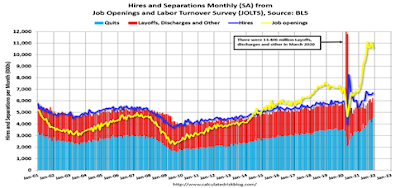
The Bureau of Labor Statistics reported that job openings decreased in November to 10.6 million from 11.1 million in October (yellow line in above graph).

It’s a sign that more workers are returning to work. So huge is the U.S. job market that hiring rose by 191,000 jobs to 6.7 million in November. The hiring rate rose to 4.5 percent from 4.4 percent in the prior month.

The BLS said:

“On the last business day of November, the number and rate of job openings decreased to 10.6 million (-529,000) and 6.6 percent, respectively. Job openings decreased in several industries with the largest decreases in accommodation and food services (-261,000); construction (-110,000); and nondurable goods manufacturing (-66,000). Job openings increased in finance and insurance (+83,000) and in federal government (+25,000). The number of job openings decreased in the South and Midwest.”

This suggests that hiring in both the service and manufacturing sectors is picking up, a good sign for continuing job growth in 2022.

The number of job openings (yellow) were up 56 percent year-over-year. Quits were up 37 percent, year-over-year. The JOLTS report showed that people quitting their jobs rose by 370,000 to 4.5 million in November.  The quits rate rose to 3 percent from 2.8 percent in October, matching the highest quits rate of the pandemic era.

The U.S. unemployment reports comes out this Friday and will give a better picture of the New Year, but the JOLTS report gives a preliminary indication, though it lags almost one month behind the unemployment report.

Another indicator of future job prospects is the decline in weekly initial jobless claims for unemployment as unemployment benefits expire.

FREDinitialclaims

Weekly claims are down from their high of 6 million during the pandemic to 198,000 in the latest week. Salaried employees can’t wait much longer to return in greater numbers in the New Year after spending the excess savings accumulated during the pandemic.

Nobel laureate Paul Krugman has the last word this week in a recent NY Times column, in comparing the swiftness of this jobs recovery to President Reagan’s 1982 recovery which Reagan called “morning in America” that boosted his 1984 reelection.

“Yes, by this measure (and many others) we’re in the middle of another morning in America, despite the drag caused by a lingering pandemic and supply-chain disruptions,” said Professor Krugman.

With this kind of a jobs recovery, what should economic growth look like going forward?

The Atlanta Federal Reserve’s GDPNow model estimate for real GDP growth (seasonally adjusted annual rate) in the fourth quarter of 2021 is 7.4 percent on January 4, down from 7.6 percent on December 23, says their press release.

So overall, 2021 real GDP growth could be upwards of 5 percent. The last time it reached this height was in the 1980s. And since this is the beginning of another year, we can call it the morning of a successful 2022 New Year.

Harlan Green © 2022

Follow Harlan Green on Twitter: https://twitter.com/HarlanGreen

Monday, March 15, 2021

We Can Pay For American Rescue Plan

 Popular Economics Weekly

“Consumer sentiment rose in early March to its highest level in a year due to the growing number of vaccinations as well as the widely anticipated passage of Biden's relief measures,” said the University of Michigan sentiment survey. “The gains were widespread across all socioeconomic subgroups and all regions, although the largest monthly gains were concentrated among households in the bottom third of the income distribution as well as those aged 55 or older (dark blue and gray lines in graph).”

Sentiments are soaring because the just passed American Rescue Plan (AMR) will boost benefits of lower and middle income consumers, raising incomes for the poorest 20 percent of families by an average of 20 percent, according to the Tax Policy Center's analysis, while top earners would see their income rise less than 1 percent in an NPR interview.

NPR

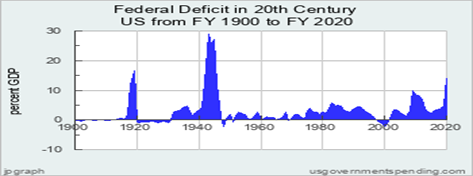
America can pay for the $1.9 trillion tab because it does not substantially raise the cost of the public debt over the long term if we look at the average annual budget deficit to GDP ratio that hasn’t varied substantially since WWII—the major exceptions being the need to finance recoveries from the Great Recession, and now the coronavirus pandemic.

USGov

The cost of financing public debt has averaged little more than 3 percent, historically because economic growth that followed that spending brought the public debt back down to manageable levels, whatever interest rates prevailed at the time.

Financing the $5 trillion in debt that congress has passed since the onset of the coronavirus pandemic should follow the same trajectory. For example, the new $1.9 trillion from the American Rescue will create 7 million new jobs by December, according to the Congressional Budget Office.

“Between 1946 and 2019,” says the CBO, “the deficit as a share of GDP has been larger than that only twice. In CBO’s projections, annual deficits relative to the size of the economy generally continue to decline through 2027 before increasing again in the last few years of the projection period, reaching 5.3 percent of GDP in 2030. They exceed their 50-year average of 3.0 percent in each year through 2030.”

Predictions of real GDP growth are soaring since the AMR’s passage. The Organization for Economic Cooperation and Development projects the U.S. economy will grow by 6.5 percent this year, according to NPR. That's more than twice the growth rate it was projecting in December — thanks in large part to more robust federal aid.

And employment is already surging, thanks to the prior pandemic aid packages. The February employment report added 465,000 private payroll jobs, with 355,000 of those jobs in leisure and hospitality — restaurants, hotels, casinos, theaters—all in the service sector.

All signs point to a robust recovery, in other words, which is why I don’t see any problem with managing a ‘new’ New Deal spending bill when it benefits so many Americans at a time of greatest need, the need to recover from a pandemic that has cost more American lives than our combined wars.

Harlan Green © 2021

Follow Harlan Green on Twitter: https://twitter.com/HarlanGreen

Tuesday, January 12, 2021

Job Losses Mount From COVID-19

 Popular Economics Weekly

MarketWatch

Total nonfarm payroll employment declined by 140,000 in December, and the unemployment rate was unchanged at 6.7 percent, the U.S. Bureau of Labor Statistics reported today.

“The decline in payroll employment reflects the recent increase in coronavirus (COVID-19) cases and efforts to contain the pandemic. In December, job losses in leisure and hospitality and in private education were partially offset by gains in professional and business services, retail trade, and construction.”

The U.S. economy shed jobs for the first time in eight months in December, suggesting a significant loss of momentum that could temporarily disrupt the recovery from the pandemic. The economy has recovered 12.4 million of the 22.2 million jobs lost during the pandemic. Employment at bars and restaurants tumbled 372,000, accounting for three quarters of the drop.

And now the pandemic’s toll is 4,000 deaths  per day which shows that without central planning to slow its spread the toll will only get worse. It is one more example of why government must be part of the solution to today’s problems, especially in protecting Americans’ health.

COVIDTrackingProject

I believe the coronavirus pandemic is a major reason why this shift to more effective government is coming with the January 20 change of administrations, as even the vaccination rollout has lacked coordination that only the federal government can provide the states in charge of disbursing the vaccinations.

Operation “Warp Speed” is not reaching recipients-especially essential workers and the elderly—at anything approaching a warp speed.

The US does lead countries in providing COVID vaccinations as of January 7 with 5.92 million doses administered and China is second with 4.5 million doses as of Dec. 31, according to the World Data, a worldwide data collecting service. But this is a far cry from the HHS and the CDC prediction that 20 million doses should have been administered by Dec. 31.

According to Steven Rattner, a former Treasury official interviewed on MSBNC’s Morning Joe, Trump is the first president to have lost more jobs than he gained during his term since Herbert Hoover at the beginning of the Great Depression.

And businesses will remain shuttered and a majority of consumers continue to stay home until the pandemic has been brought under control.  Any guesses on when that will happen? 

Harlan Green © 2020

Follow Harlan Green on Twitter: https://twitter.com/HarlanGreen

Thursday, December 17, 2020

Retail Sales, Consumer Spending Falter

 Financial FAQs


FREDretailsales

Sales at U.S. retailers fell in November for the second month in a row and posted the biggest decline since the onset of the pandemic, showing effects of the record rise in coronavirus cases. Retail sales fell -1.1 percent last month, the government said Wednesday

Sales began falling in February at the beginning of the COVID-19 recession, per the gray shading in the St. Louis FED graph. It plunged -15 percent in April and jumped almost 40 percent to a +20 percent increase in June, as the various lockdown measures were eased and people went back to work. But oh, those holidays beginning with the Memorial Day and summer vacations that brought back the virus so that spending declined again.

Sales fell at restaurants, auto dealers, gas stations, clothing stores, department stores and places that sell home furnishings and electronics. The only segments to post higher sales were suppliers of essentials; grocers, home centers and Internet retailers — and even then the increase in receipts were small.

Bars and restaurants suffered a 4 percent drop in sales, marking the second decline in a row and the largest since April during the height of the pandemic. More people avoided going out to eat or were unable to do so because of new government limits on indoor dining or hours of operation.

Sales also fell 1.7 percent last month at auto dealers, but it has been a good year for the industry. Low interest rates have helped boost sales and more people are driving instead of taking public transportation, say the number crunchers.

This is mainly because coronavirus infection rates have barely begun to flatten the curve. The COVI-19 Project reported 1.7 million tests, 190k cases, and 2,918 deaths, 112,816 people are currently hospitalized with COVID-19 on Tuesday. Current hospitalizations are falling in the Midwest and rising in the Northeast and Western states, per the project.


COVIDTracker

But next year may be different when the vaccines reach most Americans. Federal Reserve Chair Powell on Wednesday predicted the U.S. unemployment rate would fall faster in 2021 than it previously believed, but it stuck to a cautious forecast for the broader U.S. economic recovery.

The Fed slightly raised its 2021 forecast for economic growth to 4.2 percent from 4.1 percent, reported MarketWatch, “indicating continued caution on the part of central bank officials as they wait to see how effective the new vaccines for the coronavirus perform.”

‘The official unemployment rate slid to a new pandemic low of 6.7 percent in November and has declined a lot faster than expected, but economists also say it likely underestimates the true number of jobless Americans.”

The vaccines began rolling out in the past week. Chairman Powell also said they would do whatever it takes to keep interest rates low and credit easily available to banks and businesses for maybe years to come.

As I said earlier, there is a path to economic recovery from the worst recession since the Great Recession. The Fed is on board to assist for the foreseeable future, but will congress do its part?

They are close to agreement on a bill slightly less than $1 billion that will be announced later this week. But we have to first control the pandemic.

Harlan Green © 2020

Follow Harlan Green on Twitter: https://twitter.com/HarlanGreen

Thursday, October 1, 2020

No Surprises in Q2 GDP. ADP Employment

 Financial FAQs

FREDGDP

The last estimate of Q2 GDP was barely changed, contracting at -31.4 percent vs. -31.7 percent in the second estimate, but that isn’t dampening the stock market, as it looks like the upcoming first estimate of third quarter GDP growth will be positive, maybe ending the pandemic-induced recession.

Tomorrow’s ‘official’ Labor Department unemployment report should tell us more about third quarter growth, with the first Q3 estimate coming out at the end of October..

Why the consumers’ optimism, just as Covid-19 infection rates are beginning to rise again? Americans’ spending rose 1 percent in August for the fourth month in a row, stemming largely from the massive infusion of federal aid for the unemployed, and the reopening of more businesses. But the increase was the smallest since the U.S. reopened and pointed to a slower economic recovery.

Incomes had declined by 2.7 percent because of the end of government aid in July, the biggest drop since early in the pandemic, but spending is still positive due to accumulated savings from the lockdowns. The personal savings of 14.1 percent is still almost twice as high as it was before the pandemic.

ADP

And ADP reported on Wednesday that 749,000 private nonfarm payroll jobs were created in September, with most of the jobs in midsize (259k) and large (297k) companies. It is probably a sign that Friday’s Labor Department unemployment report will show at least 1 million new private payroll jobs being created as well.

Another positive growth sign was that initial jobless claims filed through state programs dropped to 837,000 in the week ended Sept. 26 from a revised 873,000 in the prior week, the Labor Department said Thursday.

And an estimated 650,120 people also filed new claims under the Pandemic Unemployment Assistance Act, the federal law that temporarily made self-employed workers eligible for benefits for the first time ever. That put the number of actual or unadjusted new claims at 1.49 million.

So more workers are returning to their workplace, but the question will still be whether the continuing job creation trend remains positive, given that the fall and winter pandemic/flu season is just beginning.

Harlan Green © 2020

Follow Harlan Green on Twitter: https://twitter.com/HarlanGreen
Saturday, August 15, 2020

Happy Consumers Are the Key...


Popular Economics Weekly

FREDretailsales

Are we heading for a fall in the Fall when the ordinary flu season begins? The chickens may be coming home to roost, as the saying goes, because the US economy opened to soon.

Retail sales rose 1.2 percent in July, the government said Friday. Economists polled by economists had forecast a 2 percent advance. Receipts have slowed from a 8.4 percent increase in June and a record 18.3 percent gain in May when the economic rebound began. In other words, consumers may be seeing the writing on the wall as we approach the cold season.

And CDC director Robert Redfield just warned in a WebMD interview on Wednesday that America is bracing for “the worst fall, from a public health perspective, we’ve ever had.”

This is not because cooler weather somehow makes the coronavirus worse, or that the summer’s heat kills the virus, which has been a common misconception about the coronavirus causing the disease COVID-19. Rather, fall and winter become influenza’s time to shine.

We are stuck at the highest unemployment rate achieved during the Great Recession (10 percent) that ended in 2009 in July’s unemployment report. But it took until 2018 to return to anything resembling full employment (4 percent), another 8 years, as I said last week.

CDC

So will it take this long to return to full employment again? So far we have only restored about 9.3 million jobs, leaving more than half of the Americans who lost their jobs still unemployed, and the flu season is about to start that historically kills between 12,000 and 61,000 deaths a year.

“We’re going to have COVID in the fall, and we’re going to have flu in the fall. And either one of those by themselves can stress certain hospital systems,” Redfield said, noting that many hospitals have already been overwhelmed by the number of coronavirus patients. There have also been reports of hospitals in New York, Texas and Arizona calling in refrigerated trucks to serve as temporary morgues to handle the number of dead bodies during the pandemic. And the ordinary flu has seen between 140,000 and 810,000 people hospitalized each year since 2010.”

Retailers have been on a roller-coaster ride since the pandemic began, sinking in March and April and recovering rapidly in the following two months as the economy reopened. The more mild increase in sales in July (+1.2%) might be a sign of what lays ahead, however.

And consumer sentiment has stagnated; another sign that consumers are becoming more cautious as the flu season hits at the same time as schools normally open. The preliminary reading of the consumer sentiment survey in August edged up to 72.8 from 72.5 in July, but it’s still just barely above the pandemic low, the University of Michigan also said Friday.

And we know what can happened next, since children will bring those virus bugs home to parents and grandparents as schools re-open. Economists such as Nobelist Paul Krugman are becoming ever more worried that this could turn what, to date, has been a mild recession into a Great Depression.

Harlan Green © 2020

Follow Harlan Green on Twitter: https://twitter.com/HarlanGreen
Wednesday, August 5, 2020

Alas, The Recovery That Was....

Financial FAQs

Reuters.com

Because the deadline has passed to renew unemployment benefits enacted by the CARES Act, it looks like there will be no quick economic recovery in the fall. I am supposing the recovery could ultimately be shaped like a ‘W’—sporadic spurts of growth and declines in growth with new COVID-19 surges, given there is no coordinated national response to the pandemic.

And what about school openings when 60 percent of the major elementary school districts will have at-home schoolings this school year, according to a CNN survey, and no national guidance on what constitutes safe re-openings?

This has to be why Republicans are pushing for the full re-opening of schools, regardless of the dangers to children. It keeps at least one parent at home who isn’t working when they want to speed up the reopening of businesses.

The huge jump in consumer spending in May and June highlights what could have been if benefits had been renewed with the additional $600 per week boost to unemployment compensation, and which Republicans don’t want to renew.

The above Reuters graph highlights the record 7.1 percent boost given by the additional benefits since the CARES Act was implemented.

Consumer spending, which accounts for more than two-thirds of U.S. economic activity, rose 5.6 percent last month after a record 8.5 percent jump in May as more businesses reopened, the Commerce Department said. But most of the spending was due to the $600 boost to low-income service workers that tend to spend more of their incomes.

Consumers boosted purchases durable goods such as auto and appliances that last more than three years, as well as clothing and footwear. They also spent more on healthcare, dining out and on hotel and motel accommodation, though outlays on services remained lackluster because of caution sparked by the virus.

Q2 economic growth had plunged 32.9 percent because consumer spending fell minus -35 percent during this period. So growth will only recover when consumers feel safe enough venture out of their rabbit holes, I said last week. They will instead choose to save more—currently a huge 25 percent of their personal incomes vs. more normal 3-6 percent—and spend less.


FREDunemploymentrate

That is why Friday’s upcoming unemployment report is so important. Dallas Fed President Robert Kaplan on Monday said he now expected an unemployment rate in a range of 9 -10 percent at the end of the year. Ten percent was the highest unemployment rate during the Great Recession when some 8 million jobs were lost.

The June unemployment rate was 11.1 percent and estimates are for July to show a 10.5 percent rate, according to an average estimate of economists. It took more than eight years, from October 2009 at the end of the Great Recession until March 2018, for the unemployment rate to drop from 10 to 4 percent, which is considered full employment.

How long might this depression last with today’s political polarization?

Harlan Green © 2020

Follow Harlan Green on Twitter: https://twitter.com/HarlanGreen

Tuesday, May 26, 2020

Will Those Jobs Return?

The Mortgage Corner


Initial claims for unemployment benefits fell by just 249K to 2.438 million in seasonally adjusted terms in the week of May 16, as the businesses begin to reopen in all 50 states.  The aggregate level of new claims not seasonally adjusted climbed to an actual 4-week high of 4.4 million when applications under federal programs are included. 

And more than 38 million workers are now out of a job, at least temporarily, in the latest week’s initial unemployment claims.

However getting them back to work will be far harder than separations, especially if congress cannot agree on another aid package to extend unemployment benefits, Personal Payroll Protection (PPP) to small businesses, and aid to states in addition to the just-passed $3 trillion bill.

Republicans meanwhile are holding up more aid, because they want workers back to work sooner when their current benefits run out, regardless of the still rising infection and death rates in many states.

But what if there are no jobs to come back to? Without more aid, states that hire and pay our essential workers (eg, Police, Fire, and health care workers) will run out money and have to reduce their payrolls. The same also applies to the PPP participants that wish to retain their employees.

Why would Republicans want to “cut off their nose to spite their face,” as the saying goes, after months of fiddling while America burned?

The latest infection data analysis is staggering. If the country had begun locking down cities and limiting social contact on March 1, two weeks earlier than most people started staying home, the vast majority of the nation’s deaths — about 54,000 — would have been avoided, reported Columbia University disease modelers.

And if many essential workers no longer have jobs, especially those workers that keep us safer and healthier, then a real recovery could be years away.

Workers can’t spend what they don’t make, which Roosevelt understood very well during the Great Depression. So he had government create millions of jobs building dams, monuments, energy grids, and planting trees; any work that allowed Americans to continue to feed their families.

And here’s another irony. Republicans support the de facto civil war between red and blue states when a viable recovery will only happen with a united effort, just as we won’t conquer the COVID-19 pandemic without a united effort in testing, contact tracing and quarantining the infected.

We cannot allow the unemployed to remain unemployed for too long. This lessens the demand for producers to produce, which in turn creates more layoffs instead of hires, which lowers Gross Domestic Product (GDP) growth. The Great Recession lasted 18 months, until June 2009 before growth was restored, yet employment didn’t return to prior levels for five years.

The Labor Department (BLS) reported unemployment rates were higher in April in all 50 states and the District of Columbia that were also higher from a year earlier. The national unemployment rate rose by 10.3 percentage points over the month to 14.7 percent as we reported last Friday and was 11.1 points higher than in April 2019.

Three states exceeded a 20 percent unemployment rate already; Nevada, Michigan and Hawaii.


The GDPNow model estimate for real GDP growth (seasonally adjusted annual rate after inflation) in the second quarter of 2020 is -41.9 percent May 19, up from -42.8 percent on May 15.

Next Thursday’s first estimate of Q2 GDP growth will be the initial indication of just how weak are the job numbers for May. The Labor Department’s unemployment rate won’t be out until June 5. They don’t look good, with estimates as high as a negative -20 percent unemployment rate, or even --25 percent as in the Great Depression.

The powers-that-be must stop their fiddling, in other words, and cooperate in crafting programs that enable workers to get back to work safely, and consumers to shop without the fear of contagion, the same cooperation that’s needed to bring down the death rates from COVID-19.

Harlan Green © 2020

Follow Harlan Green on Twitter: https://twitter.com/HarlanGreen
Wednesday, March 4, 2020

The Wages of Fear in a Recession—Part II

Financial FAQs


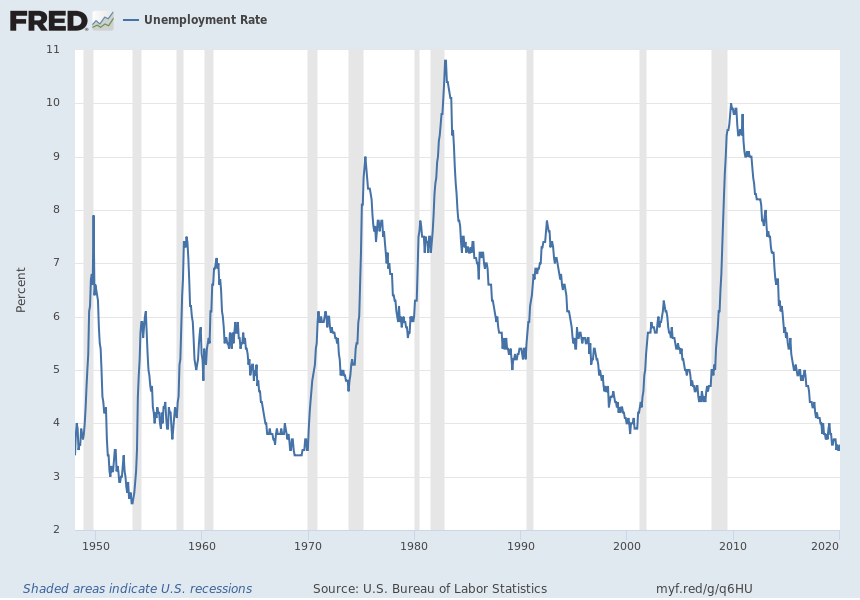
Is the U.S. economy already in recession? How can it be with more than 80 percent of the adult workforce employed? But that isn’t how recessions actually begin, as portrayed in the above St. Louis Fed unemployment rate history dating from 1950.

The latest COV-19 coronavirus news makes it a virtually certainty that the U.S. economy could go into recession this year. Why? America’s record income inequality—the worst since 1928 prior to the Great Depression—means many cannot afford to be quarantined from their work when it becomes a real pandemic that affects all of the United States.

A recent Brookings Institute study found that 44 percent of U.S. workers are employed in low-wage jobs that pay median annual wages of $18,000. And most of the 53 million Americans working in low-wage jobs are adults in their prime working years between about 25 to 54. Their median hourly wage is $10.22 per hour — above the federal minimum wage of $7.25 an hour but well below what's considered the living wage for many regions.

Recessions begin when the economy, based on four major indicators such as the unemployment rate, manufacturing and trade, and personal incomes have peaked; i.e., no longer continue to rise as determined by a Business Cycle Dating Committee of the National Bureau of Economic Research (NBER).

The NBER website states it thusly: “We identify a month when the economy reached a peak of activity and a later month when the economy reached a trough. The time in between is a recession, a period when economic activity is contracting. The following period is an expansion.”

The worldwide spread of the COVID-19 virus means a wholesale slowdown of economic activity in coming months. We are already seeing a slowdown in several U.S. sectors—especially manufacturing—and growth may have peaked in the consumer-driven service sector as well, though not yet contracting.

If American workplaces are shut down, as they are in China, S. Korea, Italy, Iran, and parts of Japan, these workers that have neither health plans to pay for sick-leave (a full 25 percent of the lowest paid service workers have no paid sick-leave coverage), or savings to fall back on until they can return to work, would have to rely on unemployment insurance or welfare.

Millions could therefore become unemployed, as happened during the Great Recession. One worrisome similarity is that stocks recently dropped to lows last seen during the Great Recession.
In other words, the U.S. is totally unprepared for any significant epidemic, or a pandemic, as CDC officials are warning. So how do we know when economic activity has peaked and begins a sustained fall?

The Great Recession began in December 2007, yet the unemployment rate had been rising for six months—from its low of 4.4 percent in June 2007 to 5.0 percent in December. And it wasn’t the Fed that declared it a recession 12 months later, but the NBER’s Business Cycle Dating Committee based at Harvard, as I have said.

The Business Cycle Dating Committee waited until December 1, 2008, a year later, to declare that the Great Recession had started in December 2007 to be sure that the rise was a continuing trend, though the unemployment rate didn’t peak and begin to come down until October 2009; at 10.0 percent, 4 months after the recession was declared to have ended!

This is not to say that is always how recessions begin, but recessions are measured from a peak of activity to its ‘trough’, as I said, when activity begins to pick up again—a total of 18 months in the case of the Great Recession.

Why do recessions begin when they do? The Great Recession in particular began because consumers and banks became so heavily indebted building too much housing in an earlier era of very low interest rates, and housing values began to decline that had been rising in double digits earlier in the decade.

Alan Greenspan’s Fed had then raised interest rates for 2 years in an attempt to slow inflation that had also reached double digits. And borrowers then began to default on their rising mortgage payments that they could no longer afford.

The U.S. economy is facing such a dangerous journey through this outbreak of the coronavirus that CNN Doctor Sanjay Gupta has said is 20 times more deadly than the ordinary flu based on initial studies, as I said last week, and WHO now says has a fatality rate of 3.4 percent, almost 40 times that of the ordinary flu.

There are 128 cases and 11 deaths, according to the latest figures from Johns Hopkins Whiting School of Engineering’s Centers for Systems Science and Engineering, including among 45 people who were repatriated from the Diamond Princess and from Wuhan, China, the city that first detected the virus in December. Six people are counted as recovered in the U.S.

Worldwide in 70 countries there are now 94,259 cases of COVID-19, at least 3,214 deaths, and about 55,393 people that have recovered primarily in China's Hubei Province.

The greatest danger to the U.S. economy is a sharp cutback in consumer confidence and spending, since it is consumers that are now keeping economic growth at 2.1 percent with the 6-month decline in manufacturing activity mainly due to the trade wars. And the COVID-19 outbreak means further supply disruptions.

Harlan Green © 2020

Follow Harlan Green on Twitter: https://twitter.com/HarlanGreen

Friday, March 8, 2019

Why Smallest Jobs Increase in 17 months?

Popular Economics Weekly


Is US economy running out of available workers? Just 20,000 nonfarm payroll jobs were created in February, per the Labor Department’s Bureau of Labor Statistics, the lowest total in 17 months. But it may have been because there aren’t enough workers that want to work. That has to be part of the reason for the sharp drop from January’s 311,000 new payroll jobs—that was also revised up from 304,000 jobs!
“The unemployment rate declined by 0.2 percentage point to 3.8 percent in February, said the BLS, and the number of unemployed persons decreased by 300,000 to 6.2 million. Among the unemployed, the number of job losers and persons who completed temporary jobs (including people on temporary layoff) declined by 225,000. This decline reflects, in part, the return of federal workers who were furloughed in January due to the partial government shutdown.”
Note that workers returning from the “partial government shutdown” accounted for some of the 300,000 decrease in unemployment, but that was in the Household Survey, a telephone survey of a smaller number of respondents that includes the self-employed.

The larger and generally more accurate Establishment survey of actual business payrolls showed a much larger decrease of 31,000 fewer construction workers (vs. 53,000 hired in January), with smaller drops in retail and government employment as well. So the two surveys don’t usually match.

That rate fell because of a sharp rise in the number of those employed (up 255,000) and a sharp fall in the number of unemployed, as I said, which makes for an unexpected 2 tenths dip in the unemployment rate to 3.8 percent.

The bottom line is there aren’t enough willing workers for hire. The number of job openings reached a series high of 7.3 million on the last business day of December due to the looming scarcity of hires. This means businesses must find more creative ways to hire and hold their employees—such as continue to raise salaries.

Wages in today's report are another indication of the labor shortage, jumping 0.4 percent in the month which is outside expectations for a year-on-year rate of 3.4 percent that is at the high end of expectations.

It should also mean more job creation this year, since many of those 6 million still out of work are simply waiting for wages to return to pre-recession levels, according to various sources. This is measured by the voluntary ‘Quits’ component of the Job Openings and Labor Survey that has been rising. Many of those having to work during and after the Great Recession had to take steep reductions in pay.


So getting back to an equivalent breakeven for those workers holding out means taking into account the pay losses from the downturn even with a fully employed economy.  The gap between openings and hires is now 1.428 million, a new record and up from 1.304 million in November. It’s a very good number for growth prospects in 2019, as employers don’t look for this many
new employees while continuing to raise wages, unless they see a better future. 

Harlan Green © 2019

Follow Harlan Green on Twitter: https://twitter.com/HarlanGreen

Friday, June 22, 2018

Trade Wars Not Good For Future Growth Either

Popular Economics Weekly

The Conference Board Leading Economic Index® (LEI)for the U.S. increased 0.2 percent in May to 109.5 (2016 = 100), following a 0.4 percent increase in April, and a 0.4 percent increase in March.

This monthly announcement of the LEI is a good predictor of future economic growth because it reports on 12 items that measure trends on everything from interest rates, to housing permits, to stock prices, and hours in the work week. It is slowing, surely not a coincidence with the talk of a worldwide trade war.
“While May’s increase in the U.S. LEI was slower than in recent months, the improvements in a majority of its components offset the declines in leading indicators of labor markets and residential construction,” said Ataman Ozyildirim, Director of Business Cycles and Growth Research at The Conference Board. “The U.S. LEI still points to solid growth but the current trend, which is moderating, indicates that economic activity is not likely to accelerate.”
That’s because raising tariffs on imported goods and services is raising taxes, which Republicans aren’t supposed to do, and all reputable economists agree slows growth.

Here’s another reason why it not good to raise taxes on imported goods. Firstly, some 80 percent of what consumers buy is imported. And consumers overall incomes haven’t been rising at all in 2017 when inflation is subtracted from the total.


Marketwatch economist Rex Nutting reports that although GDP growth in Q2 could be as high as 4.5 percent, 2014 was a much better year when average nominal wages were rising 1.3 percent above the inflation rate. And that is really what determines consumers’ demand for goods and services.

With consumers already skating on thin ice with their finances; so much so that their personal savings rate has sunk to a decade low 2.3 percent; raising taxes could well bring us to a tipping point. Let’s not forget a recession starts when economic activity has peaked, and can go no higher, and starts an inevitable decline.

Another economic indicator just out is the IHS Markit US Manufacturing PMI, which fell to 54.6 in June from 56.4 in May, well below market expectations of 56.5. The reading pointed to the slowest expansion in factory activity in 7 months, preliminary estimates showed. New work rose the least since September, partly reflecting a slight drop in export sales.
 

Was the drop in exports because of the tariff wars? The Great Recession began in December 2017 with the US still at full employment. Job losses didn’t accelerate until it dawned on the public in mid-2008 that Wall Street and the banks were in big trouble.

The unemployment rate fluctuated wildly, from a low of 4.7 percent in 2008 to a peak of 10.1 percent in 2009, after the U.S. housing bubble burst and Wall Street saw collapses unlike those seen since the Great Depression in the 1930s.

Future economic growth seems to be trending downward, so the effects of this trade war will loom sooner or later.

Harlan Green © 2018

Follow Harlan Green on Twitter: https://twitter.com/HarlanGreen